Even more knowledge

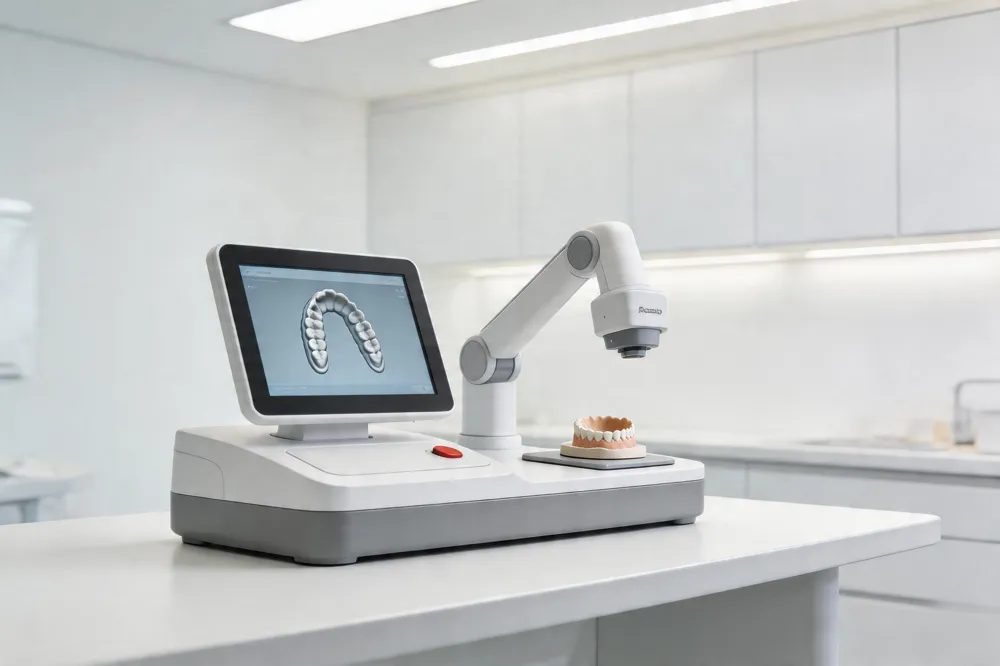
CAD/CAM (Computer‑Aided Design/Computer‑Aided Manufacturing) has become the backbone of modern restorative dentistry. By capturing a three‑dimensional digital impression with an intra‑oral scanner, the dentist can design a crown, bridge or veneer on a screen in minutes, then mill the restoration from a high‑strength ceramic block on‑site. The entire workflow—scan, design, mill, and cement—can be completed in a single visit, often within 90 minutes. For patients, this translates into fewer appointments, no messy putty impressions, and the elimination of a temporary crown that can break or cause sensitivity. Immediate function and aesthetics improve comfort and confidence, while digital records simplify future repairs. Gentle Dentistry of Staten Island embraces this technology to deliver truly patient‑centered care. The practice’s transparent communication, gentle preparation techniques and in‑office CAD/CAM milling ensure that every crown or bridge is placed efficiently, comfortably and with predictable, long‑lasting results, and satisfaction for all ages in today’s dental landscape.
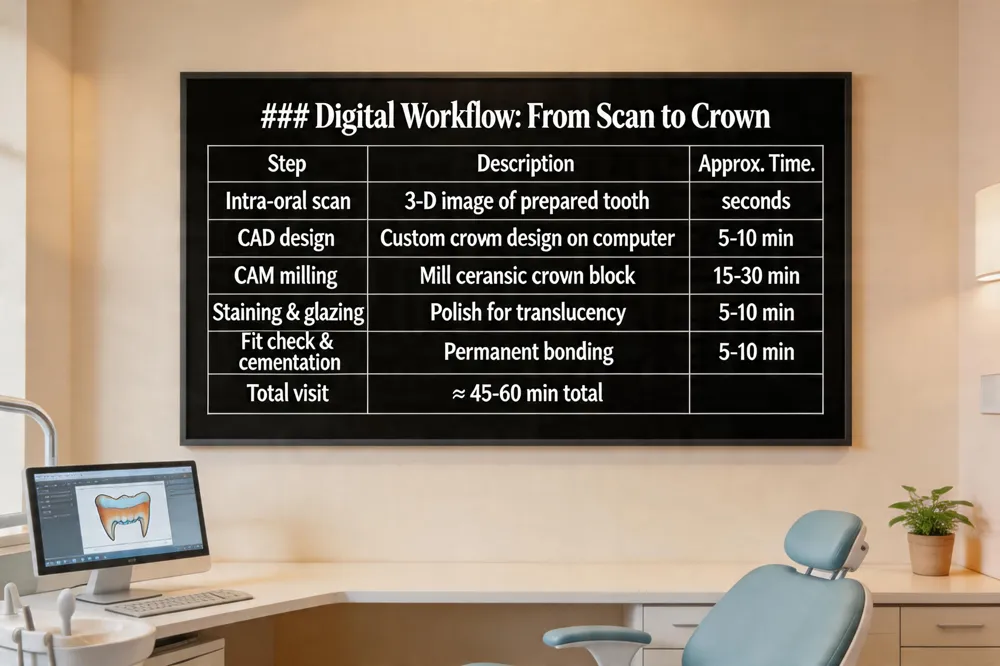 Intra‑oral digital scanning is the first step of a same‑day crown. An optical scanner captures a precise three‑dimensional image of the prepared tooth in seconds, eliminating messy putty impressions. The digital impression is far more accurate than conventional materials, providing marginal gaps measured in microns and a reliable virtual model for design.
The CAD phase lets the dentist or technician manipulate the 3‑D model on a computer. Shape, occlusion, and shade are customized while the patient watches the restoration take form on a screen. This real‑time feedback ensures that the final crown will match the natural dentition in both function and aesthetics.
Once the design is approved, the CAM unit mills the restoration from a high‑quality ceramic block—commonly lithium disilicate or zirconia. Modern chairside milling machines carve the crown in 15‑30 minutes, producing a restoration with tolerances measured in microns. After milling, the crown is stained, glazed, and polished to achieve a natural translucency.
A final fit check is performed intra‑orally; minor adjustments are made if needed, then the crown is permanently cemented. The patient leaves with a fully functional, aesthetically pleasing crown in a single appointment.
Can a crown be made the same day? Yes, a crown can be fabricated and placed in a single appointment using CEREC® (Chairside Economical Restoration of Esthetic Ceramics) technology. The dentist first prepares the tooth, then captures a precise 3D digital scan with an intra‑oral camera. That scan is sent to an on‑site milling machine, which sculpts a ceramic crown in about 15‑20 minutes. After a quick fit check and any minor adjustments, the crown is polished and permanently bonded to the tooth. Most patients leave the office ready to eat and smile, eliminating the need for a temporary crown and a second visit.
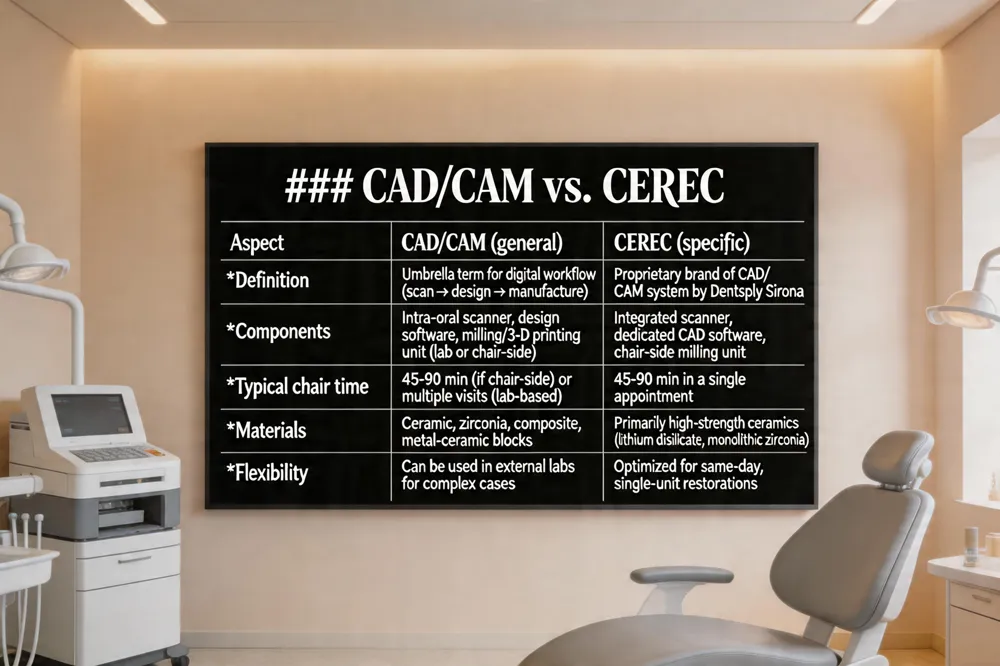 CAD/CAM (Computer‑Aided Design/Computer‑Aided Manufacturing) is an overarching digital workflow that starts with a highly accurate 3‑D intra‑oral scan, moves to computer‑based design of the restoration, and finishes with automated milling or 3‑D printing of a ceramic, zirconia, or composite block. The technology was adapted for dentistry in the 1980s and now supports a wide range of restorations, from single‑unit crowns to multi‑unit bridges, onlays, veneers, and implant‑supported prostheses. CEREC® (Chairside Economical Restoration of Esthetic Ceramics) is a proprietary CAD/CAM system developed by Dentsply Sirona. It bundles an intra‑oral scanner, dedicated CAD software, and a chair‑side milling unit that can produce a permanent crown or bridge in a single appointment, typically within 45–90 minutes. While CEREC follows the same CAD/CAM principles, it is just one brand among many; other manufacturers such as Planmeca, Roland, Amann Girrbach, and iTero offer scanners, design platforms, and milling units that can be used either chair‑side or in an external laboratory, often supporting more complex prosthetic designs. Is CAD‑CAM the same as CEREC? No. CAD‑CAM is the technology umbrella; CEREC is a specific implementation of that technology focused on rapid, in‑practice restorations.
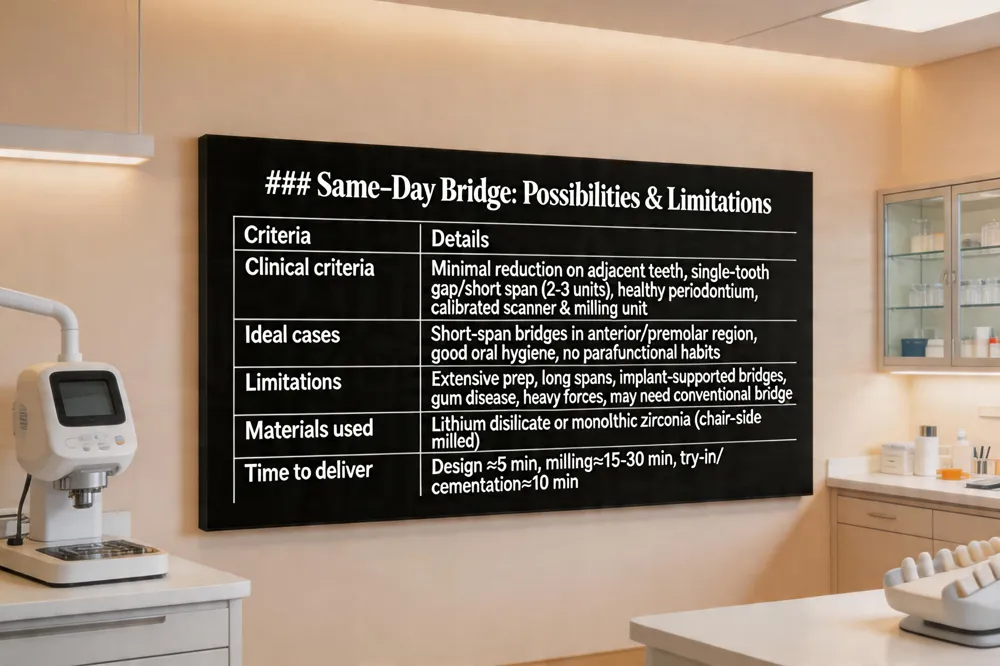 Digital design and milling of single‑unit bridges have become routine in modern dental offices that employ chairside CAD/CAM systems such as CEREC or Planmeca. After a quick intra‑oral scan captures a precise 3‑D model of the prepared abutment teeth, the dentist uses CAD software to design the bridge, adjusting shape, occlusion and shade while the patient watches. The file is then sent to an on‑site milling unit that carves the bridge from a high‑strength ceramic block—often lithium disilicate or monolithic zirconia—in 15‑30 minutes. Once milled, the bridge is stained, glazed and bonded in the same appointment, eliminating the need for temporary restorations.
Clinical criteria for same‑day bridge placement include: (1) minimal tooth reduction on the adjacent teeth, (2) a single‑tooth gap or a short span of two‑to‑three units, (3) healthy periodontal tissues without severe gum disease, and (4) the practice’s possession of a calibrated scanner and milling machine. Patients must also have adequate oral hygiene and no extensive parafunctional habits that would compromise the ceramic material.
When a bridge requires extensive preparation, multiple missing teeth, implant support, or complex aesthetic shading, a conventional multi‑visit workflow remains the gold standard. In such cases, impressions are sent to an external laboratory for custom layering, and temporary crowns are placed while the definitive restoration is fabricated over several weeks. Your dentist at Gentle Dentistry of Staten Island will assess these factors during the initial consultation to determine if a same‑day bridge is appropriate for you.
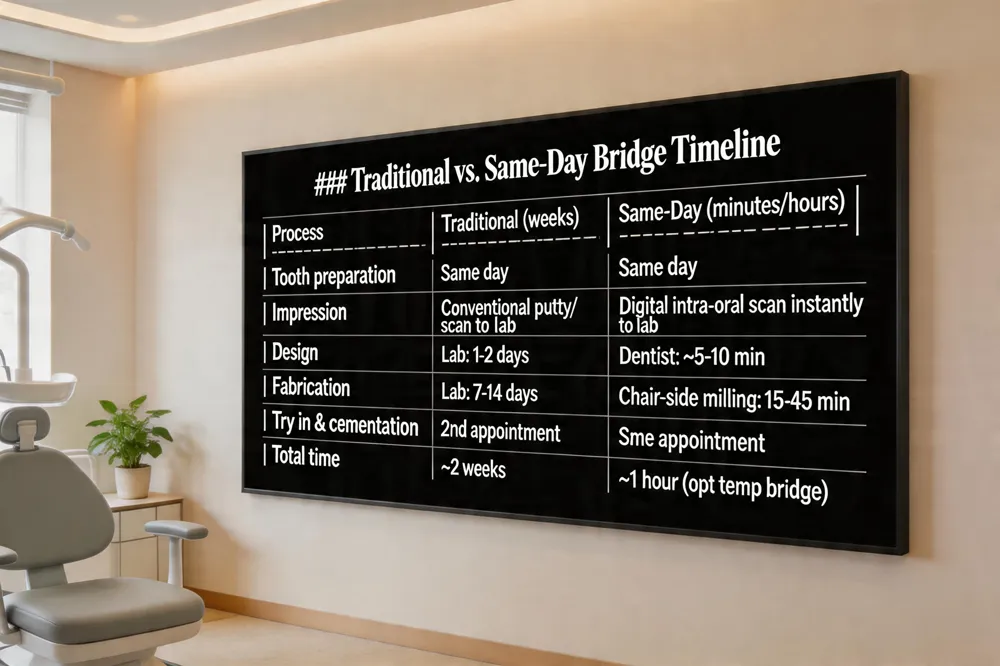 A lab‑fabricated dental bridge follows a multi‑step, weeks‑long process. After the initial examination and tooth preparation, the dentist takes either a traditional impression or a digital scan and sends the data to an external laboratory. A temporary bridge is placed immediately after preparation, allowing the patient to eat and speak normally while the permanent restoration is being crafted. The lab typically requires 7–14 days to design, mill, and finish the bridge from high‑strength ceramic or zirconia. Once the finished bridge arrives, the patient returns for a second appointment where the restoration is checked for fit, occlusion, and aesthetics before final cementation. In total, patients can expect about a two‑week turnaround from first visit to permanent bridge placement.
Same‑day bridge technology, using chairside CAD/CAM systems such as CEREC, dramatically shortens this timeline. After the appointment preparation, Digital intra‑oral scanners capture a precise three‑dimensional model of a tooth in seconds. The dentist designs the bridge on a computer while the patient watches, and a mill machine carves the restoration from a ceramic block in 15‑45 minutes. The finished bridge is polished, stained, and placed in a single appointment, eliminating the need for a temporary prosthesis.
How quickly can you get a bridge? After your first appointment, we take precise impressions and prepare the abutment teeth for the bridge. A temporary bridge can be placed right away, often on the same day, so you won’t be without a functional tooth while the permanent one is being made. The permanent bridge is then sent to our dental laboratory, where it is custom‑crafted in about 7 – 14 days. You’ll return for a second visit to have the final bridge fitted, checked for proper bite and adjusted as needed. In total, the entire process usually takes roughly two weeks from the initial consultation to the permanent restoration.
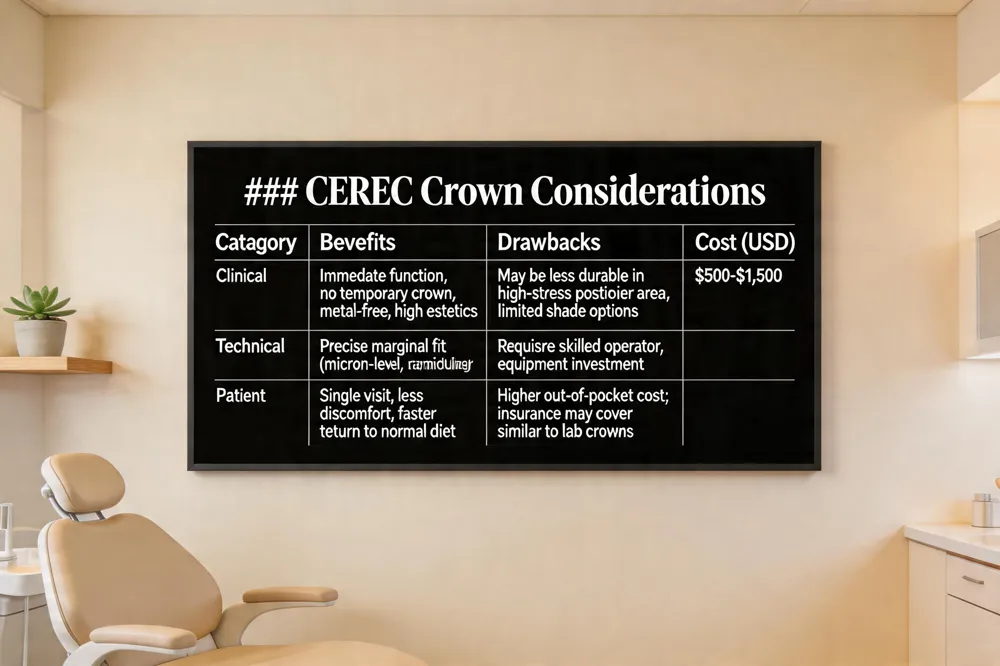 Same‑day crowns designed with CEREC’s chairside CAD/CAM workflow offer a range of practical advantages. The digital intra‑oral scan captures a precise 3‑D model in seconds, eliminating messy putty impressions and reducing patient discomfort. After a brief 10‑15‑minute virtual design, the on‑site milling unit carves a ceramic restoration in 15‑45 minutes, allowing the tooth to be permanently bonded in a single appointment. Patients leave with immediate function, no temporary crowns, and an esthetically pleasing, metal‑free restoration that mimics natural enamel translucency.
What are the disadvantages of CEREC crowns? CEREC crowns can be less durable than metal‑based or porcelain‑fused‑to‑metal options, especially in high‑stress posterior areas. Since they are milled from a single ceramic block, they provide only one shade, making exact colour matching on front teeth more challenging compared with lab‑layered crowns. Teeth with extensive structural loss, large gaps, or complex bite issues may still require a conventional laboratory‑made restoration. Minor adjustments after placement are sometimes necessary, and not all practices have the equipment or trained clinicians to deliver consistent results.
How much do CEREC crowns cost? Typical out‑of‑pocket prices range from $500 to $1,500, reflecting the technology and one‑visit convenience. Conventional crowns usually cost $300–$1,000. Final cost varies with material (all‑ceramic vs. porcelain‑fused‑to‑metal), dentist experience, tooth condition, and geographic location. Practices such as Gentle Dentistry of Staten Island provide transparent estimates that incorporate these variables.
Is a same‑day crown more expensive? Yes, the upfront price is often higher because of the specialized CAD/CAM equipment and on‑site materials. However, many patients value the elimination of multiple appointments and temporary crowns. Insurance may cover part of the procedure under the same codes as lab‑made crowns, but out‑of‑pocket expenses can still exceed those of traditional crowns. The decision balances the premium cost against time saved and immediate, permanent restoration.
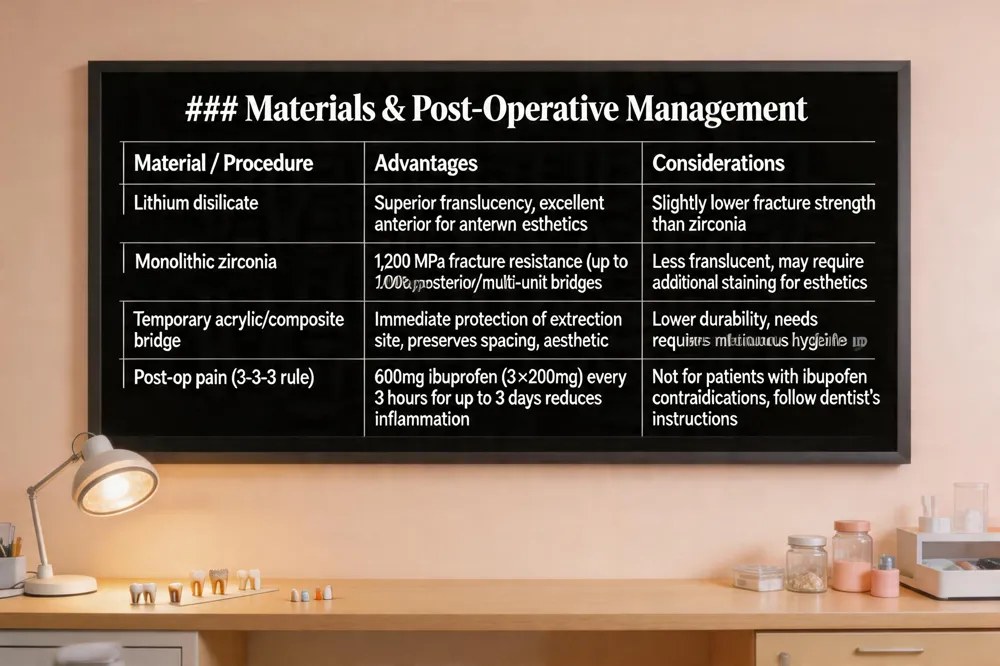 Same‑day CAD/CAM technology makes it possible to restore a tooth in a single visit, and the material you choose influences both aesthetics and durability. High‑strength ceramic blocks are the workhorse of chairside milling; within that group, lithium disilicate offers superior translucency that mimics natural enamel, making it ideal for anterior crowns and bridges where a lifelike appearance is paramount. Zirconia on the other hand, provides exceptional fracture resistance (up to 1,200 MPa) and is often selected for posterior restorations or multi‑unit bridges that demand maximal strength. Both materials are biocompatible, metal‑free, and can be stained or glazed to match surrounding teeth.
If a tooth is extracted, a temporary bridge can be placed immediately. The provisional bridge—usually fabricated from acrylic or composite—protects the healing socket, preserves the spacing of adjacent teeth, and gives you an instant, natural‑looking smile while the permanent restoration is being designed and milled. Because it is not as durable as the final prosthesis, meticulous oral hygiene with floss threaders is essential until the definitive bridge is cemented after the extraction site has healed.
For post‑operative toothache relief, many dentists recommend the 3‑3‑3 rule: take 600 mg of ibuprofen (three 200 mg tablets) every three hours, for up to three days. This dosage helps control inflammation, which is the most common source of dental pain after extraction or crown preparation.
CAD/CAM same‑day restorations combine rapid digital scanning, computer‑aided design and on‑site high‑speed quality to deliver crowns and bridges in a single 90‑minute visit. The technology’s micron‑level tolerances produce a superior fit that minimizes adjustments, while the elimination of traditional putty impressions and temporary crowns enhances patient comfort and reduces sensitivity. Gentle Dentistry of Staten Island leverages this workflow, using intra‑oral scanners and chairside milling units such as CEREC to provide metal‑free, biocompatible ceramic restorations that look and function like natural teeth. By offering a streamlined, patient‑centered experience, the practice ensures immediate functional and aesthetic results with long‑term durability. If you are interested in a personalized, efficient solution for a damaged tooth or missing tooth, contact Gentle Dentistry today to schedule a consultation and explore how same‑day CAD/CAM technology can meet your restorative needs.