Even more knowledge

An aesthetic assessment puts the patient at the center of every decision, ensuring goals, facial features, and lifestyle preferences shape the plan. A thorough smile analysis—examining tooth color, shape, proportions, gum line, smile arc, and midline—provides objective data that reveal hidden issues such as gum inflammation or mis‑aligned incisors. This detailed evaluation directs material choice, preparation depth, and digital mock‑up design, which together predict the final result and greatly increase the likelihood of long‑term veneer satisfaction for patients worldwide today.
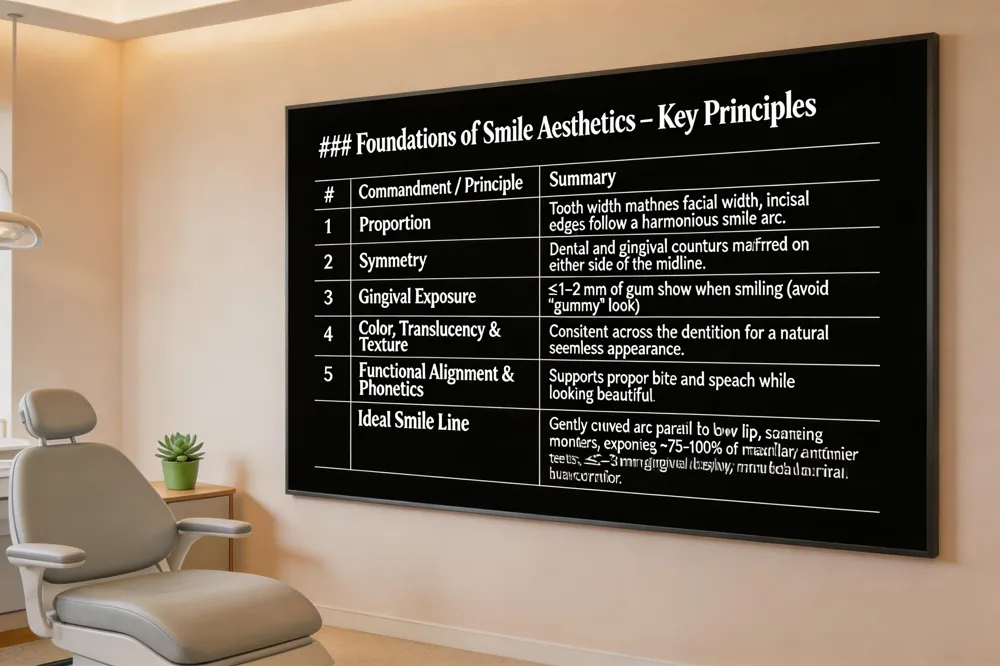 10 commandments of smile esthetics The first commandment is to maintain proper proportion, ensuring the width of the teeth matches the facial width and the incisal edges follow a harmonious smile arc. The second demands symmetry, with both dental and gingival contours mirrored on either side of the midline. The third stresses optimal gingival exposure—typically no more than 1–2 mm of gum show when smiling—to avoid a “gummy” appearance. The fourth requires consistent tooth color, translucency, and texture, creating a natural, seamless look across the entire dentition. Finally, the fifth commandment emphasizes functional alignment and phonetics, guaranteeing that the smile not only looks beautiful but also supports proper bite and speech.
Ideal smile line The ideal smile line is a gently curved arc of the upper front teeth that follows the natural contour of the lower lip, creating a harmonious, youthful appearance. It should be parallel to the lower lip, span from one mouth corner to the other, and expose roughly 75‑100 % of the maxillary anterior teeth. Minimal gingival display—no more than two to three millimeters of gum tissue—keeps the line clean and attractive, while a modest buccal corridor enhances the perception of a full, confident smile.
Principles of smile design (PDF & PPT) Both the PDF and PPT outline core guidelines that blend scientific measurements (tooth size, proportion, symmetry, gingival contour) with artistic concepts of facial harmony. They stress a patient‑centered approach, integrating facial analysis, dental composition, and functional considerations such as occlusion and phonetics, supported by digital tools for precise, personalized restorations.
Smile design drawing A smile design drawing is a visual blueprint created with digital software that maps ideal tooth shape, size, alignment, and color. It lets patients preview the post‑treatment result, fostering informed decisions about veneers, orthodontics, or bonding.
What is smile design in dentistry? Smile design is a personalized cosmetic plan that combines artistic principles with advanced technology—digital imaging, 3D scanning, CAD/CAM—to correct discoloration, chips, gaps, misalignment, or gum irregularities while preserving oral health. The process begins with a comprehensive exam, followed by a customized treatment plan that may include veneers, crowns, orthodontics, or gum contouring, ultimately delivering a natural‑looking, confidence‑boosting smile.
 A comprehensive cosmetic dental assessment begins with a thorough evaluation of tooth color, shape, alignment, gum health, and bite, allowing the clinician to identify the most appropriate, minimally invasive options—such as whitening, bonding, or veneers—to meet the patient’s aesthetic goals. Modern smile design software, including Exocad Smile Creator, Smilecloud, 3Shape TRIOS Smile Design, and Planmeca Romexis Smile Design, turns facial photos or intra‑oral scans into realistic 3‑D visualizations. Exocad’s Smile Creator, for example, lets dentists convert patient images into a 3‑D model, adjust tooth dimensions, and instantly render photorealistic before‑and‑after views, while AI‑driven TruSmile™ Video adds dynamic simulations that enhance patient understanding. These tools streamline communication, boost case‑acceptance rates, and integrate seamlessly with digital workflows to guide lab fabrication and orthodontic planning. By combining a detailed cosmetic assessment with cutting‑edge digital design, Gentle Dentistry of Staten Island delivers personalized, predictable smile transformations that align functional health with aesthetic excellence.
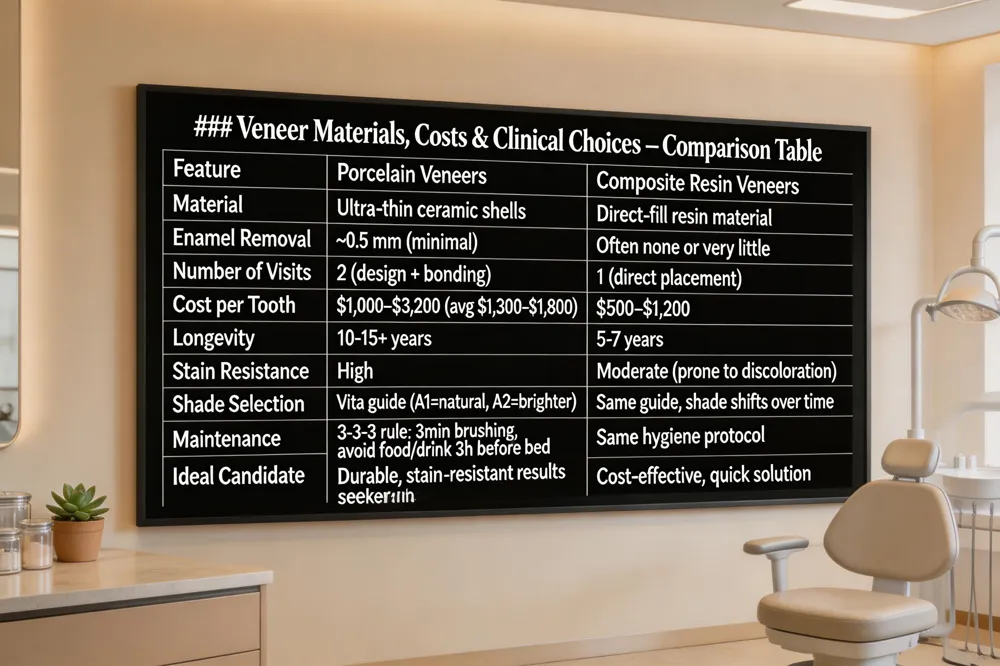 Porcelain veneers are ultra‑thin, custom‑crafted ceramic shells that mask discoloration, chips, gaps or misshapen teeth. they require minimal enamel removal (≈0.5 mm) and typically involve two visits – a digital smile‑design mock‑up and final bonding. Composite resin veneers, by contrast, are applied directly in one appointment, are more affordable, and need little or no enamel preparation, but they are less stain‑resistant and last 5‑7 years versus 10‑15+ years for porcelain. Cost varies widely: porcelain veneers range from $1,000 to $3,200 per tooth (average $1,300‑$1,800), while composite options sit between $500 and $1,200. A full‑smile makeover (six‑eight teeth) can total $7,500‑$20,000. Shade selection follows the Vita guide; A1 provides a natural, slightly lighter hue ideal for most patients, whereas A2 offers a brighter, more youthful look but may appear conspicuous on darker enamel. Finally, the “3‑3‑3” rule supports veneer longevity: brush three times daily for three minutes each, and avoid food or drink for three hours before bedtime to maintain optimal oral health.
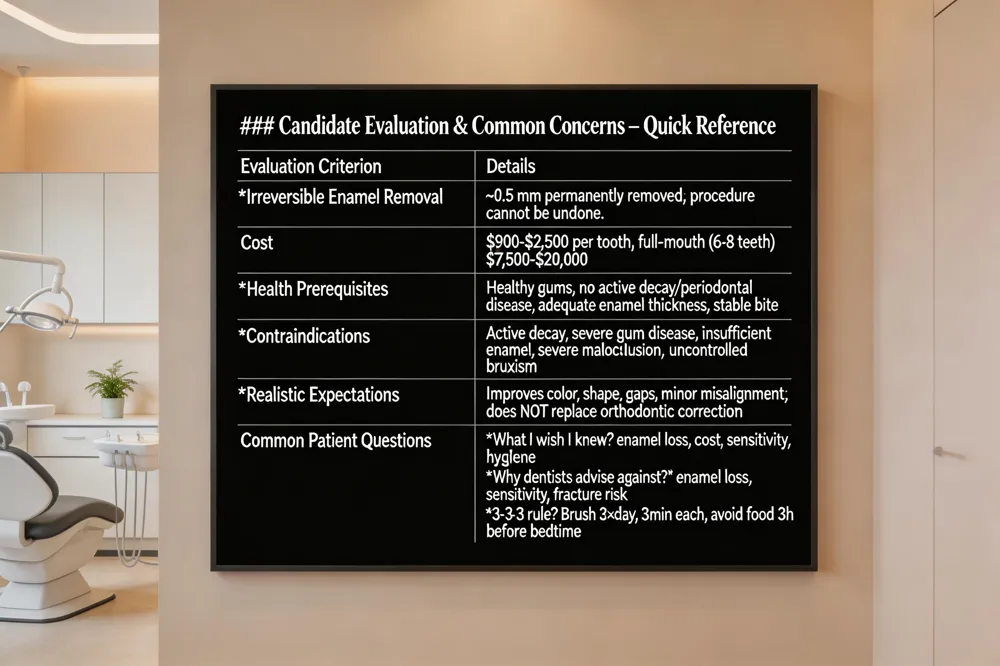 Before committing to veneers, patients should understand that a thin layer of enamel (≈0.5 mm) will be permanently removed, making the procedure irreversible. A digital smile design mock‑up can preview shape and shade, and patients should budget for the $900‑$2,500 per tooth cost and the inevitable replacement after 10–15 years. Dentists often decline veneer treatment when active decay, active gum disease, insufficient enamel, or severe malocclusion are present; these conditions can cause sensitivity, bonding failure, or future complications. Good oral health—healthy gums, no active periodontal disease, adequate enamel thickness, and a stable bite—is a prerequisite. Patients must also have realistic expectations: veneers improve color, shape, gaps, and minor misalignment but do not replace orthodontic correction or address functional problems like bruxism without a night guard. Answers to common questions:
What I wish I knew before getting veneers? I wish I’d known the irreversible enamel loss, the upfront cost, the need for a temporary trial, possible post‑placement sensitivity, and the importance of lifelong oral hygiene.
Why do dentists advise against veneers? Because irreversible enamel removal, heightened sensitivity, underlying decay or gum disease, high cost, and the risk of fracture in grinders make more conservative options preferable.
What is a cosmetic dental assessment? It is a thorough evaluation of tooth color, shape, alignment, gum health, and bite, often using digital photography and DSD software, to create a personalized, minimally invasive treatment plan.
What is the 3‑3‑3 rule for teeth? Brush three times a day for three minutes each and avoid food or drink for three hours before bedtime.
 Veneers before and after celebrities – Dental veneers can dramatically transform a celebrity’s smile, masking chips, gaps, and discoloration with a thin, porcelain or composite shell that looks natural. Before‑and‑after photos of stars such as Dua Lipa, Katie Holmes, and Freddie Freeman show how a few carefully placed veneers can create a brighter, more uniform smile while preserving tooth structure. The process typically involves minimal preparation (≈0.5 mm enamel removal), a quick digital design, and placement completed in a few appointments, giving public figures a camera‑ready grin that boosts confidence and personal branding.
Full‑mouth veneers before and after – Full‑mouth veneers correct color, shape, size and minor alignment across every visible tooth. Patients often start with yellowed, worn, spaced, or chipped teeth that lower self‑conscious. After bonding custom‑crafted porcelain shells, the teeth appear uniformly bright, evenly spaced and proportionate, delivering a youthful, harmonious look that can last 10‑15 years with proper care. Most patients report a dramatic confidence boost and a willingness to smile freely.
Porcelain veneers before and after – Before treatment, teeth may be discolored, unevenly shaped, or have gaps and black triangles. Porcelain veneers, thin ceramic shells, are bonded to the front surface, allowing changes in color, length, and contour. The result is a brighter, more uniform smile with natural translucency and a durability that resists staining.
Veneers before and after pictures – Gallery images illustrate the dramatic improvement in color, shape, and alignment achievable with skilled veneer placement. At Gentle Dentistry of Staten Island, our patient gallery showcases real results, helping prospective patients set realistic expectations and see the confidence‑boosting impact of a beautifully restored smile.
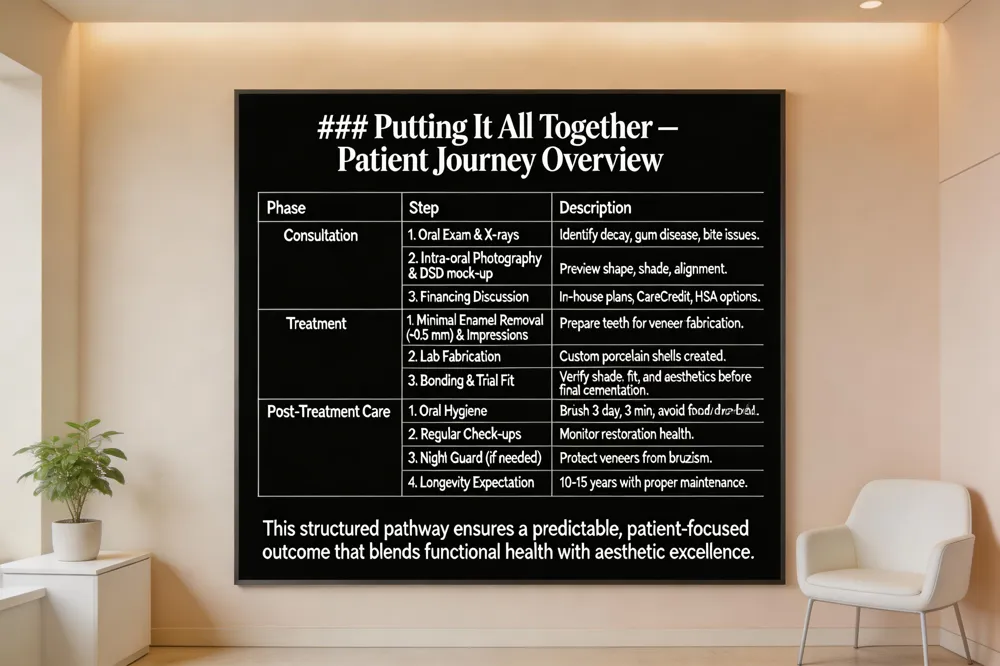 The journey begins with an initial consultation where the dentist conducts a thorough oral exam, reviews X‑rays, and records any decay, gum disease, or bite issues. High‑resolution intra‑oral photography and a digital smile design (DSD) mock‑up let you preview the proposed veneer shape, shade, and alignment before any tooth reduction. Financing options—such as in‑house plans, CareCredit, or HSAs—are discussed at this stage to match your budget to the number of veneers and any adjunctive procedures (gum contouring, orthodontics). Treatment proceeds in three appointments: (1) minimal enamel removal (≈0.5 mm) and impression taking, (2) fabrication of custom porcelain shells in the lab, and (3) bonding of the final veneers after a trial fit and shade verification. Long‑term care focuses on diligent oral hygiene, regular dental check‑ups, avoiding hard foods, and wearing a night guard if you grind; with proper maintenance porcelain veneers typically last 10‑15 years, preserving the confidence boost of your new smile.
An accurate smile assessment—examining tooth color, shape, gum health, and facial harmony—ensures veneers will meet your aesthetic goals. Gentle Dentistry of Staten Island uses digital smile design, thorough exams, and personalized planning to create your ideal result. Schedule your private consultation today and start your smile transformation now.