Even more knowledge

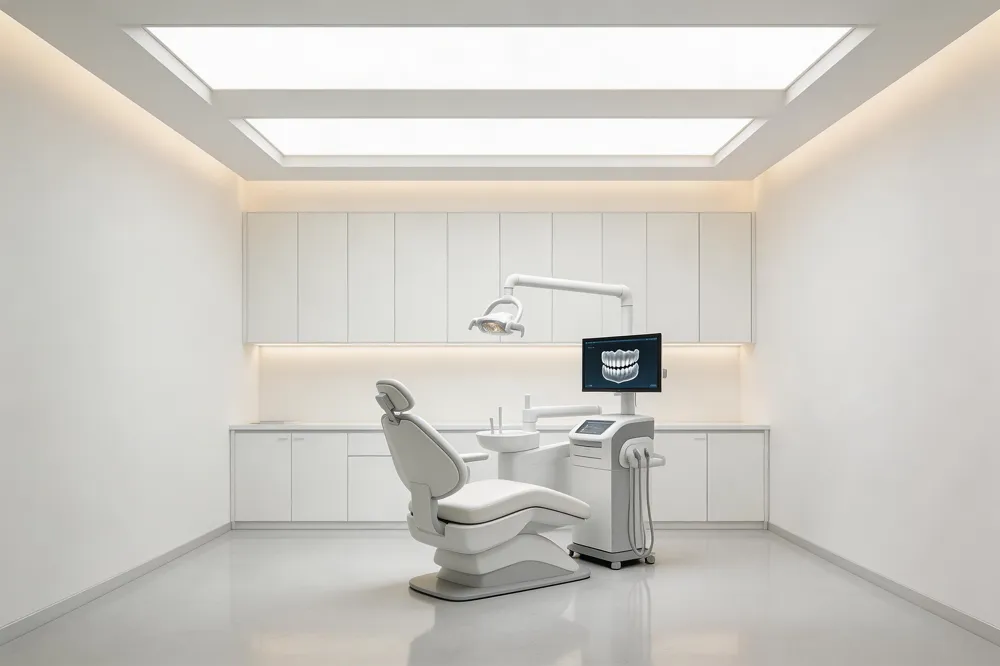
Intra‑oral scanners use structured‑light or confocal imaging to capture thousands of high‑resolution points per second, stitching them into a seamless 3‑D model of the teeth and soft tissues in seconds. The wand replaces trays and putty, eliminating material mixing, setting time, and distortion risk. Because the data are generated instantly, clinicians can view the anatomy, correct any gaps on the spot, and transmit the STL file securely to a lab or CAD/CAM system for rapid design and milling.
Patient‑centered benefits are immediate. The non‑invasive scan is painless, avoids the gag‑inducing taste of impression materials, and shortens chair time to a few minutes. Patients can see their own dentition on a screen, improving understanding, comfort, and case acceptance. Digital workflows also reduce waste and infection risk, supporting a greener, safer, practice.

Digital dentistry is transforming oral health care by replacing messy impression trays with intra‑oral scanners that capture precise 3‑D images in seconds. These scanners eliminate patient discomfort, reduce gag reflexes, and produce highly accurate models (often within 10‑20 µm), leading to better‑fitting crowns, bridges, and orthodontic appliances. Real‑time visualizations allow dentists to explain treatment plans instantly, improving communication and case acceptance. Instant electronic transmission to labs shortens turnaround times from weeks to days, enabling same‑day restorations and reducing chair‑side time by up to 30 %. The workflow also cuts material waste, supporting eco‑friendly practices. Patient feedback consistently highlights greater comfort, reduced anxiety, and higher satisfaction with digital scanning compared with traditional putty impressions. Together, these advancements deliver a faster, gentler, and more efficient dental experience that aligns with modern, patient‑centered care.

Gentle Dentistry can benefit from scanners that combine speed, accuracy, and an easy workflow. Best intra‑oral scanner – Independent reviews consistently rank the iTero Lumina as the top choice for its high‑precision, fast capture, cloud‑based data management, and seamless CAD/CAM integration; close alternatives include 3Shape’s TRIOS 6 (AI‑driven diagnostics) and the budget‑friendly Medit i900 Mobility. Types of intra‑oral scanners – Three main technological categories exist: confocal microscopy scanners (single‑point focus for exceptional detail), optical wand scanners (structured‑light or laser projection for rapid data acquisition), and active wavefront‑sampling scanners (advanced sampling for comprehensive surface capture). Price range – Certified pre‑owned units run $10,000‑$17,000, with entry‑level models around $9,995; examples are Alliedstar AS 260 ($12,490), AS 200E ($13,995), Sensa wireless ($16,995), and Shining 3D Aoralscan Elite ($10,999). Selection factors – Practices should weigh accuracy (micron‑level), scan speed, ergonomic design, integration with existing CAD/CAM, training/support packages, and long‑term cost savings from reduced material waste. For Gentle Dentistry, the iTero Lumina best aligns with patient‑centered, high‑quality care.

Intra‑oral scanners capture precise 3‑D digital impressions in seconds, eliminating the mess and distortion of alginate or silicone trays. Because no material is placed in the mouth, patients experience far greater comfort, reduced gag reflex, and lower anxiety—especially children and anxious adults. The rapid scan (≈3–5 minutes per arch) cuts chair‑time dramatically, allowing the dentist to move swiftly from diagnosis to treatment planning. Digital files integrate instantly with CAD/CAM software, enabling same‑day design and milling of crowns, bridges, veneers, and Invisalign® aligners, as well as virtual orthodontic setups and implant guides. The scanner’s optical engine projects structured light or laser patterns, recording thousands of points per second; AI‑driven stitching creates a real‑time 3‑D model that can be edited on the spot. Limitations include a high upfront cost, a learning curve for optimal scanning technique, the need for a dry field, and robust data‑security measures to protect patient records. Overall, intra‑oral scanning improves accuracy, patient experience, workflow efficiency, and interdisciplinary communication.

Accuracy and patient experience – Intra‑oral scanners capture 3‑D images with sub‑20 µm precision, often surpassing the dimensional distortion of silicone or alginate impressions. Patients avoid trays, taste, and gag reflex, reporting comfort scores up to 9/10 versus 6.5/10 for traditional methods.
Clinical study outcomes – Meta‑analyses show digital scans produce marginal gaps under the 120 µm clinical threshold and comparable linear deviations for short‑span restorations. In implant studies, fully edentulous digital impressions matched conventional accuracy (mean deviation 8 µm, P = 0.72), while partially edentulous cases favored conventional methods (52 µm, P = 0.03). Real‑time visualization enables immediate correction, reducing repeat visits.
Adoption rates – Roughly 40‑50 % of dentists now employ intra‑oral scanners, a figure rising as workflows integrate CAD/CAM and same‑day milling. The technology’s speed, reduced chair‑time, and patient‑centred benefits drive this rapid uptake.

Intra‑oral scanners dramatically cut material waste by eliminating disposable trays, alginate, polyvinylsiloxane gels and gypsum stone models. The digital workflow replaces physical impressions with electronic STL files that can be stored indefinitely, reducing the volume of single‑use plastics and chemical waste that traditional practices generate. Because scans are captured in seconds and Instant transmission of digital data to dental laboratories, the clinical workflow is streamlined: dentists can verify margins in real time, correct any omissions on the spot, and share the data securely with specialists, which shortens turnaround times and improves patient communication. These efficiencies support sustainable dentistry initiatives—lowering the practice’s carbon footprint, decreasing storage space for physical models, and aligning with eco‑friendly policies that many patients now expect from modern dental offices.
Intra‑oral scanners capture a three‑dimensional digital image of the teeth and gums in seconds, replacing messy alginate or silicone trays. The resulting digital impression eliminates the “gooey mess,” reduces gag‑reflex incidence, and provides sub‑20‑micron accuracy that translates into better‑fitting crowns, bridges and orthodontic appliances. Scans are viewed in real time, allowing the dentist to explain anatomy and treatment options on a screen, while the file is instantly sent to the laboratory for faster turnaround or same‑day milling. Because no disposable trays or stone casts are needed, material waste and environmental impact drop dramatically. Gentle Dentistry of Staten Island embraces this technology, matching its patient‑centered, gentle approach with a modern, efficient workflow that improves comfort, communication and clinical outcomes for every patient and long‑term oral health in the community today.