Even more knowledge

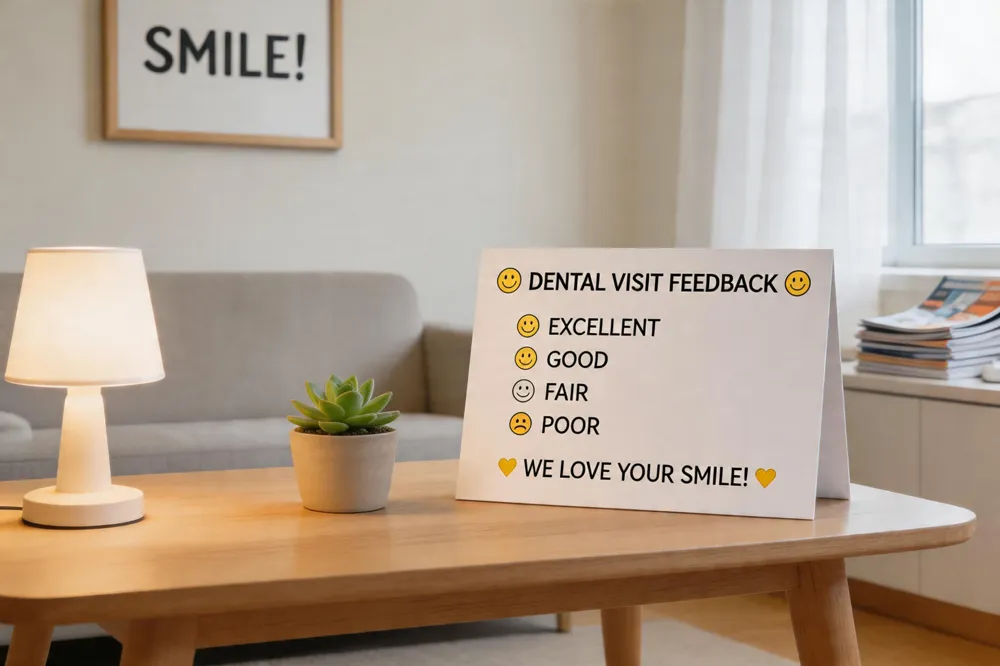
Patient feedback is the cornerstone of trust in modern dentistry. When prospective patients read authentic reviews that describe empathetic staff, clear communication, and a welcoming environment, they feel reassured and less anxious about choosing a provider. These honest testimonials also shape a practice’s online reputation; positive reviews boost search‑engine visibility and act as powerful word‑of‑mouth advertising, while constructive criticism signals areas that need attention. By continuously gathering, reviewing, and acting on patient input—through surveys, QR‑code prompts, or post‑visit emails—practices create a feedback loop that drives real‑time improvements in scheduling, billing transparency, and clinical interaction. This relentless cycle of listening, adjusting, and communicating changes back to patients not only elevates the patient experience but also strengthens loyalty, referrals, and long‑term practice growth.

Patient reviews are a powerful driver of dental practice growth because they provide authentic, unfiltered insights that prospective patients trust more than any marketing material. Five‑star examples illustrate what resonates most:
How to write a good review: start by naming the dentist or staff (e.g., Dr. Louis Sterling, Dr. Sara Skurnick, front‑desk team) and the visit type. Describe the treatment—cleaning, Invisalign, crown, cosmetic work—and emphasize the practice’s gentle approach, clear communication, pain‑free experience, and any follow‑up care that exceeded expectations. Mention concrete outcomes like a healthier smile or increased confidence, and end with a concise recommendation for others.
Online reputation and SEO: positive reviews boost search‑engine rankings because algorithms prioritize fresh, user‑generated content. A steady stream of 5‑star reviews improves visibility on Google, Yelp, and health‑care directories, attracting new patients and reinforcing trust. Responding promptly to all feedback—thank‑you notes for praise and constructive replies to concerns—demonstrates transparency, encourages repeat visits, and fuels the virtuous cycle of continuous improvement and practice growth.

Strategies for effective dentist‑patient communication: a literature review Effective dentist‑patient communication hinges on clear, concise, and complete information exchange that is organized and patient‑centered. Dentists should use plain, jargon‑free language, supportive body language—including eye contact, gestures, and facial expressions to convey empathy and build trust. Incorporating visual aids and allowing ample time for questions encourages shared decision‑making and reduces dental anxiety. Leveraging secure messaging platforms for follow‑up and reminders promotes continuity of care while lowering visit costs. Ultimately, a patient‑centered approach that respects individual preferences and pace leads to higher adherence, satisfaction, and better oral‑health outcomes.
Non verbal communication in dentistry Non‑verbal communication is a cornerstone of dental care, conveying confidence, empathy, and reassurance before a single word is spoken. A dentist’s posture, open gestures, steady eye contact, and a genuine smile signal professionalism and create a calm, welcoming atmosphere that eases patient anxiety. Tone of voice and measured speech further reinforce safety, especially when masks obscure facial cues. The clinic’s clean, organized environment and the coordinated body language of the whole team send additional signals of competence and trustworthiness. By aligning verbal messages with consistent non‑verbal cues, dentists build stronger relationships, improve compliance, and achieve better treatment outcomes.
Why is it important to have good communication skills in the dental office Good communication builds trust, keeping patients returning and encouraging adherence to treatment recommendations. Clear, lay‑person explanations of options, risks, and after‑care instructions reduce anxiety and increase satisfaction. Active listening and empathy make patients feel heard, while consistent positive communication among dentists, hygienists, and staff creates a cohesive, transparent environment that minimizes misunderstandings. Effective communication thus improves clinical outcomes, lowers legal risk, and enhances overall practice efficiency.

Effective dental practice management hinges on reliable feedback mechanisms. [ADA Dental Survey](https://www.ada.org/resources/practice/practice-management/patient-satisfaction-surveys) – The American Dental Association’s (ADA) Dental Survey is a comprehensive research tool that gathers data on dentist income, practice structure, reimbursement, and patient‑experience trends across the United States. Conducted by the ADA’s Health Policy Institute, it provides quarterly and annual reports that help practices benchmark performance, understand workforce shifts, and make informed decisions about staffing, pricing, and service offerings. Its patient‑satisfaction modules evaluate comfort, wait times, and communication effectiveness, enabling Gentle Dentistry of Staten Island to align its personalized, transparent care model with industry best practices.
CAHPS Dental Plan Survey – This standardized, anonymous questionnaire from the U.S. Agency for Healthcare Research and Quality measures patients’ experiences with dental care and dental plans, covering access, communication, courtesy, coverage, and overall satisfaction. Results are shared with providers to pinpoint strengths and improvement areas, fostering patient‑centered care. Gentle Dentistry uses this annual feedback to ensure services remain gentle, transparent, and high‑quality.
[Dental Patient Survey](https://www.ada.org/resources/practice/practice-management/patient-satisfaction-surveys) – A structured questionnaire that captures every aspect of the patient journey—from scheduling and clinic environment to care quality and team communication. Using a mix of multiple‑choice, Likert‑scale, and open‑ended items (typically 4‑5 minutes), the survey is tailored to visit type (new versus routine) and prioritizes critical questions to maximize completion. Anonymity, opt‑out options, and regular team review turn feedback into actionable changes and boost loyalty.
[Dental Patient Satisfaction Survey Template](https://www.smartsurvey.com/templates/surveys/healthcare/dental-patient-satisfaction-survey-template) – Begin with a brief thank‑you and confidentiality note, collect short demographics, then ask concise Likert‑scale statements on appointment ease, cleanliness, staff courtesy, and treatment explanation clarity. Include open‑ended prompts for highlights and suggestions, finish with an overall rating and likelihood‑to‑recommend question.
[Dental Satisfaction Questionnaire (DSQ)](https://pmc.ncbi.nlm.nih.gov/articles/PMC11225999/) – A validated outcome measure created by Davies and Ware (1982) focusing on overall satisfaction, communication, and perceived treatment quality. Its brief item set fits seamlessly into workflows, allowing Gentle Dentistry to monitor experience and maintain its reputation for gentle, personalized care.
[Patient Satisfaction Survey Examples & Questions](https://hellopearl.com/blog/4-ways-dental-patient-satisfaction-surveys-can-benefit-your-practice) – Sample items: “On a scale of 1‑10, how easy was it to schedule your appointment?” “How long did you wait before being seen?” “Did the provider listen and explain your treatment plan clearly?” “Rate the friendliness of front‑desk staff.” “Would you recommend us to family or friends?” Demographic and visit‑frequency questions, environment queries, treatment clarity, cost‑fairness, and an open‑ended comment field round out the instrument, ensuring comprehensive insight for continuous improvement.

Patient‑centered feedback is the backbone of a thriving dental practice. One practical tool for real‑time monitoring is the 5 P’s of patient satisfaction—a quick hourly rounding checklist: Pain (ask about any discomfort and address it promptly), Position (ensure the patient’s chair or headrest is comfortable), Potty (offer bathroom assistance when needed), Periphery (keep call lights, water, phone, and tissues within reach), and Pump (verify any IV or medical equipment is functioning). By consistently applying the 5 P’s, staff create a safe, comfortable environment that translates into higher trust and loyalty.
The 80/20 rule (Pareto principle) shows that roughly 80 % of a practice’s revenue comes from the top 20 % of patients—those who schedule regular preventive care, undergo extensive restorative or orthodontic work, and refer new patients. Targeting this high‑value segment with personalized communication, flexible scheduling, and transparent pricing maximizes profitability while fostering long‑term relationships.
Rating communication skills reveals that sociodemographic factors matter: female dentists, private‑practice clinicians, older and more experienced providers, and those with higher education tend to score higher on communication competence. Yet many practitioners have never attended formal training, citing time, cost, and perceived relevance as barriers. A structured dental communication course can bridge this gap by teaching scripted phone calls, visual aids for treatment plans, and compassionate handling of sensitive topics. When the entire team masters these techniques, patient education improves, case acceptance rises, and the overall patient experience becomes more transparent, empathetic, and rewarding for both patients and the practice.

The 3‑3‑3 rule for teeth is a popular mnemonic that suggests brushing three times a day, for three minutes each session, and waiting three hours after the last meal before bedtime. While easy to remember, most dental professionals, including those at Gentle Dentistry of Staten Island, recommend the evidence‑based routine of brushing twice daily for two minutes with a soft‑bristled brush, daily flossing, and regular check‑ups. Over‑brushing or brushing immediately after acidic foods can harm enamel, so the three‑hour “no‑eating‑before‑bed” pause mainly allows saliva to neutralize acid.
In post‑operative pain management, the 3‑3‑3 rule refers to taking three 200 mg ibuprofen tablets every three hours for a maximum of three days to control inflammation—the primary source of dental pain. This regimen should be used only as directed and adjusted for individual health needs. Both rules illustrate how simple, patient‑centered guidelines can improve oral health and recovery when applied responsibly.

Modern dental practices are turning to instant electronic surveys that trigger within minutes of a visit, delivering real‑time insights while the experience is fresh. QR‑code feedback stations placed in the lobby let patients quickly submit comments on staff courtesy, wait times, or treatment clarity without needing a device of their own. Secure messaging platforms enable personalized follow‑up, allowing clinicians to address lingering concerns, share post‑procedure instructions, and confirm satisfaction in a HIPAA‑compliant environment. Meanwhile, AI‑driven analytics aggregate survey, review, and appointment data, flagging trends such as recurring billing confusion or anxiety triggers, and recommending targeted staff training or workflow adjustments. Together, these technologies create a continuous feedback loop that empowers patients, refines policies, and elevates the overall quality of dental care.
Continuous feedback loops turn patient comments into actionable data that dental practices can review on a regular cadence. By analyzing reviews, surveys, and post‑visit questionnaires, clinics identify trends—such as wait‑time concerns, communication gaps, or preferences for flexible scheduling—and translate those insights into policy changes. When policies are aligned with what patients truly value—clear cost explanations, gentle treatment techniques, and a welcoming environment—trust grows and return visits increase. Gentle Dentistry of Staten Island embraces this model, systematically collecting feedback, adjusting office procedures, and openly communicating improvements, proving that patient voices directly shape a compassionate, patient‑centered practice for sustained growth and community health.