Even more knowledge

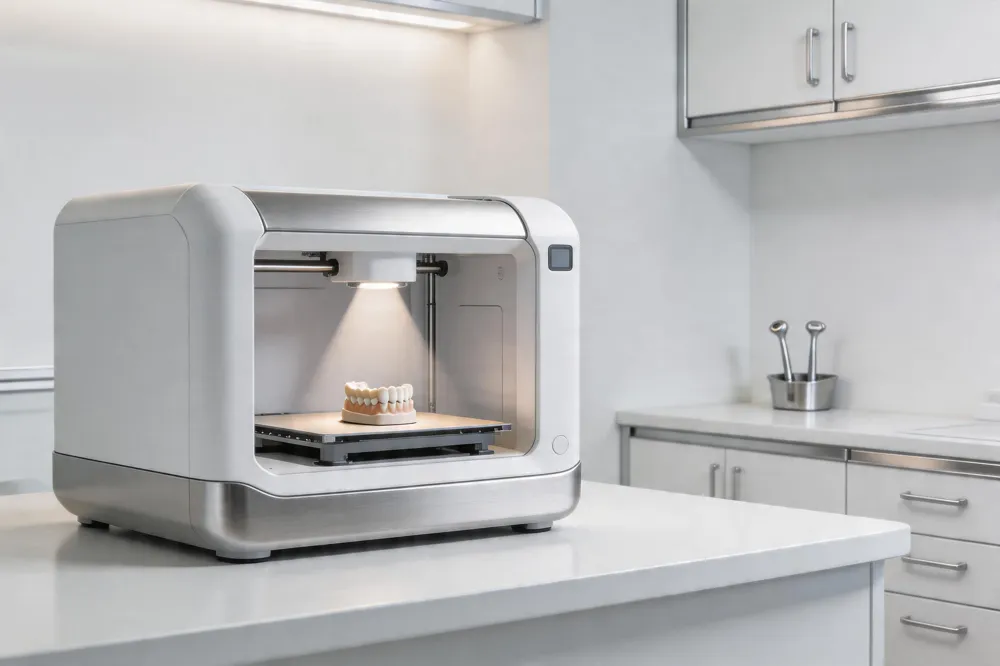
Digital intra‑oral scanning has replaced messy impressions, capturing micron‑level anatomy that feeds directly into CAD software. This creates a fully digital workflow: scan, design, print, and post‑process all within the office, eliminating stone models and multiple lab visits. Patients benefit from same‑day restorations, reduced appointments, and immediate visual previews of their final tooth, which improves case acceptance and overall satisfaction. Gentle Dentistry of Staten Island embraces this patient‑centered approach by integrating intra‑oral scanners, FDA‑cleared biocompatible resins, and a chairside 3D‑printing system that can produce crowns, bridges, and surgical guides in under an hour. The practice’s commitment to modern technology not only speeds treatment but also enhances comfort, transparency, and long‑term oral health outcomes.
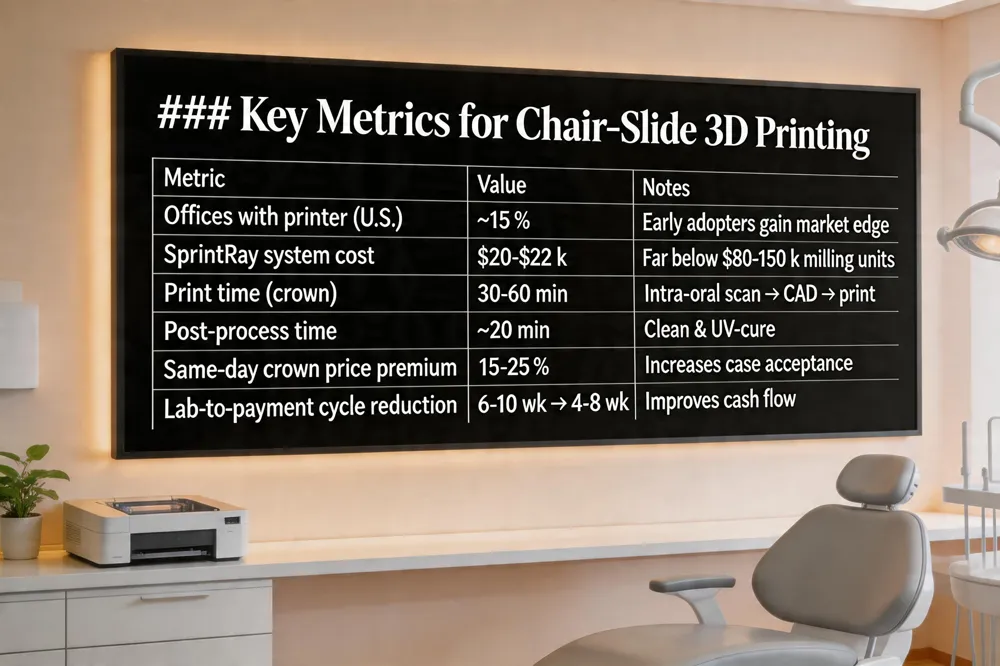 In the United States roughly 15 % of dental offices have installed a chairside 3D printer, giving early adopters a clear market edge. The workflow is simple: an intra‑oral scan is captured, the restoration is designed in CAD, printed in 30‑60 minutes, and then post‑processed (cleaned and UV‑cured) for another 20 minutes—allowing same‑day delivery of crowns, bridges, surgical guides, night guards and more. A complete SprintRay system costs $20‑$22 k, far below the $80‑$150 k price tag of chairside milling units, yet it yields comparable accuracy (25‑50 µm layers) and biocompatible, FDA‑cleared resins. Reducing the lab‑to‑payment cycle from 6‑10 weeks to 4‑8 weeks improves cash flow, while same‑day crowns can be priced 15‑25 % higher, boosting case acceptance.
Is 3D printing used in dentistry? Yes—it is now a standard tool for custom crowns, bridges, dentures, orthodontic appliances and surgical guides, delivering precise, patient‑specific parts in hours.
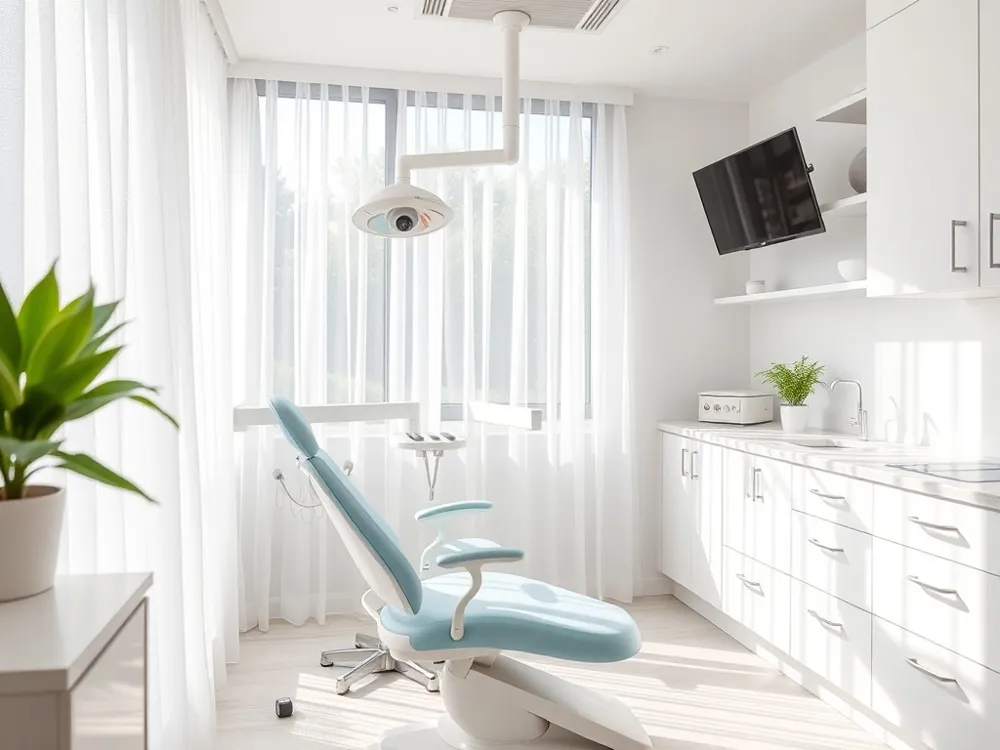
What is a stomatology chair (dental chair)? It is a powered, adjustable seat that positions the patient comfortably for oral procedures, integrating light, water/air supply and delivery points for handpieces. Classified as a Class I FDA device, modern chairs offer motorized ergonomics and accessories that support a gentle, patient‑centered experience.
What are the benefits of 3D‑printed dental models for a dental practice? They provide accurate physical replicas for diagnosis, treatment planning and patient education, cut turnaround time versus stone casts, lower material waste, and enable rapid redesign and re‑printing, enhancing flexibility and patient confidence.
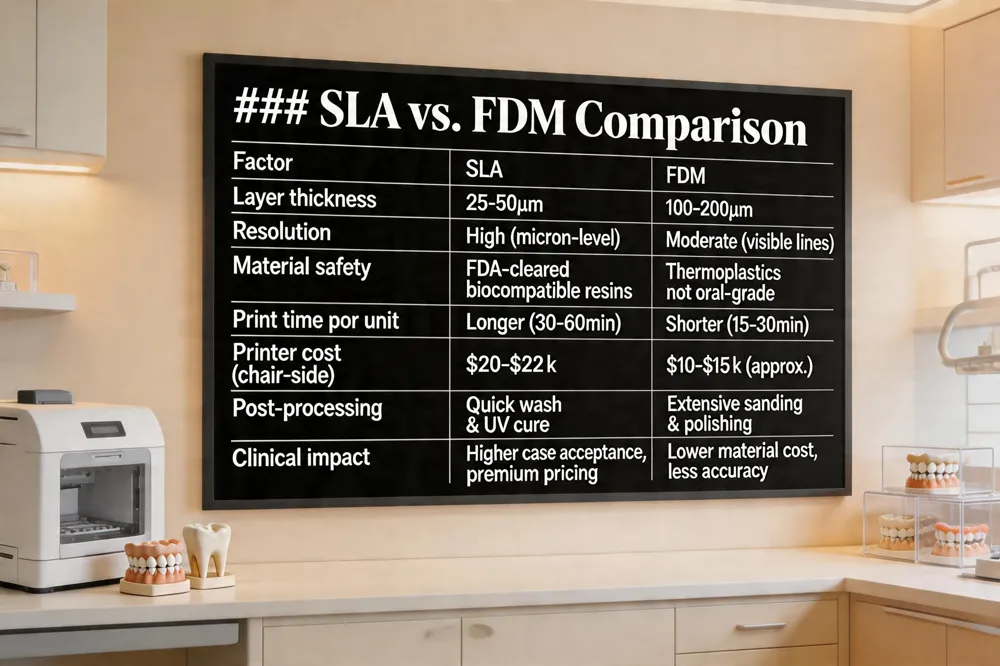 SLA (Stereolithography) is the preferred technology for dental restorations. Its UV‑cured photopolymer resins achieve layer thicknesses of 25‑50 µm, delivering the high resolution needed for precise marginal fit and intricate geometries, while FDM typically prints at 100‑200 µm, leaving visible layer lines. SLA resins are FDA‑cleared for intra‑oral use, offering biocompatibility and mechanical strength that meet clinical standards, whereas FDM thermoplastics lack the same oral‑grade certifications. The smooth surface of SLA prints reduces post‑processing time—only a brief wash and UV cure are required—whereas FDM parts often need extensive sanding and polishing. Although SLA printers cost more upfront (often $20‑$22 k for a chairside system) and have longer print times per unit, the superior accuracy and reduced chair‑side adjustments translate into higher case acceptance and the ability to charge a 15‑25 % premium for same‑day crowns. Overall, SLA’s resolution, material safety, and finish outweigh FDM’s speed and lower material cost for dental applications.
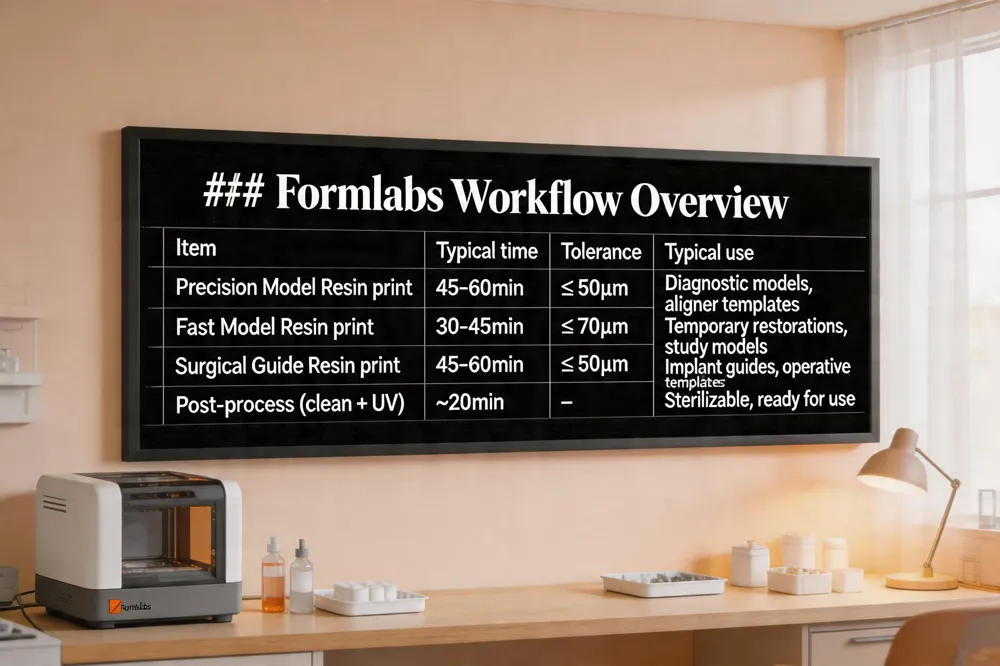 Formlabs dental models are printed from high‑precision resins such as Precision Model Resin and Fast Model Resin, delivering surface tolerances within 50 µm. Clinicians use these accurate, patient‑specific models for diagnostic planning, clear‑aligner templates, restorative design, and the fabrication of splints, custom trays, and surgical guides. The Form 4B/4BL printers can produce a model in 45–60 minutes, enabling a same‑visit workflow that shortens orthodontic and prosthetic turnaround times.
3‑D‑printed surgical guides are custom‑designed templates generated from a digital treatment plan. After an intra‑oral or CBCT scan, the dentist designs the exact implant trajectory, prints the guide in biocompatible Surgical Guide Resin, and sterilizes it for use. The guide fits snugly over the teeth or bone, directing drills or implants with millimetric precision, reducing operative time and intra‑operative adjustments, and improving patient safety.
A Formlabs Surgical Guide is a resin‑printed, patient‑specific device fabricated on Formlabs SLA printers using FDA‑cleared Surgical Guide Resin. Designed in dental CAD software, exported to PreForm, printed, post‑processed, and sterilized, it provides a stable press‑fit and accurate sleeve offsets that guide implant placement, delivering predictable outcomes and a more comfortable experience for patients at practices like Gentle Dentistry of Staten Island.
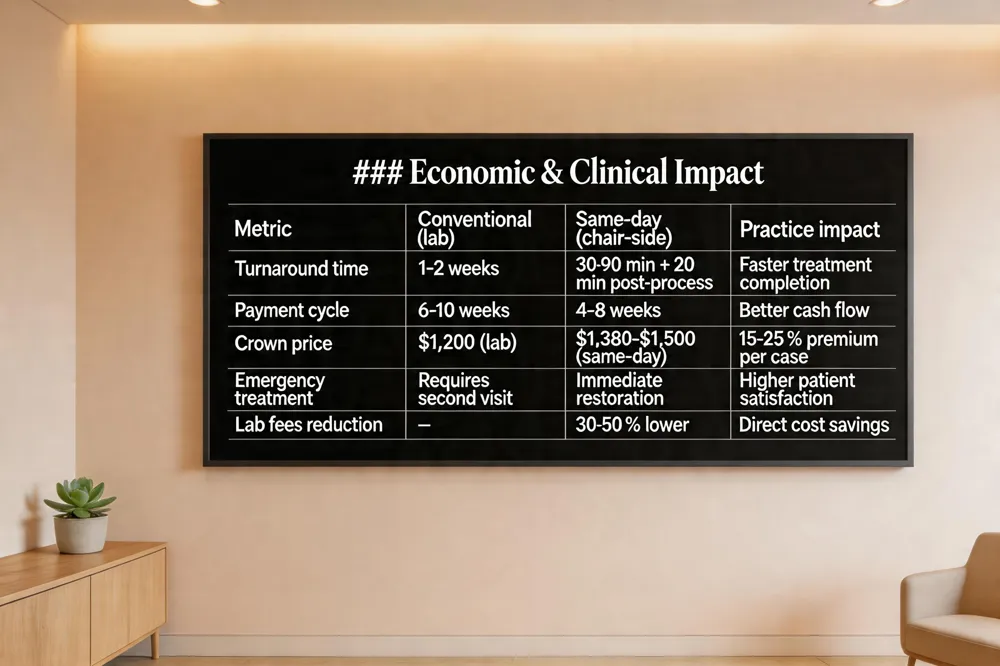 Chairside 3D printing compresses the traditional 1‑2‑week lab turnaround to a 30‑90‑minute print plus ~20 minutes of post‑processing, allowing a crown to be fabricated and placed while the patient is still in the chair. This dramatic reduction in turnaround time not only speeds treatment but also enables same‑day pricing premiums of 15‑25 % (e.g., $1,380‑$1,500 versus $1,200 for a conventional lab crown), improving practice revenue per case. Faster delivery shortens the interval from preparation to payment from 6‑10 weeks to 4‑8 weeks, strengthening cash flow and reducing accounts‑receivable lag. The ability to produce restorations on‑site also supports emergency treatment—such as a cracked tooth on a Friday—by eliminating the need for a second lab visit and allowing the clinician to restore function in a single appointment.
Benefits of 3D‑printed dental models: Printed models give clinicians highly accurate, physical replicas of a patient’s oral anatomy, enhancing diagnosis, treatment planning, and patient education. They enable rapid prototyping of crowns, bridges, orthodontic appliances, and surgical guides, cutting turnaround time compared with traditional stone casts. Tangible models improve communication, allowing patients to visualize procedures and feel more confident. The digital workflow reduces labor‑intensive lab steps and material waste, lowering overall practice costs, and the ease of modifying and re‑printing models supports a flexible, patient‑centered approach to restorative and orthodontic care.
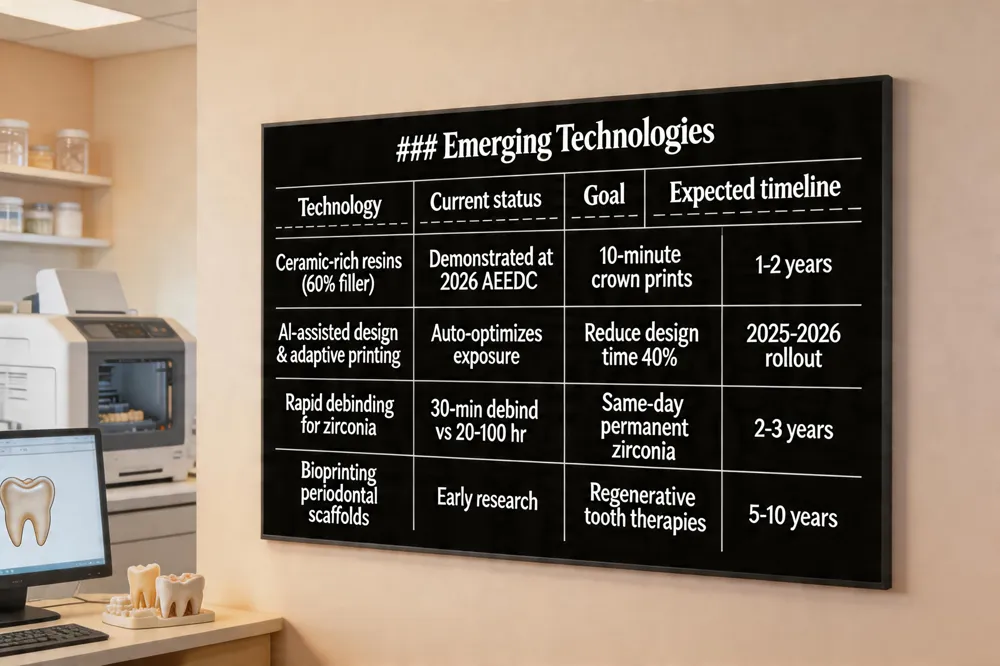
The next wave of chair‑side 3D printing aims to compress crown fabrication to ten‑minute print cycles using ceramic‑rich resins with over 60% filler, as demonstrated at the 2026 AEEDC showcase.
AI‑assisted design and adaptive printing tools now auto‑optimize layer exposure, support structures, and geometry in real time, cutting design time by up to 40% and improving fit.
A breakthrough rapid‑debinding process for zirconia—porous graphite felt, enhanced heat transfer, and vacuum‑assisted gas removal—shrinks the traditionally 20‑100‑hour debinding step to under 30 minutes, opening the door to true same‑day permanent zirconia restorations.
Parallel research in bioprinting explores cell‑laden bio‑inks for periodontal scaffolds and future tooth regeneration, moving beyond hard‑material crowns.
What is the Rule of 7 in dentistry? The Rule of 7 recommends that children receive their first orthodontic evaluation around age seven, allowing early detection of bite issues and timely intervention.
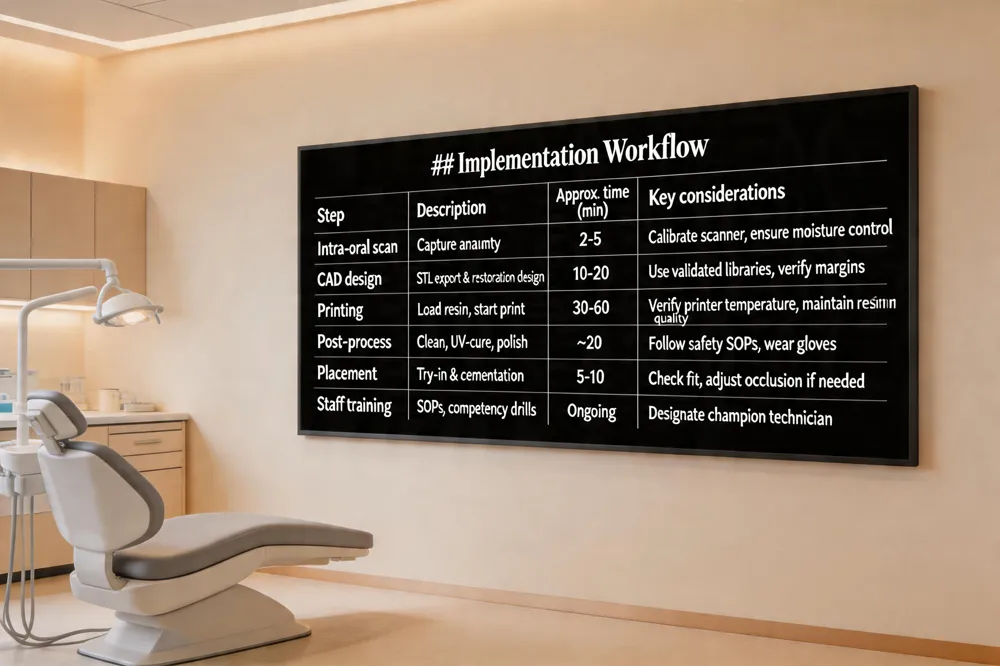 A smooth, patient‑centered adoption of chair‑side 3D printing begins with a clear digital workflow: scan the tooth with an intra‑oral scanner, export the STL file to CAD software, design the restoration, send the file to the printer, print (30‑60 min for a crown, then post‑process (clean, UV‑cure, polish) for another 20 min before same‑day placement. Staff training is essential; designate a champion technician, create SOPs for scanner calibration, printer maintenance, resin handling, and safety protocols, and schedule regular competency drills. ROI is realized quickly: the $20‑$22 k printer costs far less than $80‑$150 k milling units, reduces lab fees by 30‑50 %, and enables same‑day crowns priced 15‑25 % higher, improving cash flow and patient satisfaction. Communicate these benefits to patients by highlighting faster appointments, no temporary crowns, and the practice’s commitment to gentle, comfortable care. This aligns perfectly with Gentle Dentistry’s philosophy of personalized, efficient, and stress‑free treatment.
Gentle Dentistry of Staten Island is marrying the speed of chairside 3D printing with the precision of SLA/DLP resin technologies to deliver restorations that fit within 50 µm of the preparation and are ready in a single visit. A typical crown now moves from intra‑oral scan to cured restoration in 30‑60 minutes of printing plus 20 minutes of post‑processing, eliminating the 1‑2‑week lab lag and giving patients same‑day comfort and aesthetics. By adopting this workflow early—only about 15 % of U.S. practices have done so—Gentle Dentistry gains a clear competitive edge in case acceptance and cash‑flow, able to charge a 15‑25 % premium for the convenience of immediate service. The practice’s commitment to continuous innovation is evident in its integration of AI‑assisted design, capsule‑based resin systems, and ongoing staff training, ensuring that every patient experiences the gentle, patient‑centered care that modern digital dentistry promises.