Even more knowledge

Missing teeth affect more than just appearance; they compromise chewing ability, speech, bite alignment, and overall oral health. Tooth loss can lead to shifting of adjacent teeth, jawbone deterioration due to lack of stimulation, and increased risk of gum disease and further tooth loss. Early replacement helps prevent these complications and maintains facial structure.
Restorative dentistry focuses on repairing and replacing damaged or missing teeth to restore proper function, comfort, and aesthetics. Treatments range from tooth-colored fillings and crowns to bridges, dentures, and dental implants. These procedures improve chewing, speaking, and help preserve oral health.
Losing teeth reduces the jawbone's stimulation, leading to bone resorption. This bone loss alters facial appearance and can cause future dental complications. Missing teeth also impair nutrition by limiting chewing efficiency and affect speech clarity. Restorative dentistry addresses these issues by restoring tooth structure and oral function, enhancing both health and quality of life.

Dental implants are widely regarded as the best option for replacing missing teeth. They involve placing a titanium post into the jawbone, which serves as a durable artificial root. This method offers a natural look and feel, restoring both appearance and chewing function closely mimicking real teeth.
Dental implants integrate with the jawbone, providing excellent stability. They preserve bone health by stimulating the jawbone during chewing, preventing bone loss that occurs with missing teeth. Implants do not require altering adjacent healthy teeth, unlike some bridges, making them more conservative. The typical process includes implant placement, healing over several months for osseointegration, and final restoration with crowns or prosthetics. Although implants require a higher initial investment and longer treatment time, they offer superior longevity and comfort.
Bridges are fixed prosthetic devices that replace one or more missing teeth by anchoring artificial teeth to adjacent natural teeth, which are often reshaped to hold crowns. Bridges provide quicker restoration and have a lower upfront cost compared to implants. However, they do not prevent bone loss under the missing tooth area and may compromise the health of supporting teeth over time.
Dentures are removable prosthetics that replace multiple or all teeth in an arch. Partial dentures fill gaps when some natural teeth remain, while complete dentures replace entire upper or lower arches. They are more affordable and non-invasive but less stable than implants or bridges. Dentures require daily maintenance and periodic adjustments due to changes in the mouth's shape.
These combine the benefits of implants and dentures by anchoring dentures on dental implants for enhanced stability and function. This option helps prevent bone loss and reduces slipping issues common with traditional dentures, improving comfort and chewing efficiency.
Designed for full-arch tooth replacement, the All-on-4 method uses four strategically placed implants to support an entire row of fixed teeth. This can often be done with same-day placement, offering immediate function. It is ideal for patients seeking a permanent, fixed solution for extensive tooth loss.
Choosing the best restoration depends on the number of missing teeth, jawbone health, patient preferences, treatment timeline, and budget. Consultation with dental professionals ensures a personalized approach to restoring oral health and confidence.

Dentists offer several effective dental restoration options suited to the patient's unique needs.
Dental Implants involve surgically placing a titanium post into the jawbone, which acts as an artificial tooth root. After healing and integration with the bone, a custom crown is attached, creating a durable and natural-looking tooth replacement.
Dental Bridges replace a missing tooth by anchoring a false tooth to the crowns fitted on adjacent natural teeth. This fixed solution restores chewing and appearance but requires reshaping nearby teeth.
Removable Dentures enable replacement of multiple missing teeth. Partial dentures clip onto remaining teeth, while full dentures replace all teeth in an arch. They are removable for cleaning and offer a more affordable, less invasive option than implants.
Temporary Solutions like same-day or one-day dentures provide immediate restoration while waiting for permanent treatments. These improve aesthetics and function briefly but are not long-lasting.
The best approach depends on oral health, bone density, lifestyle preferences, and budget, with dentists carefully evaluating these factors before recommending treatment.
Dentists utilize various materials depending on the restoration type and desired balance of durability, aesthetics, and biocompatibility.
Amalgam is a durable metal alloy often used for fillings in posterior teeth but is less visually appealing.
Composite Resin is tooth-colored and widely used for fillings and dental bonding, offering a natural look but with somewhat less strength than metals.
Porcelain and Zirconia Ceramics are strong, stain-resistant, and highly aesthetic materials commonly used for crowns, inlays, onlays, and veneers.
Gold provides excellent strength and durability for crowns and bridges and is biocompatible, though its metallic color limits cosmetic use.
Titanium is the preferred metal for dental implants, due to its compatibility with bone and ability to fuse through osseointegration.
These materials enable dental professionals to customize dental restoration that restore function, comfort, and appearance effectively.
The restoration process begins with a thorough evaluation including imaging and health assessment.
Recovery and longevity vary by procedure but all aim to restore chewing, speech, and aesthetics while preserving oral health.
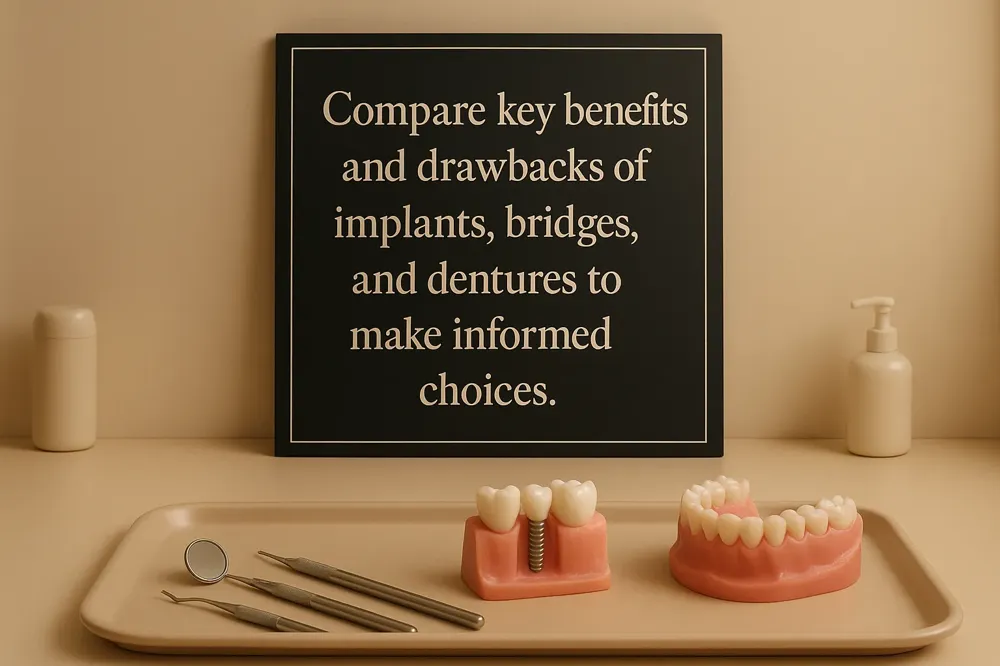
Benefits of dental implants are widely regarded as the gold standard for tooth replacement due to their natural appearance and function. They involve surgically inserting a titanium post into the jawbone, which then fuses with the bone to provide a strong foundation for a crown, bridge, or denture. Implants preserve jawbone health by stimulating bone growth, preventing the bone loss typically associated with missing teeth. They offer superior durability and can last a lifetime with proper care. However, implants require a surgical procedure, have a longer treatment timeline involving healing periods that can span several months, and present higher upfront costs. Good bone density and overall health are essential for candidates.
Dental bridges explained serve as a fixed, non-removable solution to replace one or a few missing teeth by anchoring artificial teeth to adjacent healthy teeth that have been reshaped and crowned. They provide immediate restoration of aesthetics and chewing function without surgery and tend to be less costly than implants initially. The drawbacks include the need to alter healthy neighboring teeth, which may increase the risk of decay and require more maintenance. Bridges do not prevent bone loss beneath the missing tooth site since they do not stimulate the jawbone. Their typical lifespan ranges between 5 to 15 years.
Dentures for tooth replacement, both partial and complete, are removable dental appliances that replace multiple missing teeth on a gum-colored base. They are the most affordable and non-invasive option, suitable for extensive tooth loss or patients who cannot undergo surgery. Dentures, however, may cause discomfort, have a tendency to shift or slip during speaking and eating, and can accelerate bone loss over time due to the lack of stimulation to the jawbone. They require daily cleaning and periodic adjustments or replacement every 5 to 10 years. Implant-supported dentures offer improved stability but involve additional procedures.
Choosing the best restorative option depends on individual factors such as oral health, number and location of missing teeth, budget, lifestyle, and long-term goals. Consulting with a Dental implants vs dentures and bridges professional can provide personalized advice tailored to each patient's needs and circumstances.

Yes, missing teeth can be effectively restored through a variety of options tailored to your specific needs. For individual missing teeth or small gaps, Dental implants offer durable, natural-looking replacements by surgically anchoring titanium posts into the jawbone, which preserve bone health and provide stable support for crowns. Alternatively, Dental bridges fill gaps by anchoring prosthetic teeth to adjacent natural teeth, but they require modification of these teeth and do not prevent bone loss.
When multiple teeth are missing, especially consecutive teeth, implant-supported bridges or implant-supported dentures provide a comprehensive solution. These restorations use strategically placed implants to support bridges or dentures, enhancing stability and function while conserving jawbone integrity.
For extensive tooth loss, full-mouth dental restoration is a multidisciplinary approach combining procedures like implants, crowns, bridges, periodontal therapy, and sometimes bone grafting. This treatment aims to restore optimal function, aesthetics, and oral health across both jaws.
Bone grafting and advanced implant techniques, such as zygomatic implants anchored in the cheekbone or sinus lift surgeries, enable implant placement even in patients with insufficient bone volume, expanding treatment possibilities.
The process of full-mouth restoration typically includes consultation with digital imaging and bite analysis, phased treatment involving foundation therapies (gum disease treatment, extractions, grafting), structural restorations (implant placement, root canals, preparations), final prosthetic placement, and ongoing maintenance for durability.
With diligent care and regular dental follow-up, these comprehensive solutions can restore chewing, speech, and confidence, offering long-lasting improvements to quality of life.

Cost is a pivotal factor when choosing among dental implants, dentures, and bridges. Dentures typically present the most affordable upfront option, with prices ranging approximately from $300 to $1,000 for partial or full sets. However, they generally require replacement every 5 to 7 years. Dental bridges fall into a mid-range category, costing roughly between $2,000 and $5,000. Though more durable than dentures, with an average lifespan of 10 to 15 years, bridges necessitate modifying the adjacent healthy teeth to secure the prosthetic.
Dental implants, while being the most costly upfront—averaging between $3,000 and $5,000 per tooth—provide a permanent solution that preserves jawbone health. Their longevity and minimal maintenance often make them more cost-effective over time, as they usually do not require replacement.
Dental restoration procedures aim to repair or replace damaged or missing tooth structure to reestablish function and aesthetics. The treatment process starts with a thorough dental exam and cleaning, followed by removal of decay or damaged tissue.
Depending on the patient's condition, restorations may include direct procedures like fillings or bonding, which can often be completed in a single visit. More complex restorations, such as crowns, bridges, or implants, typically require multiple appointments and collaboration with dental labs for custom fabrication.
Throughout treatment, the focus remains on conserving natural tooth structure when possible, improving chewing ability, maintaining oral health, and restoring the appearance of the smile.
Choosing an appropriate restorative option depends on several considerations including oral health status, bone density, number and location of missing teeth, patient budget, and lifestyle preferences. Maintenance demands and expected longevity also guide decision-making.
Insurance plans may cover parts of bridge and denture costs more commonly than implants, which are often considered elective or cosmetic. Patients should consult their insurance providers and dental clinics for detailed coverage information.
An individualized consultation with a dentist or restorative specialist is critical. The dentist evaluates oral and systemic health, discusses treatment objectives, and presents tailored options, ensuring informed decisions aligned with patient goals.
Maintaining excellent oral hygiene is essential regardless of restoration type. Implants require care similar to natural teeth, bridges need special cleaning techniques, and dentures must be removed and cleaned daily. Proper care influences the lifespan and success of the restoration.
Choosing the right restoration for missing teeth begins with a thorough dental consultation. Dentists assess factors like jawbone health, number of missing teeth, overall oral condition, and patient lifestyle. This personalized evaluation helps recommend solutions—be it implants, bridges, or dentures—that best suit each patient's unique needs and oral health status.
Treatment decisions often balance upfront costs, procedure invasiveness, comfort, and expected lifespan. Dental implants offer natural appearance and long-term durability but involve higher initial expenses and surgery. Bridges and dentures provide quicker, more affordable options but may require future replacements and present challenges like bone loss or reduced stability. Patients must consider their budget, treatment timelines, and maintenance preferences.
Modern dental technologies, including 3D imaging, guided surgery, and digital smile preview tools, have greatly enhanced treatment precision and patient experience. These advances help customize restorations for better fit, function, and appearance, often reducing recovery time and improving overall satisfaction with missing teeth restoration.