Even more knowledge

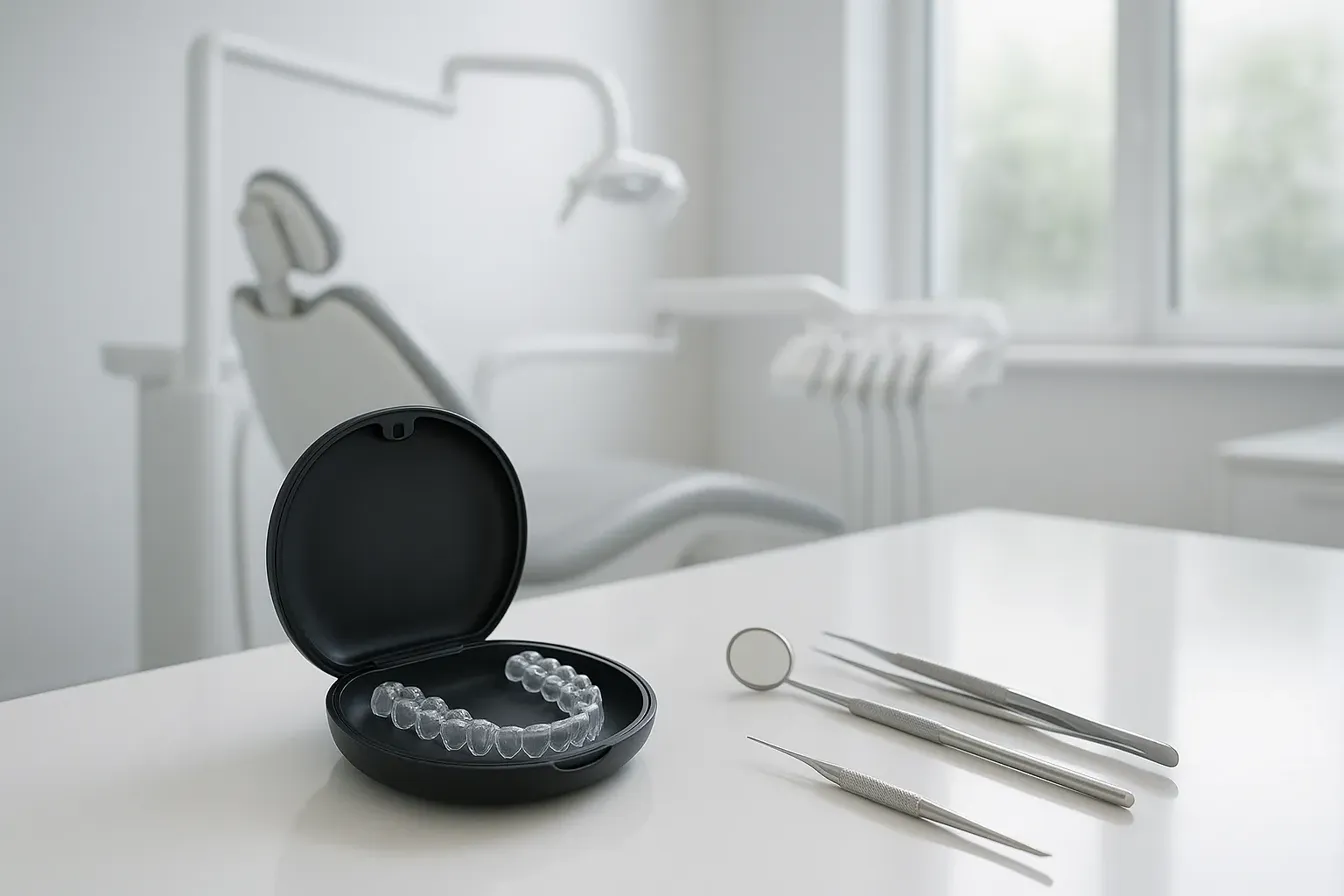
Clear aligners are custom-made, transparent plastic trays that fit snugly over the teeth. They gradually move teeth to their desired positions by applying gentle pressure in a controlled manner.
Clear aligner therapy (CAT) involves a series of these aligners, each designed to achieve incremental tooth movement. Patients typically wear each set for one to two weeks before progressing to the next. Advances in 3D imaging and computer-aided design enable precise treatment planning, allowing orthodontists to map out tooth movements and fabricate aligners that deliver consistent force while maximizing comfort.
Unlike traditional braces, clear aligners are virtually invisible, enhancing aesthetics during treatment—especially beneficial for adults and professionals. Their removability permits unrestricted eating and easier oral hygiene, reducing risks of dental decay and gingivitis often associated with fixed appliances. Additionally, the smooth plastic material minimizes soft tissue irritation commonly caused by wire and bracket systems.
Clear aligner therapy emphasizes patient comfort, convenience, and lifestyle compatibility. Patients can maintain normal daily activities without disruption, including speaking, sports, and social events. The treatment is tailored to individual orthodontic needs and monitored regularly, often integrating remote check-ins and digital tools to enhance engagement and adherence.
This innovative approach represents a shift towards more discreet, comfortable, and effective orthodontic care, aligning with modern patient expectations and clinical best practices.
Clear aligners are custom-made, transparent trays designed to fit snugly over your teeth and progressively move them into better alignment. Using advanced 3D imaging and digital scanning technologies, dental professionals create an exact digital model of your smile to fabricate a series of these aligners.
Each aligner in the sequence is made from BPA-free thermoplastic materials such as SmartTrack®, which are flexible yet durable. These trays exert gentle, controlled pressure facilitating tooth movement by stimulating natural bone remodeling within the periodontal ligament.
Patients typically wear clear aligners for 20 to 22 hours daily, removing them only for eating, drinking (anything other than water), and oral hygiene routines. Every one to two weeks, the aligner is replaced with the next one in the series, guiding teeth gradually to their desired positions.
Removability is a significant advantage of clear aligners, promoting superior oral hygiene by allowing brushing and flossing without obstruction. It also enables patients to eat without dietary restrictions commonly imposed by traditional braces.
This modern orthodontic method offers a discreet, comfortable, and convenient alternative to fixed braces, integrating seamlessly into daily life while delivering effective orthodontic treatment.

Clear aligners provide an effective and discreet orthodontic option primarily for patients with mild to moderate dental misalignments. They are ideal for those seeking a comfortable and nearly invisible treatment, including adults and teens concerned about aesthetics during orthodontic care.
Patients best suited for clear aligners typically have issues such as mild crowding, spacing between 1 and 5 millimeters, minor rotations, and simple bite corrections (overbite, underbite, crossbite). Those prioritizing ease of oral hygiene and the ability to remove their appliances during meals also benefit greatly from this method.
Clear aligners effectively treat:
These cases often do not require tooth extractions or jaw surgery.
Severe crowding or spacing, complex multidirectional tooth movements, significant bite problems, or skeletal discrepancies are less suitable for aligners alone. Such cases may require traditional braces, sometimes in combination with surgical or adjunctive orthodontic techniques. Aligners may also be limited in providing precise control of root torque or vertical tooth movements. See more on comparison of treatment effectiveness between clear aligners and braces.
Success with clear aligners depends heavily on patient adherence. The trays should be worn approximately 22 hours per day, removed only for eating, drinking (other than water), and oral hygiene. Non-compliance can extend treatment time and reduce effectiveness. For details, visit patient compliance importance.
At Gentle Dentistry of Staten Island, each patient undergoes thorough evaluation using digital scans and clinical assessments. Our orthodontists determine whether clear aligners are suitable based on the complexity of the malocclusion, patient lifestyle, and treatment goals. This personalized approach ensures optimal outcomes, pairing patients with the most appropriate treatment modality, whether clear aligners or alternative orthodontic solutions. Learn more about patient-centered orthodontic care.

Clear aligners are a modern orthodontic option made from nearly invisible, smooth plastic trays that fit snugly over the teeth. Their removability allows patients to maintain excellent oral hygiene by brushing and flossing easily, and they eliminate dietary restrictions since aligners are taken out during meals. Patients often appreciate the comfort of aligners, which lack metal wires and brackets that can irritate gums and cheeks. Additionally, treatment with aligners tends to require fewer office visits and may offer shorter duration for mild to moderate misalignments.
On the other hand, traditional braces consist of metal or ceramic brackets bonded to teeth with connecting wires, which provide continuous, controlled pressure beneficial for complex cases. Braces can effectively address severe crowding, significant bite issues, tooth rotations, and cases requiring extractions. However, they are more visible and can cause discomfort initially after adjustments. Oral hygiene demands are higher due to brackets and wires obstructing cleaning, and dietary modifications are necessary to protect the appliances.
Patient compliance plays a crucial role with clear aligners, as they must be worn approximately 22 hours per day to be effective. Missing wear time or losing aligners can delay treatment or increase costs. Conversely, braces are fixed appliances that do not depend on patient removal, ensuring consistent treatment delivery.
Regarding cost, both clear aligners (including Invisalign) and traditional braces in the U.S. typically range from $3,000 to $8,000 depending on case complexity. Invisalign may be slightly more expensive, and insurance coverage varies by plan.
Ultimately, the choice between clear aligners and braces depends on the severity of orthodontic issues, patient lifestyle preferences, and comfort with appliance maintenance. Orthodontist consultation is essential to determine the most appropriate treatment plan.
Clear aligners in the United States need to be worn for 20 to 22 hours each day. This duration is crucial because the removable clear aligners exert continuous, gentle pressure on the teeth, guiding them gradually toward the desired positions. While it is necessary to remove the aligners for eating, drinking anything besides water, and oral hygiene, patients should limit the time without aligners to avoid slowing down tooth movement. Inadequate wear time can extend treatment duration and may require additional aligners or refinements to achieve the intended results. Consistent daily compliance is essential to complete the treatment on schedule.
Proper maintenance of clear aligners is key to ensuring their effectiveness and hygiene. Patients should clean their aligners daily using a soft toothbrush and clear, non-abrasive toothpaste or a specifically designed cleaning solution to prevent staining and bacterial buildup. It is important to avoid eating or drinking (other than water) while wearing aligners to reduce risks of discoloration and trapped food particles. After cleaning, aligners must be rinsed thoroughly and placed in a protective case when not worn. This practice helps prevent damage or loss, keeps the aligners comfortable, and maintains oral health by reducing odor and bacterial growth.
By following these guidelines on wear time and maintenance, patients can maximize the benefits of clear aligner therapy for an effective and hygienic orthodontic treatment experience.

Clear aligners generally cause less pain and discomfort compared to traditional braces. Unlike braces, which involve metal brackets and wires that may irritate gums and cheeks, clear aligners use smooth plastic trays that minimize soft tissue irritation. Patients usually experience mild pressure, mainly in the first few days after switching to a new aligner set, and this discomfort quickly subsides. In contrast, braces tend to produce more intense soreness especially after adjustments, often accompanied by prolonged discomfort and potential sores from the metal components. For more on this comparison, see Clear aligners overview and Comfort of Invisalign aligners.
Clear aligners are made from flexible, BPA-free medical-grade plastics such as SmartTrack®, designed to fit snugly and smoothly over teeth and gums. The absence of metal wires and brackets eliminates the risk of cuts and abrasions, enhancing comfort throughout treatment. Detailed information on materials can be found at Materials used in clear aligners and Innovations in orthodontic materials.
Clear aligners typically shorten treatment times for mild to moderate orthodontic issues, with an average duration of 12 to 18 months. They move teeth incrementally using a series of aligners changed every 1 to 2 weeks while requiring 20-22 hours of daily wear. Traditional braces often require 18 to 36 months due to slower tooth movement and management of more complex cases. More on treatment duration comparisons is available at Treatment duration comparison and Comparison of treatment effectiveness between clear aligners and braces.
Success and speed with clear aligners depend heavily on patient compliance. Aligners must be worn consistently for over 20 hours per day; failure to comply extends treatment time. Traditional braces do not depend on patient adherence as they are fixed appliances continuously applying pressure. For further insights, see Patient compliance importance and Patient compliance and removable aligners challenges.
Clear aligner therapy achieves success rates of approximately 80-90% for mild to moderate cases when patient compliance is high. Patients report high satisfaction due to improved comfort, aesthetics, and convenience over braces. Reduced pain and shorter treatment times contribute to the positive treatment experience. See more at Success rate of clear aligner therapy and Patient satisfaction with Invisalign.

Clear aligner therapy is undergoing rapid advancement driven by cutting-edge technologies that revolutionize orthodontic care. A key innovation is the integration of artificial intelligence (AI) into treatment planning and monitoring. AI analyzes comprehensive dental images such as 3D scans and X-rays to predict precise tooth movements and tailor aligner designs to individual needs. This improves treatment precision, reduces discomfort, and can shorten treatment durations.
Advancements in 3D printing technology play a vital role by allowing the swift and accurate production of custom aligners. Modern materials used in aligners have become thinner, stronger, and more comfortable, further enhancing patient experience. On-demand 3D printing enables quicker fabrication of replacement trays and supports seamless treatment progression.
The emergence of teleorthodontics utilizes smartphone apps and AI-assisted remote monitoring tools for patients to submit progress images. This reduces the frequency of in-office visits while allowing orthodontists to track treatment effectively and make timely adjustments.
Hybrid orthodontic approaches combining clear aligners with fixed appliances or hidden devices are gaining popularity. These strategies enable management of complex tooth movements that aligners alone may not address efficiently, improving overall outcomes and minimizing treatment time.
In addition, there is a growing emphasis on sustainability with the use of eco-friendly, biodegradable plastics and recyclable materials in aligner fabrication. Patient-centered trends focus on increasing comfort, convenience, and accessibility through virtual consultations and personalized digital treatment plans.
Together, these innovations represent a paradigm shift toward more efficient, precise, comfortable, and environmentally conscious orthodontic care using clear aligner therapy.
Clear aligners, while popular for their aesthetic appeal and convenience, come with certain limitations and challenges that patients should consider. One significant disadvantage is their limited effectiveness in treating complex orthodontic cases. Issues such as severe jaw misalignments, extensive crowding, or intricate tooth movements often require traditional braces for more precise control.
Patient compliance plays a crucial role in the success of clear aligner therapy. Since aligners are removable, they must be worn approximately 20 to 22 hours per day to maintain continuous gentle pressure on the teeth. Inadequate wear time can prolong treatment duration and reduce effectiveness.
Another challenge is the risk of losing or damaging the aligners due to their removable nature. Misplaced or broken aligners may disrupt the treatment sequence and result in additional costs or delays.
Minor side effects may occur, including speech difficulties as patients adjust to wearing aligners, and occasional mild allergic reactions to the plastic material used in some aligners.
Maintaining rigorous oral hygiene during treatment is essential. Food particles can become trapped between the aligners and teeth, increasing the risk of cavities and gum disease if regular brushing and flossing are neglected. Patients must remove aligners when eating or drinking anything other than water and clean both their teeth and aligners thoroughly.
Understanding these challenges helps patients make informed decisions and maximize the benefits of clear aligner therapy.
Clear aligners offer a discreet, comfortable, and effective alternative to traditional braces, particularly suitable for mild to moderate orthodontic needs. Their removability allows better oral hygiene and dietary freedom, while their nearly invisible nature caters to aesthetic-conscious patients. However, they require strict patient compliance—typically worn 20–22 hours daily—and may not be ideal for complex or severe orthodontic cases which often need traditional braces or combined treatments.
At Gentle Dentistry, treatment plans are carefully tailored with a patient-centered focus. Orthodontists evaluate each individual’s unique dental conditions, lifestyle, and preferences to recommend the most suitable orthodontic solution, whether clear aligners, braces, or hybrid therapies. This ensures both clinical effectiveness and patient satisfaction throughout the treatment journey.
Patients are encouraged to schedule consultations to discuss their orthodontic goals and receive expert assessments. These visits involve advanced diagnostics such as 3D scanning and imaging, allowing clear visualization of treatment outcomes. Personalized guidance helps patients make informed choices aligned with their oral health needs and lifestyle.
With continuous technological advancements in materials, digital planning, and remote monitoring, clear aligner therapy stands at the forefront of modern orthodontics. Its ability to provide efficient, comfortable, and aesthetically appealing tooth alignment makes it an integral part of the future trajectory of invisible braces, redefining the patient orthodontic experience.