Even more knowledge

For decades, a standard model of dental care has been common practice. This approach typically involved scheduling two professional cleanings per year for every patient, regardless of their individual risk factors or oral health history. While this provided a baseline for preventive care, it followed a generalized protocol. This method was designed to identify and monitor common concerns like tooth decay and gum disease during these regular check-ups.
The broader field of healthcare is undergoing a significant transformation. There is a clear trend toward personalization, moving away from generic treatments. Modern medicine now leverages a combination of clinical data, genetic information, environmental factors, and behavioral patterns. This wealth of individual data allows for treatments and preventive strategies to be finely tuned to each person's unique circumstances, improving outcomes and patient satisfaction.
Dentistry is actively embracing this shift. The profession is moving from a reactive, schedule-based model to a proactive, patient-centered philosophy. The core principle is that effective care must be tailored. This involves considering a person's complete health history, lifestyle, specific risk factors, and personal goals. The aim is to create a collaborative partnership between the dentist and patient, fostering better communication, trust, and long-term oral health success.
At Gentle Dentistry of Staten Island, we believe your dental care should be as unique as you are. We are committed to moving beyond the traditional checklist. Our approach begins with listening to your concerns and conducting a comprehensive assessment. We utilize advanced diagnostic tools and evidence-based methods to understand your individual oral health profile. This allows us to co-create a personalized treatment plan designed specifically for your needs, comfort, and long-term wellness.

We begin your journey with a detailed, patient-focused consultation. This is far more than a standard check-up; it's a conversation. We listen to understand your concerns, whether they involve discomfort, cosmetic goals like a brighter smile, or functional issues like difficulty chewing. Understanding your personal preferences and lifestyle is paramount.
Your overall health directly impacts your oral health. We conduct a comprehensive review of your complete medical and dental history. We discuss conditions like diabetes or heart disease, as well as previous dental treatments or trauma. This information is critical for ensuring any treatment is safe, effective, and tailored to your unique physiology.
A meticulous clinical examination evaluates your teeth, gums, bite alignment, and jaw joints. We assess gum health to detect early signs of periodontal disease. To see what the eye cannot, we utilize advanced diagnostic tools like low-radiation digital X-rays and diagnostic tools. This reveals hidden issues such as cavities between teeth, infections, bone loss, or impacted teeth, forming an accurate foundation for your plan.
After gathering all data, we organize our findings to prioritize treatment. Immediate concerns, such as active infection, pain, or damage, are addressed first. Next, we focus on preventive care like professional cleanings. Finally, we plan for long-term restorative or cosmetic needs. This phased approach ensures your oral health is stabilized and managed logically.
A truly personalized dental care plan must fit your life. We work collaboratively with you to align with patient goals. Whether you have a busy work week, family commitments, or specific budgetary needs, we present flexible options. Your input is essential in crafting a plan you feel confident and comfortable following.
Modern technology plays a key role in personalization. Digital intraoral scanners create precise 3D models of your mouth, eliminating uncomfortable impressions. For cosmetic work, digital smile simulation software allows you to preview potential results before any procedure begins. These tools enhance accuracy, facilitate informed decisions, and ensure your expectations are met.
We believe informed patients make the best decisions. We use visual aids, digital images, and plain language to explain your oral health condition. We present multiple treatment options for any issue—for example, a damaged tooth might be addressed with a filling, a crown, or careful monitoring. This transparent, clear communication and patient education approach builds the trust and confidence necessary for successful treatment.
Your treatment plan is structured into a phased treatment approach. This allows for proper healing, financial planning, and ongoing evaluation. Your care does not end with a procedure. Through regular checkups and personalized dental care plans, we monitor your progress, evaluate healing, and adjust recommendations based on any changes in your health or lifestyle. This commitment to ongoing partnership supports your lifelong oral health.
| Step in Building Your Plan | Key Actions | Outcome & Benefit for You |
|---|---|---|
| Initial Consultation | Listening to concerns, goals, lifestyle factors. | A plan centered on your unique needs and priorities. |
| Health History Review | Discussing medical conditions, medications, past dental work. | Safer, more effective treatment tailored to your health. |
| Comprehensive Exam & Diagnostics | Clinical check, digital X-rays, Advanced diagnostic tools like 3D imaging. | Complete picture of oral health, revealing hidden issues early. |
| Treatment Prioritization | Addressing urgent problems first, then preventive and long-term care. | Logical, staged approach for stability and optimal results. |
| Collaborative Planning | Discussing schedule, finances, and personal goals together. | A realistic, achievable plan that fits your life and budget. |
| Technology Integration | Using digital scans, smile simulations, treatment planning software. | Clear visualization of outcomes and enhanced precision of care. |
| Clear Communication | Explaining options with visuals, discussing benefits and risks. | Empowered decision-making and strong patient-dentist trust. |
| Phased Execution & Monitoring | Structuring care in phases with regular follow-up appointments. | Manageable treatment journey with adjustments for long-term health. |
Standardized dental plans often follow a predetermined checklist, which can be insufficient for individual patient needs. These one-size-fits-all approaches risk under-treating patients with a high susceptibility to disease while potentially recommending unnecessary procedures for those at low risk.
Tools like PreViser technology enable dentists to move beyond intuition. By analyzing a combination of clinical data (like bone loss and tooth decay), environmental factors (such as access to fluoridated water), and behavioral information (including smoking history), these tools calculate numeric risk and severity scores for oral disease. This provides an objective, reproducible measure of a patient's oral health status.
These quantitative risk scores directly inform personalized care strategies. They help dentists identify the most suitable diagnostic and preventive benefits for at-risk patients. For instance, a patient with a high decay risk score might receive personalized home care recommendations, specific fluoride treatments, and more frequent recall visits, rather than adhering to a generic twice-a-year cleaning schedule.
A significant advantage of these data-driven assessments is the ability to track risk scores over time. Accumulating this historical data allows dentists and patients to monitor an oral health trajectory, objectively evidence improvement from interventions, and motivate continued adherence to better home care practices.
Patient-accessible tools, such as online self-assessments, facilitate this model. Patients can estimate their own risk scores from home, which fosters engagement and prepares them for more informed discussions with their dental team during appointments.
Beyond environmental and behavioral data, genomics is playing an increasingly important role. Translational research analyzes the human genome, microbiome, and other biological systems to understand disease susceptibility. For example, genetics is estimated to account for 40–70% of early childhood caries risk and significantly influences susceptibility to periodontitis and the etiology of malocclusions.
Personalized dentistry is expanding into novel applications. Saliva diagnostics can detect indicators for both dental and systemic diseases, including heart conditions and cancers. In oral oncology, biomarker detection allows for earlier diagnosis and therapy tailored to a patient's genetic profile. Research also points toward personalized pain management and the potential for nanotechnology-driven, implantable biodevices for targeted drug delivery in the oral cavity.
Major dental organizations endorse this shift. The American Dental Association specifically supports tailoring a patient's recall interval and home care regimen—such as recommending powered toothbrushes for specific needs—based on individually assessed risk, rather than a standard schedule.
| Data Type | Examples | Use in Personalization |
|---|---|---|
| Clinical Data | Bone loss, tooth decay, existing restorations | Calculates baseline disease severity and treatment needs. |
| Environmental Data | Access to fluoridated water | Informs preventive recommendations and caries risk assessment. |
| Behavioral Data | Smoking history, diet, oral hygiene habits | Guides patient coaching and lifestyle modification plans. |
| Genetic Data | Susceptibility markers for caries, periodontitis | Enables early, targeted prevention for genetically at-risk patients. |
| Longitudinal Data | Historical risk score trends | Tracks treatment efficacy and motivates patient adherence over time. |
Personalized dental care plans move beyond generic checklists to provide more effective care. By considering a patient's unique oral disease risk, medical history, lifestyle, and personal goals, dentists can create highly targeted strategies for addressing specific dental concerns. For high-risk patients, this may mean more frequent cleanings, specialized fluoride treatments, or nutritional counseling, directly addressing their specific vulnerabilities. This precision leads to better long-term oral health outcomes by preventing small issues from escalating.
Oral health is deeply connected to overall systemic health. Personalized care helps manage this link proactively. Conditions like periodontal disease are associated with increased risks for heart disease, diabetes complications, adverse pregnancy outcomes, and even Alzheimer's disease. By using personalized risk assessments to identify and aggressively manage gum disease and other oral conditions, these plans can contribute to reducing systemic inflammation and the risk of related chronic illnesses.
A personalized, prevention-focused approach saves money over a lifetime. Addressing minor decay early with a simple filling is far less costly than waiting until a root canal or extraction is needed. Statistics show that patients who receive consistent preventive care can spend up to 43% less on dental expenses over five years compared to those who skip visits. By preventing emergencies and major procedures, personalized dental care reduces both immediate out-of-pocket costs and long-term financial burden.
The Centers for Disease Control and Prevention (CDC) highlights the power of prevention. Their data shows that patients who receive regular, personalized preventive care experience significantly lower rates of tooth loss and require fewer major dental interventions over time. Tailoring the dental recall interval based on risk, rather than using a standard twice-a-year schedule for everyone, is key to achieving these improved outcomes.
Personalized care fosters trust and strengthens the dentist-patient relationship. When patients feel their concerns are heard and their individual circumstances are considered, they are more likely to be satisfied and comply with recommended treatments. Surveys indicate that a high percentage of satisfied patients value personalized communication in dentistry and the personalized dental experience. This collaborative partnership makes patients active participants in their care, leading to better adherence and results.
The benefits extend far beyond the dentist's chair. A healthy, functional mouth allows you to enjoy food without discomfort. A smile you are confident to share can enhance social and professional interactions. By preventing painful emergencies and complex procedures, personalized care helps you avoid unexpected disruptions to your daily life, contributing to overall well-being and peace of mind.
Modern personalized dentistry directly addresses patient anxiety. Practices now offer patient comfort tools and tailored comfort options for anxious patients like noise-canceling headphones, weighted blankets, and a range of sedation choices from nitrous oxide to IV sedation. A patient-centered approach, with clear communication and patient education, helps patients feel valued and in control, transforming a potentially stressful experience into a manageable one.
Whether addressing cosmetic concerns or functional needs, personalized care aims for harmony. Dentists consider facial structure, skin tone, and personal preferences when designing restorations like veneers or crowns. The goal is a result that looks natural and feels comfortable, seamlessly blending aesthetics with long-term oral function. This balance ensures that treatments enhance both your smile's appearance and your mouth's health.
| Benefit Category | Primary Outcome | Example or Statistic |
|---|---|---|
| Health Outcomes | Better oral & systemic health | Lower risk linked to heart disease, diabetes |
| Financial Impact | Reduced lifetime dental costs | Up to 43% lower spending over 5 years |
| Patient Experience | Higher satisfaction & compliance | 96% of highly satisfied patients value personalized communication |
| Treatment Efficacy | More targeted, effective care | CDC notes fewer major interventions with preventive care |
| Daily Life Quality | Enhanced confidence & comfort | Enjoy food, smile freely, avoid emergencies |
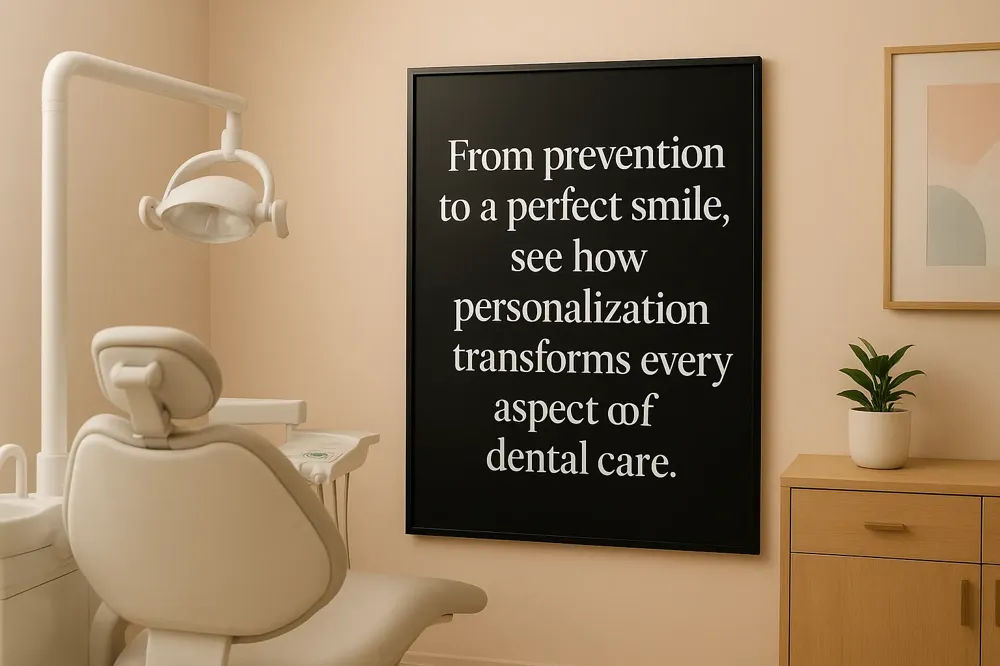
Moving beyond the one-size-fits-all model, preventive dental care now hinges on personalized risk assessment. Standardized plans often fall short, potentially under-treating high-risk patients or providing unnecessary care for low-risk ones. Instead, dentists analyze data on an individual's lifestyle, genetics, and clinical health to tailor interventions. This could mean recommending more frequent professional cleanings, targeted fluoride treatments, or personalized home oral care recommendations based on a patient's elevated risk for cavities or gum disease. For restorative work like fillings and crowns, personalization extends to selecting materials and shades that not only ensure durability but also blend seamlessly with the patient's natural teeth, creating natural-looking dental restorations while addressing functional needs.
In cosmetic dentistry, personalization is an art form focused on enhancing a patient's unique features. A successful customizing a smile makeover considers skin tone, gumline, facial structure, and personal goals. Advanced technology plays a crucial role; using imaging to preview smile results allows patients to preview potential results, facilitating informed decisions. Some practices offer a 'try a "trial smile"' with temporary restorations, letting patients experience changes before finalizing the plan. Treatments often combine multiple procedures—like porcelain veneers, teeth whitening, and gum contouring—to achieve a harmonious and natural-looking cosmetic dentistry result where enhanced teeth are indistinguishable from natural ones. This collaborative process ensures outcomes align with the patient's aesthetic vision and personality.
The causes of misaligned teeth (malocclusions) are complex, influenced by both genetic predisposition and environmental factors. This understanding informs highly personalized orthodontic treatment plans. Whether using clear aligners like Invisalign® or traditional braces, the plan is tailored to the specific biological and behavioral patterns of the individual. Genetic factors can influence the rate of tooth movement and bone response, while environmental habits like thumb-sucking inform the treatment strategy. A personalized approach ensures the correction not only aligns teeth but also considers the patient's oral health status, facial aesthetics, and long-term stability of the results, aligning with principles of personalized orthodontics.
Dental needs and risks evolve with age, requiring care adapted to each life stage. For elderly patients, personalized plans often focus on managing dry mouth (xerostomia), oral hypofunction, and coordinating care with other chronic health conditions, reflecting a personalized dental care strategies strategy. Conversely, young adults, who may visit dentists most frequently for routine care, benefit from early detection of suboptimal conditions, such as a predisposition to xerostomia, allowing for prevention-focused oral health strategies. Middle-aged patients might require more proactive care to address the onset of chronic disorders and acute issues. Personalized dentistry stratifies care based on age, lifestyle, and specific health challenges to optimize outcomes.
Personalized dentistry thrives on active patient collaboration, a concept known as 'participatory medicine in dentistry'. This involves patients taking responsibility for their oral health through education and engagement. Dentists act as coaches, communicating clearly and gauging patient understanding and motivation. They coach patients for effective home care—such as considering powered toothbrush for special needs—based on what the individual will consistently use. This partnership empowers patients, improves compliance with personalized dental treatment plans, and is fundamental to achieving long-term oral health goals. Successful personalized care is a shared journey between the patient and dental team.
| Dental Need | Personalization Focus | Example Strategies & Technologies |
|---|---|---|
| Preventive & Restorative | Individual Risk Assessment & Material Selection | Tailored cleaning schedules, fluoride treatments, shade-matching for crowns, personalized dental care trends like PreViser technology. |
| Cosmetic Dentistry | Aesthetic Harmony with Unique Features | Digital smile design, trial smiles, combination of veneers/whitening/contouring based on facial analysis. |
| Orthodontics | Genetic & Environmental Etiology | Customized aligner plans (Invisalign®), braces adjusted for individual biology and habits. |
| Life Stage Care | Age-Specific Health Challenges | Elderly: dry mouth management. Young adults: early detection. Middle-aged: proactive chronic disease care. |
| Patient Engagement | Coaching for Home Care Compliance | Personalized home oral care recommendations, motivational interviewing, clear communication of individual risk factors. |

Personalized dental care necessitates a fresh look at dental insurance. While insurance plans traditionally operate on standardized benefit schedules, a truly personalized dental care plan considers your unique risk factors and oral health trajectory. This may mean your recommended care—such as more frequent preventive visits—does not perfectly align with a generic plan's coverage limits.
When evaluating a private dental insurance plan, start by ensuring it covers the specific services you anticipate needing, such as routine cleanings, major restorative work, or orthodontics. Scrutinize the details: compare monthly premiums against annual maximums, deductibles, and the insurer's reimbursement levels for different procedures. Pay close attention to waiting periods, especially for major services, as some plans delay coverage for 6-12 months. Verify that your preferred dentist is within the plan's network to avoid higher out-of-pocket costs. Finally, research the insurer’s reputation for customer service and claims processing to ensure a smooth experience.
A personalized, prevention-focused plan may prioritize different benefits than a reactive one. Discussing your customized dental treatment plan with your dentist and insurer can clarify coverage for advanced diagnostics, specialized preventive treatments, and phased restorative work that aligns with your long-term health goals.
Today's dental technology directly supports personalized dental care by enhancing precision, comfort, and efficiency. CAD/CAM systems allow for same-day design and milling of custom crowns, veneers, and implants, reducing wait times and ensuring a perfect fit tailored to your anatomy. Laser dentistry offers minimally invasive options for procedures like gum contouring or cavity treatment, often with less discomfort and faster healing.
Teledentistry facilitates remote consultations and follow-ups, making care more accessible and allowing for continuous, personalized monitoring. Digital intraoral scanners create precise 3D models of your mouth, replacing uncomfortable impressions and enabling highly accurate treatment planning. These tools empower dentists to craft care that is not only effective but also uniquely suited to your schedule, comfort preferences, and clinical needs.
Personalized care requires efficient practice management to be sustainable. The 80/20 rule, or Pareto Principle, can be a valuable tool. In dentistry, this principle suggests that 80% of a practice's positive outcomes—such as patient satisfaction, practice revenue, or treatment success—often come from 20% of its efforts, services, or patient relationships.
Applying this principle involves identifying high-value services, efficient workflows, or key patient relationships that generate the most positive outcomes. This focus can help streamline practice management and enhance productivity. For instance, a practice might analyze which preventive and diagnostic services most effectively reduce future major procedures for their patient population and optimize scheduling and resources around them. This strategic focus allows the practice to dedicate more time and attention to developing and executing highly personalized dental treatment plans.
| Application Area | High-Impact 20% Focus | Expected 80% Benefit |
|---|---|---|
| Patient Management | Nurturing relationships with patients committed to preventive care | Higher treatment plan acceptance, better long-term outcomes, and consistent attendance |
| Service Offerings | Prioritizing high-demand, preventive, and diagnostic services | More efficient scheduling, improved oral health across patient base, and stable practice revenue |
| Operational Workflow | Implementing digital tools for scheduling and patient communication | Reduced administrative overhead, fewer missed appointments, and enhanced patient satisfaction |
Personalized dentistry is currently a fertile and rapidly evolving field of research. While concepts like using genetic data for caries risk assessment or saliva diagnostics for disease detection are supported by growing scientific evidence, many of these advanced clinical applications are still emerging. Experts describe them as being 'just around the corner.'
Current clinical personalization primarily leverages available data—clinical exam findings, digital imaging, behavioral questionnaires, and risk assessment tools like PreViser oral health risk scores—to tailor prevention and treatment. This represents a significant shift from the one-size-fits-all model, even as the field awaits wider adoption of genomic and biomarker-based tools.
The most transformative future potential for personalized dentistry lies in its integration with overall medical care. As science continues to elucidate the strong links between oral health and chronic disease, personalized oral care becomes a critical component of whole-person health.
Future risk assessment tools in dentistry may not only predict periodontal disease but also flag elevated risks for related medical complications. This could lead to collaborative care models where dentists and physicians share data from personalized oral health profiles to co-manage patient health, moving towards truly integrated, precision healthcare.
Personalized dental care represents a fundamental shift away from a one-size-fits-all model. This approach transforms dental care into a collaborative partnership, where your unique health profile, personal goals, lifestyle, and preferences are central to every decision.
It ensures that treatments are not based on a generic checklist, but are specifically designed for you. This patient-centric philosophy values your input, fostering trust and ensuring that the care plan aligns with what matters most to you, from daily comfort to lifelong oral health.
Creating your plan is a comprehensive process. It relies on a deep understanding gained from reviewing your complete medical and dental history. Advanced diagnostic tools, like digital X-rays and intraoral scanners, provide a precise picture of your oral health.
Technologies for data-driven risk assessments help identify your specific susceptibility to issues like decay or gum disease. Your dentist then combines this clinical information with your personal objectives and concerns. Clear communication and visual aids ensure you are fully informed and an active participant in shaping your treatment roadmap.
Adopting a personalized care plan yields significant long-term advantages. For your health, it means a proactive, prevention-first strategy that can reduce your risk for serious dental problems and their linked systemic conditions, such as heart disease and diabetes.
Financially, addressing small concerns early often prevents the need for more complex and costly procedures later. On a personal level, a plan tailored to your needs boosts confidence in your smile and minimizes dental anxiety, knowing your care is designed specifically for you.
At Gentle Dentistry of Staten Island, we are dedicated to providing this patient-centered, gentle, and highly personalized experience. We combine advanced technology with genuine empathy to build a trusting partnership focused on your long-term well-being and a healthy, confident smile.
| Patient Input & History | Advanced Assessment Tools | Treatment Focus | Long-Term Outcomes |
|---|---|---|---|
| Medical history, lifestyle, personal goals | Digital scans, risk assessments, imaging | Prioritized, phased care aligned with you | Improved health, confidence, cost savings |
| Discussion of concerns and preferences | Comprehensive oral exams, cancer screening | Preventive strategies based on your risk | Fewer emergencies, sustained oral wellness |
| Financial and schedule considerations | Saliva diagnostics, genetic insights (emerging) | Restorative and cosmetic options explained | Better overall health, natural-looking results |