Even more knowledge


Dental infections commonly arise from untreated tooth decay, injury, or gum disease. They involve bacterial invasion of the tooth pulp or surrounding tissues, leading to abscesses characterized by pus accumulation, swelling, and severe pain. These infections can affect different areas, including the root tip (periapical abscess), gums (periodontal abscess), or facial spaces.
Prompt recognition and management of dental infections are essential to prevent complications. Early symptoms such as persistent throbbing pain, sensitivity to hot or cold, and localized swelling should trigger urgent dental evaluation. Treatment typically involves eliminating the infection source through drainage, root canal therapy, or extraction, while antibiotics are reserved for systemic involvement or severe infections.
If left untreated, dental infections can rapidly spread beyond the oral cavity to the jaw, neck, sinuses, and even vital organs like the brain and heart, leading to life-threatening conditions such as Ludwig’s angina or sepsis. Early intervention significantly reduces morbidity, prevents the need for complex surgeries, and ensures a good prognosis, underscoring the critical role of timely dental care in maintaining overall health.

The earliest indicators of a dental infection include a severe, throbbing toothache that may extend to the jaw, ear, or neck. Sensitivity to hot or cold foods and drinks, pain during chewing, and the presence of a foul taste or odor in the mouth may also occur. Early swelling of the face or neck, tender lymph nodes, and fever can signal that the infection has progressed to an abscess. If not treated promptly, the infection may spread to nearby tissues, potentially causing life-threatening complications such as difficulty swallowing or breathing.
Visually, a tooth infection often manifests as swelling and redness around the affected area. A clearly visible sign is a pus-filled bump or abscess on the gums. The infected tooth may become loose, and swelling can extend to the jaw or face. Additional symptoms like inflamed and shiny gums, and swollen lymph nodes beneath the jaw, may be present. Bad breath and a bitter taste in the mouth are common accompanying signs.
Yes, tooth infections can sometimes be asymptomatic, particularly in the early stages or when the infection is confined without affecting nerve endings. Some abscesses, especially those in previously treated root canals or localized infections, may not cause pain immediately. Despite the lack of symptoms, such infections pose serious risks if left untreated, including spread to vital organs or systemic illness. Regular dental visits and imaging exams are crucial for detecting asymptomatic infections to provide timely treatment and prevent severe consequences.
| Symptom/Sign | Description | Importance |
|---|---|---|
| Throbbing toothache | Severe pain often radiating beyond tooth | Early and common symptom |
| Sensitivity to temperature | Pain triggered by hot or cold stimuli | Indicates pulp or nerve involvement |
| Facial or gum swelling | Redness and visible swelling near infected area | Shows infection progression |
| Pus-filled abscess | Visible bump containing pus | Confirmed dental infection |
| Fever | Elevated body temperature | Indicates systemic infection risk |
| Asymptomatic infection | No pain despite infection | Risk of delayed diagnosis |
Tooth infections are caused when bacteria enter the tooth through deep cavities, cracks, or trauma, reaching the dental pulp—the soft tissue inside the tooth containing nerves and blood vessels. This bacterial invasion leads to inflammation known as pulpitis: reversible and irreversible. If pulpitis is not treated, bacteria can spread beyond the pulp chamber, causing a dental abscess, which is a painful collection of pus at the root tip or within the gums.
Common causes include poor dental hygiene and abscess prevention, which allows plaque and bacteria to accumulate; untreated tooth decay and cavities; periodontal disease progression; and previous dental procedures that may create openings for bacteria to enter. Symptoms usually involve severe, throbbing tooth abscess symptoms, swelling of the gums or face, fever, and sometimes a foul taste or odor, signaling active infection.
Without timely dental care such as root canal therapy for abscess, abscess drainage, or tooth extraction, the infection may spread to nearby tissues like the jawbone, sinuses, neck, or even vital organs, posing serious health risks including deep space infection risks.
Dental infections typically fall into several categories based on location and affected tissues:
Some infections can extend beyond the tooth and gum tissues, leading to serious conditions such as Ludwig angina management (deep neck space infection), oral facial infection of dental origin, or infections affecting the jawbone and sinuses.
Early recognition of symptoms and prompt management of dental infections are crucial to prevent the spread of these infections and avoid life-threatening complications.
Several factors increase the likelihood of developing dental infections:
Maintaining regular dental care, good hygiene, and a healthy lifestyle are important measures to reduce the risk of infection such as preventing tooth abscess.
| Aspect | Description | Outcome if Untreated |
|---|---|---|
| Bacterial Entry | Through cavities, cracks, or dental trauma | Spread to pulp, abscess formation |
| Periapical Abscess | Pus at root tip due to pulp infection | Swelling, pain, potential spread to face or neck |
| Periodontal Abscess | Infection in gums from periodontal disease | Tissue destruction, systemic spread possible |
| Pulpitis | Inflamed pulp causing pain, reversible or irreversible | Severe pain, abscess, tooth loss if untreated |
| Risk Factors | Poor hygiene, sugar intake, dry mouth, trauma, smoking | Increased infection incidence |
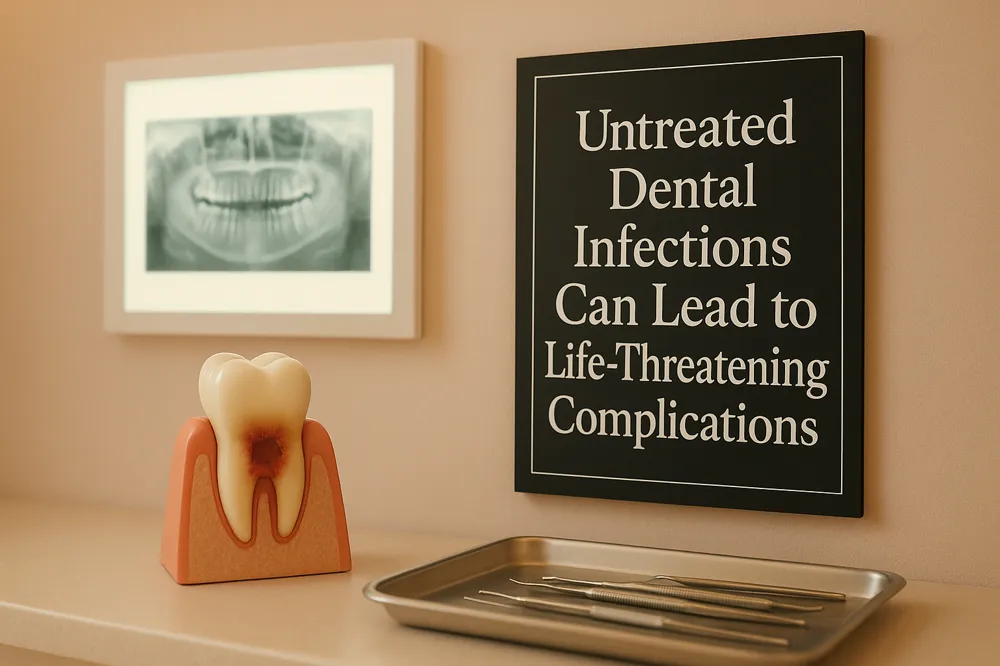
A tooth infection can escalate to a life-threatening condition within just a few days if left untreated. The infection may quickly spread beyond the tooth to critical areas like the jaw, neck, or even the brain. These spreads can cause serious complications such as cellulitis, Ludwig angina management (a severe neck infection), or brain abscesses. The speed of progression depends on individual factors including immune system strength, age, and overall health.
Neglected dental infections often lead to the spread of bacteria to surrounding tissues, jawbone, or sinuses, potentially causing sinusitis. A particularly severe risk is the infection entering the bloodstream, leading to sepsis—a life-threatening systemic response that demands immediate medical care. Some abscesses may rupture, causing foul taste and odors, and typically require surgical drainage or tooth extraction if not caught early.
Signs of spreading infection include:
If the infection enters the bloodstream causing sepsis, symptoms can escalate to high fever, rapid heart rate, and clammy skin. These signs constitute medical emergencies requiring urgent treatment with antibiotics and possibly surgical intervention.
Early recognition and prompt dental care are critical to prevent these serious health consequences.

The best treatment for a tooth infection depends heavily on the infection’s severity and how far it has spread. For localized dental abscesses, dental procedures like incision and drainage or root canal therapy are preferred since they remove infected tissue and can save the natural tooth. When the infection proves more extensive or systemic symptoms such as fever appear, antibiotic therapy becomes important to limit spread.
If the infection has damaged the tooth beyond repair, extraction is often necessary. Severe infections might require hospitalization for advanced care. Throughout treatment, early diagnosis via clinical evaluation and imaging, combined with prompt dental intervention, improves prognosis and can prevent complications like Ludwig angina management or sepsis.
Amoxicillin is typically the first-choice antibiotic for dental infections due to its efficacy against common oral bacteria including Streptococcus species. It is often paired with metronidazole use in dental infections to target anaerobic bacteria implicated in abscesses, such as Prevotella and Porphyromonas gingivalis.
For patients allergic to penicillin, clindamycin serves as an alternative. Other antibiotics used depending on clinical presentation and susceptibility include doxycycline, co-amoxiclav, and cephalosporins. Management of severe or immunocompromised cases may involve broader-spectrum agents like piperacillin-tazobactam.
Antibiotic stewardship is vital to prevent resistance: antibiotics should be restricted to cases with systemic involvement, as dental infections typically require surgical intervention (e.g., drainage). Overuse can contribute to antimicrobial resistance, reducing future treatment efficacy.
Home remedies such as warm salt water rinses, and over-the-counter pain medications (acetaminophen or ibuprofen) may offer temporary relief from pain and inflammation. However, these measures do not eliminate dental infections. A dental abscess definition is a serious bacterial infection requiring professional diagnosis and treatment.
Delaying dental care or relying solely on home management can lead to worsening infection, spread to adjacent structures, bone loss, or systemic illnesses like sepsis. Immediate professional evaluation ensures appropriate procedures—such as abscess drainage or root canal therapy—combined with targeted antibiotics, effectively resolve the infection and reduce risks.
While supportive care at home can ease discomfort, it is only a bridge to timely definitive dental therapy.
| Aspect | Treatment Approach | Notes |
|---|---|---|
| Localized abscess | Drainage, root canal therapy | Aim to preserve the tooth and eliminate infection |
| Severe or spreading infection | Antibiotics + dental intervention | Antibiotics reserved for systemic signs and spread |
| Tooth unsalvageable | Extraction | Followed by implant or prosthetic options, if desired |
| Antibiotic choice | Amoxicillin first-line; alternatives as needed | Stewardship to minimize resistance |
| Home management | Saltwater rinse, pain relief | Temporary only; does not replace professional care |

If you experience severe, throbbing tooth pain accompanied by facial swelling, fever, difficulty opening your mouth, or trouble swallowing and breathing, these are signs that the Signs of spreading infection and require immediate medical attention. Other urgent symptoms include persistent swelling on one side of the face, tender lymph nodes, and a bad taste or foul odor in the mouth. These indicate a potentially serious infection that can threaten your airway or enter the bloodstream.
To alleviate tooth abscess pain safely before seeing a dentist, over-the-counter painkillers like ibuprofen or acetaminophen are effective in managing discomfort temporarily. Applying a cold compress to the cheek near the affected area can also reduce swelling and numb the pain. It’s important to avoid very hot or cold foods and drinks that may worsen sensitivity. Maintaining good oral hygiene, rinsing with warm salt water, and eating soft, non-irritating foods can help ease symptoms during this time.
You should never attempt to drain a gum or tooth abscess at home. Proper diagnosis and treatment require professional examination, including Tooth abscess diagnosis such as sensitivity tests and imaging such as X-rays or CT scans, to assess the infection’s severity. Self-draining the abscess can spread infection, damage the surrounding tissue, and lead to life-threatening complications like sepsis. Avoid ignoring symptoms or delaying care, as Importance of early dental infection treatment like drainage, root canal therapy, or extraction.
Seeking urgent dental care is crucial to address the Oral Facial Infection of Dental Origin effectively and avoid serious complications.
Regular dental check-ups are crucial for early detection and management of tooth decay and infections. Dental professionals can identify early signs like white spot lesions before they progress to cavities, helping prevent severe infections.
Good oral hygiene is the foundation of preventing dental infections. Brushing twice daily with fluoride toothpaste, flossing, and reducing sugary food intake help control plaque and bacteria that cause tooth decay and gum disease.
Watch for symptoms such as tooth pain, swelling, sensitivity to hot or cold, bad breath, or fever. Early treatment of these signs can prevent infections from worsening or spreading, reducing risks of complications like abscesses or systemic illness. Timely dental intervention ensures better outcomes and avoids emergency situations.