Even more knowledge

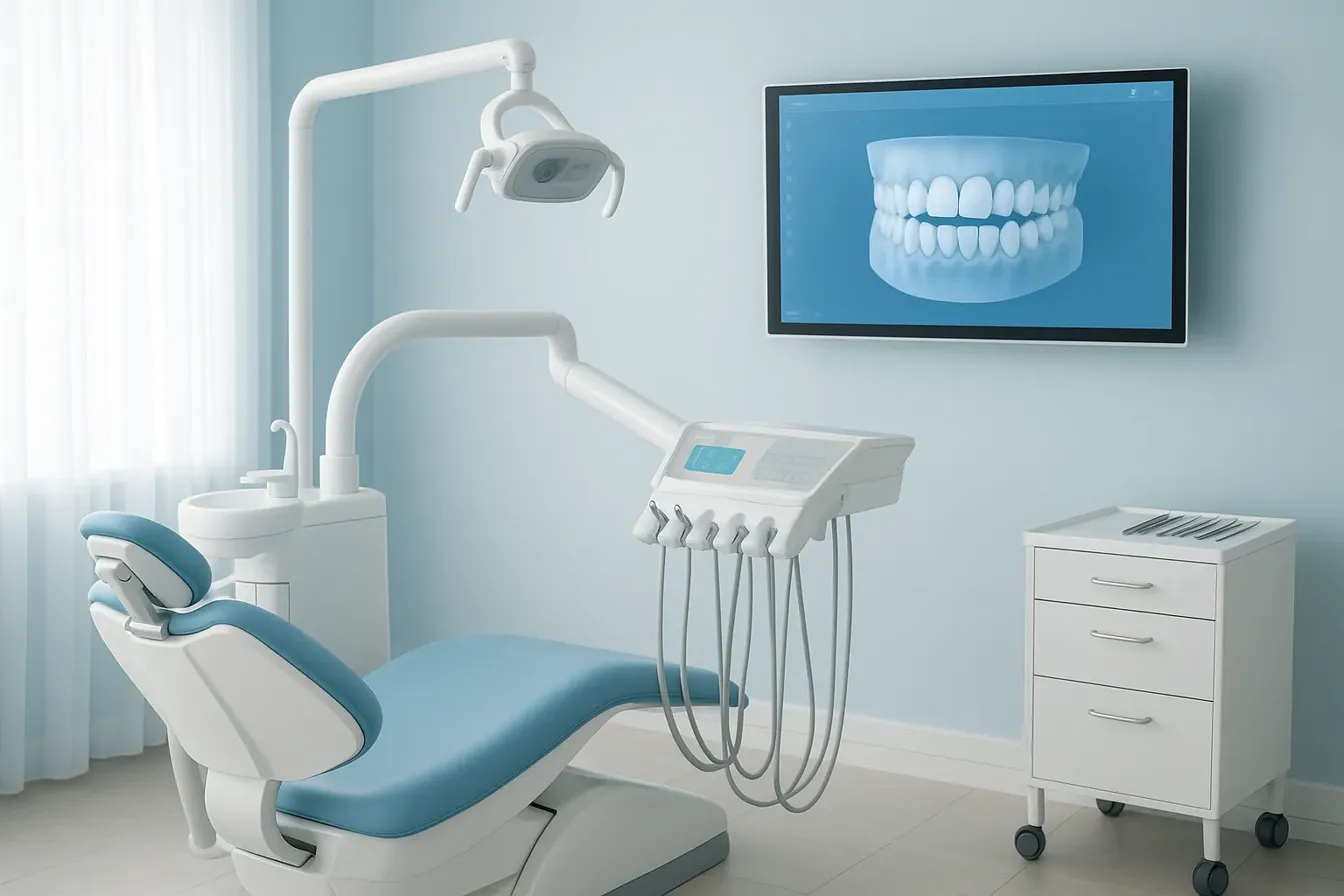
Personalized dental care is a tailored approach to oral health that considers an individual's unique needs, health history, genetics, lifestyle, and habits. This customized strategy aims to optimize long-term oral health by addressing specific risks such as cavities, gum disease, or other dental conditions.
Each patient's oral health is affected by several factors including genetic predisposition, age, lifestyle choices, and environmental influences. These factors guide dental professionals in developing treatment plans that are individualized. By evaluating these elements, dentists can provide more effective preventive care and ensure restorations fit seamlessly and function properly.
Artificial intelligence (AI) plays an increasingly vital role in enhancing personalized dental care. AI technologies analyze vast amounts of patient data—from digital imaging and X-rays to health records—to detect early signs of disease and support diagnosis precision. Advanced algorithms help create personalized treatment plans that improve outcomes and patient satisfaction.
AI tools, such as machine learning and predictive analytics, enable real-time problem-solving and early detection of dental issues, thereby reducing the number of appointments and invasiveness of procedures. By integrating AI into dental practice, care becomes more efficient, transparent, and aligned with modern patient expectations.
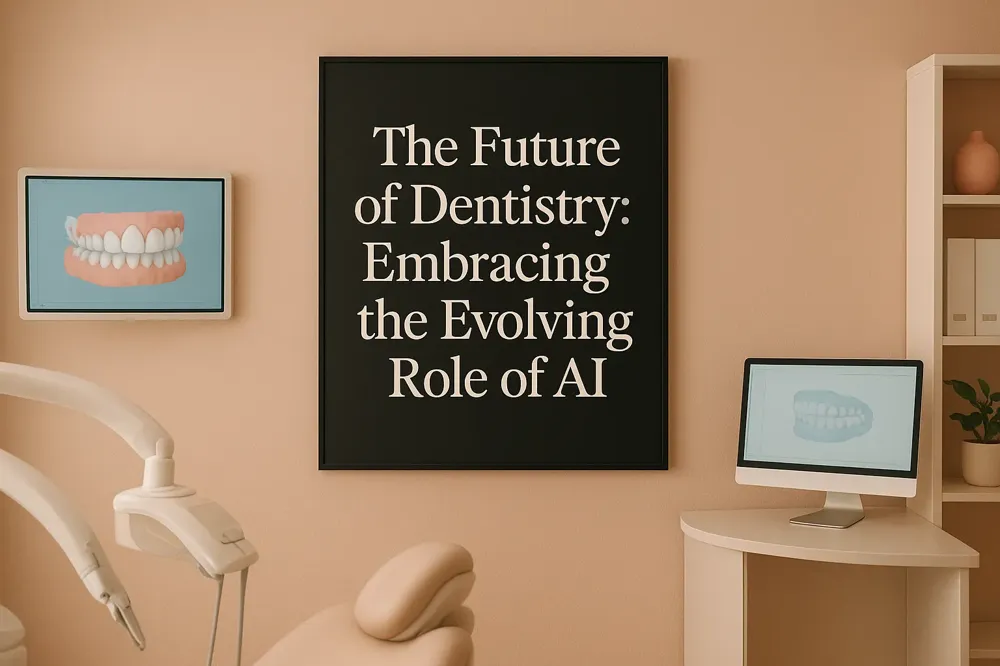
Artificial intelligence is transforming dental care by dramatically improving diagnostic accuracy and treatment planning. Currently, AI analyzes dental images such as digital X-rays and 3D scans with remarkable precision, enabling early detection of dental diseases, including cavities, gum disease, oral cancers, and other conditions that might be missed by traditional methods. Tools like Overjet dental algorithms and AI-powered CAD/CAM technology are already enabling personalized dental treatment plans and same-day dental restorations, reducing appointment times and improving patient comfort.
AI also supports clinicians by augmenting their decision-making, rather than replacing human expertise. This collaborative approach ensures that dentists maintain oversight while benefiting from AI’s data-driven insights, as described in Artificial intelligence in dental practice. Furthermore, AI-driven virtual assistants and chatbots enhance patient experience by streamlining appointment scheduling, reminders, and educational support.
Looking ahead, AI is expected to revolutionize patient care through custom dental care plans based on individual genetics, lifestyle, and oral health data. Predictive analytics will help forecast disease progression, tailoring preventive and restorative treatments more effectively. Operational efficiency will be enhanced as AI automates administrative tasks like billing and record-keeping, freeing dental staff to focus on direct patient care.
Virtual and augmented reality technologies powered by AI will improve patient education and procedural precision, highlighted in Augmented intelligence supporting clinicians. Tele-dentistry platforms supported by AI will expand access to dental services, especially in underserved or rural areas, by facilitating remote dental consultations and emergency dental assessments.
In summary, AI’s evolving role in dentistry promises greater diagnostic accuracy, personalized dental treatment, increased accessibility, and streamlined operations, all contributing to higher quality, patient-centered oral health care.
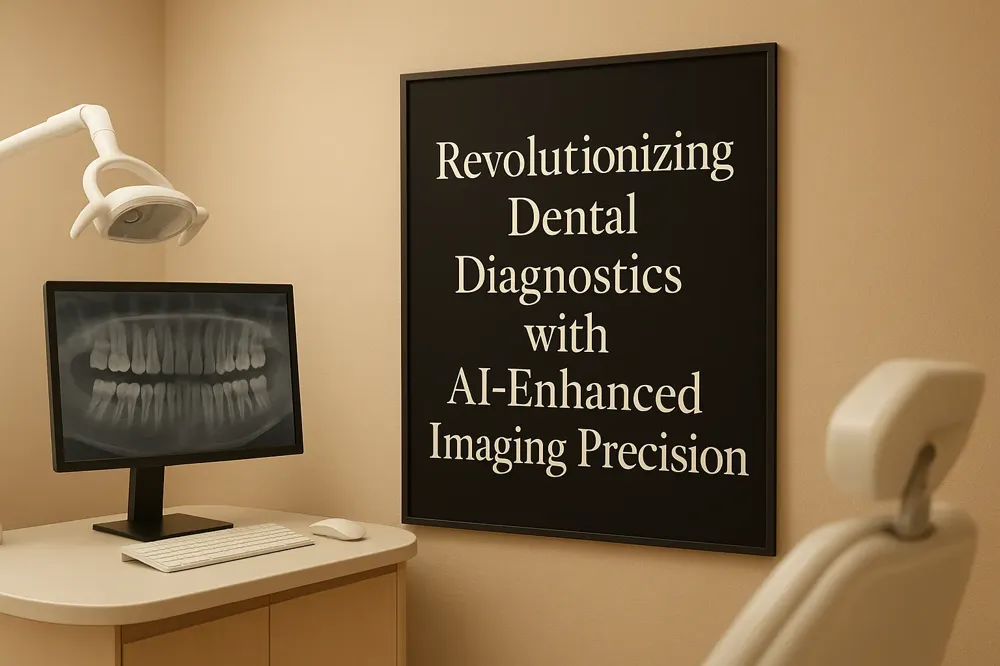
Artificial intelligence transforms dental imaging by providing highly accurate analysis of radiographs and advanced 3D imaging techniques. AI algorithms utilize deep learning to detect subtle changes and abnormalities in dental images that may be missed by dentists, such as early cavities, gum disease, and potentially oral cancers.
These technologies enable early detection of oral diseases by identifying patterns and anomalies at a millimeter-level precision. For example, AI tools like Overjet X-ray annotation annotate X-rays with detailed insights, helping dentists understand and explain findings more effectively.
Moreover, AI streamlines the diagnostic workflow by processing images rapidly and consistently, reducing human error and saving valuable time in clinical settings. This efficiency allows for more personalized dental treatment plans tailored to the individual patient's dental profile, improving outcomes and patient satisfaction.
In summary, integrating AI into dental imaging elevates diagnostic accuracy, enables earlier intervention, and supports personalized care strategies, leading to more proactive and effective dental health management.
Artificial intelligence (AI-driven dental tools) utilizes advanced algorithms to analyze comprehensive patient data including dental images, medical histories, and treatment outcomes. Platforms like Overjet dental algorithms provide millimeter-level accuracy in detecting oral diseases and overlay diagnostic annotations on X-rays, facilitating precise early diagnosis. These algorithms assist dentists in formulating individualized treatment plans by evaluating unique oral health conditions and predicting possible treatment successes, thereby enhancing precision in care.
Personalized dental treatment considers genetics, lifestyle habits, and the oral microbiome—factors that greatly impact oral health. Advanced diagnostic tools and data analytics evaluate these variables to customize care. For example, genetic predispositions can indicate susceptibility to cavities or gum disease, while microbiome profiles help design preventive strategies. AI also integrates lifestyle data, such as diet and smoking habits, to better tailor hygiene and treatment recommendations.
Personalized dental care offers superior prevention by enabling early detection of issues like cavities and periodontal disease, reducing invasive treatments. Tailored preventive strategies improve patient outcomes and comfort. Restorative procedures benefit from customized designs that fit precisely, resulting in better functionality and aesthetics. Overall, personalized plans boost long-term oral health, reduce treatment frequency, and elevate patient confidence through more natural and effective results.
| Aspect | AI Role | Benefit |
|---|---|---|
| Diagnostic Accuracy | Analyzes digital X-rays and patient data | Early disease detection and preventive care |
| Treatment Customization | Uses genetics and lifestyle data | Tailored treatment strategies |
| Patient Comfort and Outcomes | Designs precise restorations and plans | Improved fit, function, and satisfaction |
Advances in dental technology are transforming treatment approaches to be more precise, efficient, and patient-friendly. One major innovation is the use of CAD/CAM technology (computer-aided design/computer-aided manufacturing) systems powered by AI, which enable same-day dental restorations such as crowns, veneers, and bridges. This technology digitizes impressions and mills restorations in-office, significantly reducing the need for multiple visits and improving fit and comfort.
Laser dentistry represents another breakthrough, offering minimally invasive dental procedures with faster healing times and less discomfort. This technology allows dentists to treat conditions like gum disease and decay more effectively while enhancing patient experience.
3D printing in dentistry innovations are revolutionizing the production of dental prosthetics, including manufacturing of dental implants, dentures, and orthodontic appliances. This leads to highly customized, patient-specific devices with improved fit and treatment outcomes.
Teledentistry is expanding access to dental care by enabling remote dental consultations, follow-ups, and urgent assessments—particularly beneficial for patients in rural or underserved areas. AI-powered tools within teledentistry also support early diagnosis of oral diseases and personalized treatment plans.
Additionally, smart oral care devices such as AI-enabled toothbrushes provide real-time oral hygiene feedback and personalized oral hygiene recommendations, encouraging better at-home care and early problem detection.
Together, these advanced technologies foster a future of personalized dental treatment, accessible, efficient, and comfortable, ultimately improving oral health outcomes across diverse patient populations.
Artificial intelligence offers significant benefits in dentistry, including enhanced Advanced imaging and radiography analysis and the capacity to visualize anatomic details for treatment planning. AI also supports clinicians by simulating treatment outcomes and forecasting disease progression, which promotes more Personalized treatment planning with AI. Additionally, AI-driven dental treatment planning streamlines administrative tasks and improves practice efficiency.
Despite these advantages, the integration of AI faces challenges. Protecting patient data privacy is paramount, requiring strict adherence to regulations like HIPAA regulations for dental AI. Bias in AI algorithms, often due to unrepresentative data, can lead to unequal care, making transparency and fairness essential in AI tool development. Moreover, understanding how AI systems make decisions is crucial to build trust among clinicians and patients.
The American Dental Association (ADA) AI standard has developed standards for AI applications in dentistry to ensure safety, fairness, and transparency. Such regulatory standards promote consistent validation of AI tools, helping dentists compare performance and reducing risks of errors. Clinician oversight remains vital, with AI serving as an assistive technology rather than replacing human judgment. This balance ensures ethical and safe use of AI while preserving professional expertise in patient care.
AI functions best as Augmented intelligence supporting clinicians in diagnosis and treatment planning. Human clinical judgment remains essential to interpret AI insights, consider individual patient context, and make final decisions. Training and education about AI capabilities and limitations help practitioners integrate technology responsibly. Ultimately, combining advanced AI tools with skilled dental professionals enhances precision and personalization without sacrificing the human touch.
| Aspect | Benefits | Challenges |
|---|---|---|
| Diagnostic Accuracy | Early disease detection, precise treatment (AI in dental diagnosis and treatment planning) | Data quality, image variability (AI classification of periodontal disease) |
| Patient Care | Personalized plans, treatment simulations (Personalized dental treatment plans | Bias, transparency, ethical concerns (Ethical and safe AI implementation in dentistry) |
| Practice Efficiency | Automated scheduling, streamlined workflows (AI-powered virtual dental assistants) | Staff training, financial investment (Challenges in integrating AI in dentistry) |
| Regulatory Compliance | Standards for safety and fairness (ADA AI standards) | Ongoing development, enforcement (Regulatory approval of dental AI) |
| Human-AI Interaction | Augmented intelligence supporting clinicians (Augmented intelligence supporting clinicians | Maintaining clinical judgment (Clinician oversight in AI use) |
The American Dental Association (ADA) has established foundational standards to guide the safe and effective use of Artificial Intelligence in Dentistry. Notably, ANSI/ADA Standard No. 1110-1:2025 defines criteria for annotating and collecting data from 2D radiographs to support AI applications in clinical use. This standard aims to ensure that AI systems maintain safety, efficacy, transparency, and fairness.
The ADA actively promotes the development of certification and benchmarking protocols for AI dental technologies. Their technical report No. 1109:2025 highlights the importance of validating AI algorithms using independent datasets with known diagnoses, allowing clinicians to compare accuracy across different AI tools. Such initiatives pave the way for trustworthy AI integration.
The ADA is committed to ethical AI adoption by prioritizing patient safety, data privacy, and equitable treatment. They emphasize transparency in AI system operation and advocate for practices that prevent bias and discrimination. Their guidelines support interoperability of AI systems while ensuring compliance with privacy regulations like HIPAA, safeguarding patient data during AI deployment.
These ADA-led efforts ensure that AI technologies enhance dental care quality while maintaining ethical standards and professional oversight in the United States.
The American Dental Association (ADA) recommends routine dental cleanings, called prophylaxis, typically every six months for most patients. However, this frequency can be tailored based on individual risk factors like a history of gum disease or frequent cavities. Along with professional cleanings, patients are advised to brush twice daily with fluoride toothpaste and perform daily interdental cleaning using floss or brushes to reduce risk of periodontitis.
AI enhances dental care by analyzing scans and X-rays with high precision to detect early signs of cavities, gum disease, and other oral conditions often before symptoms appear. This early detection allows dentists to intervene sooner, reducing the severity and invasiveness of treatments. AI tools also help create personalized treatment plans by evaluating a patient's unique oral health data, improving preventive strategies and follow-up care.
Personalized dental care, supported by AI insights, enables tailored advice and education for patients to maintain better oral hygiene at home. AI-driven patient engagement tools like virtual assistants can remind patients about appointments and share customized oral health tips. This empowers patients to take an active role in their oral health, improving compliance and outcomes over time.
Together, the ADA’s cleaning guidelines and AI-powered dental technologies support proactive, effective oral health maintenance, ensuring patients receive timely care and personalized guidance in today's advancing dental landscape.
The future of dental care promises remarkable breakthroughs that will improve how treatments are delivered and experienced. AI-powered diagnostics are at the forefront, with tools AI for dental scans analysis more accurately and earlier than ever before. Technologies like CBCT reduce radiation exposure while providing highly detailed imaging for better diagnosis. Procedures are becoming less invasive through innovations such as laser dentistry, guided implant surgeries, and designing digital impressions. Orthodontic advances like Invisalign and preventive treatments such as silver diamine fluoride expand minimally invasive dental procedures available to patients. Taken together, these innovations aim to make dental care more Personalized dental care, efficient, and comfortable.
The 80/20 rule — also known as the Pareto principle — suggests that roughly 80% of outcomes come from 20% of efforts. In dentistry, this means focusing on the most impactful procedures and care strategies can maximize patient benefits and practice efficiency. Identifying critical activities, such as prioritizing Early detection in dentistry with AI tools or streamlining workflows using digital imaging techniques, helps reduce wasted time and resources while improving clinical results. This rule encourages dental teams to leverage data and technology to amplify their most effective interventions.
Combining cutting-edge research with advanced technology is essential for delivering value-based dentistry that prioritizes patient outcomes and cost-effectiveness. AI in dental diagnosis and treatment planning informs Tailoring dental treatments based on individual risks and genetics, optimizing care precision. Digital workflow optimization with AI and predictive analytics reduce unnecessary procedures and appointment visits, benefiting both patients and providers. Emphasizing early detection in dentistry also aligns with value-based care goals by maintaining oral health longer and minimizing invasive interventions. This integrated approach ensures dentistry continues evolving towards smarter, patient-centered, and sustainable care models.
Artificial intelligence (AI) is revolutionizing dental care by enhancing diagnostic accuracy and treatment efficiency. Through precise analysis of dental images and real-time data, AI enables earlier detection of issues such as cavities, gum disease, and oral cancer, which were often missed by traditional methods. This innovative technology also streamlines procedures like crown fabrication and implant planning, reducing patient visits and improving comfort.
By leveraging AI-driven insights, dental professionals can develop highly tailored treatment plans that consider individual genetics, lifestyle, and oral health history. This personalized approach leads to more effective preventive care and restorations that fit seamlessly, boosting long-term oral health and patient confidence.
The future of dentistry is poised to expand AI applications further, incorporating predictive analytics, teledentistry, and advanced imaging to elevate patient-centered care. Patients are encouraged to seek dental practices that embrace these cutting-edge technologies to experience improved outcomes, greater convenience, and enhanced comfort in their dental health journey.