Even more knowledge

Zirconia’s flexural strength and fracture toughness ensure durable crowns; its biocompatibility and bacterial adhesion promote oral health. CAD/CAM workflows provide fit, and Gentle Dentistry of Staten Island delivers patient‑centered care.
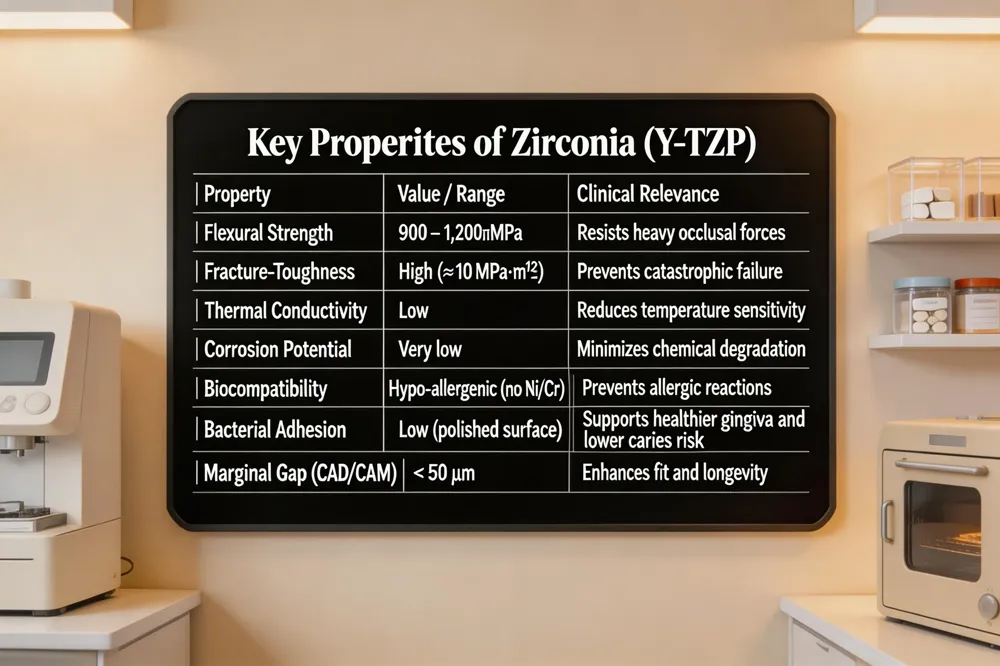 Zirconia (Y‑TZP) is distinguished by a combination of mechanical, physical, and biological attributes that give it exceptional durability in the oral environment. Zirconia’s flexural strength ranges from 900 to 1,200 MPa and it possesses a high fracture‑toughness, making it the strongest dental ceramic and able to resist the heavy occlusal forces of both anterior and posterior teeth. The material’s low corrosion potential, low thermal conductivity further protect it from chemical degradation and reduce patient sensitivity to hot or cold stimuli. Zirconia is highly biocompatible and hypo‑allergenic; it contains no nickel, chromium, or other metal alloys, eliminating the risk of metal‑related allergic reactions and gingival irritation. In vitro and in vivo studies show that polished zirconia surfaces accumulate significantly less plaque than titanium or porcelain, promoting healthier gingival tissues and reducing the likelihood of secondary caries. Altogether, these properties—robust mechanical strength, chemical inertness, thermal stability, and a clean, biocompatible surface—underpin the long‑term clinical success and patient satisfaction associated with zirconia crowns.
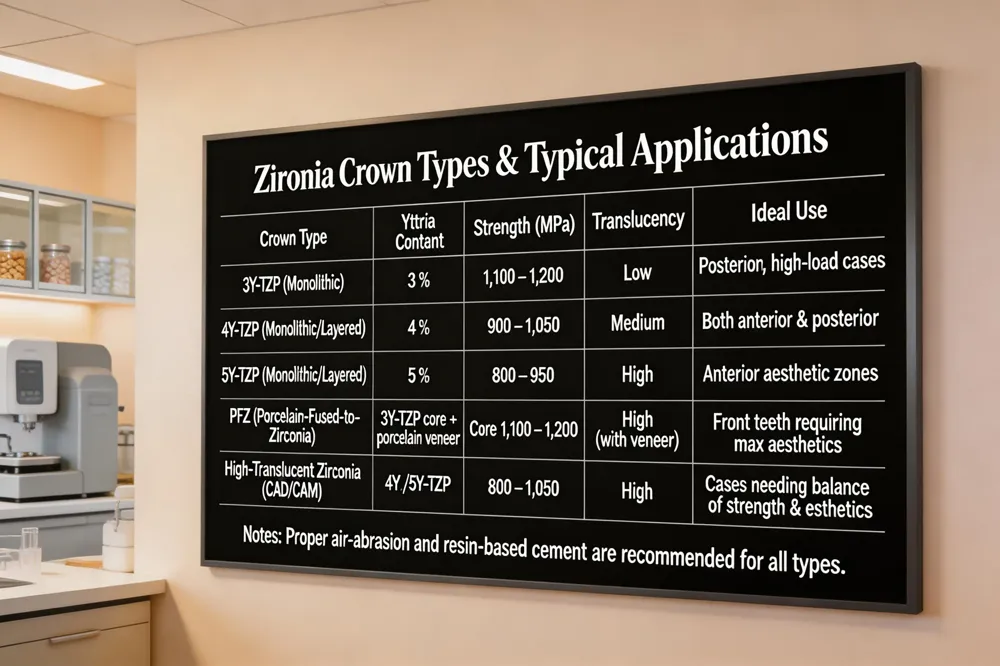 Zirconia crowns are available in several distinct forms to match both strength and aesthetic needs. Monolithic (full‑contour) zirconia crowns are milled from a single block of zirconia, offering the highest fracture resistance and are ideal for posterior teeth or patients with heavy bite forces. Layered or porcelain‑fused‑to‑zirconia (PFZ) crowns add a thin porcelain veneer over a zirconia core, providing enhanced translucency for a natural look in the front teeth while still benefiting from the core’s durability. High‑translucent zirconia is classified by yttria content: 3Y‑TZP (tetragonal) provides maximum strength, 4Y‑TZP offers a balance of strength and medium translucency, and 5Y‑TZP delivers the greatest translucency for highly aesthetic zones. All of these formulations can be fabricated with CAD/CAM technology, which captures a digital intra‑oral scan, mills the restoration with sub‑millimeter precision, and often allows same‑day placement. Proper surface treatment (air‑abrasion, resin‑based cement) and optimal cement thickness further enhance retention and marginal fit, ensuring long‑term stability regardless of the chosen zirconia type.
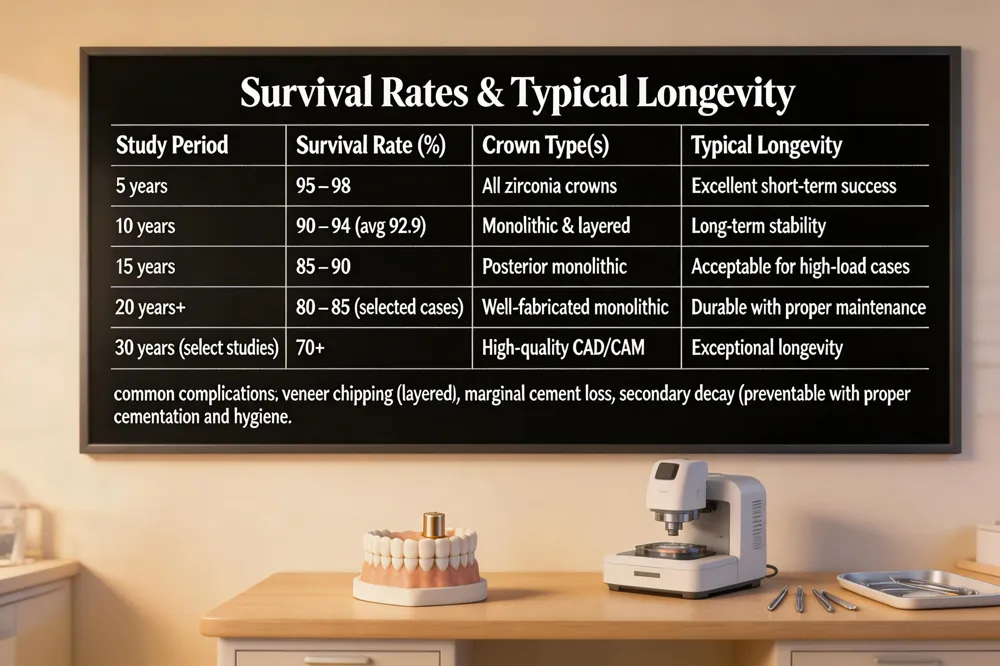 Zirconia crowns exhibit excellent survival statistics. Five‑year survival rates range from 95 % to 98 %, while 10‑year rates are reported between 90 % and 94 % (e.g., 92.9 % after ten years). Monolithic zirconia, milled from a single block, maintains a 90‑95 % success rate over 5‑10 years and is less prone to veneer chipping than layered designs. Long‑term data up to 30 years show that well‑fabricated crowns can survive two decades or more when proper preparation, air‑abrasion, optimal cement thickness, and regular maintenance are observed. Front‑tooth zirconia crowns typically last 10‑15 years, with many reaching 20 years with good oral hygiene and occlusion control. Patient satisfaction remains high; common complications are minor veneer chipping, marginal cement loss, or secondary decay—issues that are easily repaired or prevented with proper cementation, night‑guard use for bruxism, and routine dental check‑ups. Overall, zirconia’s high flexural strength, biocompatibility, and low bacterial adhesion support stable retention and functional stability for many years.
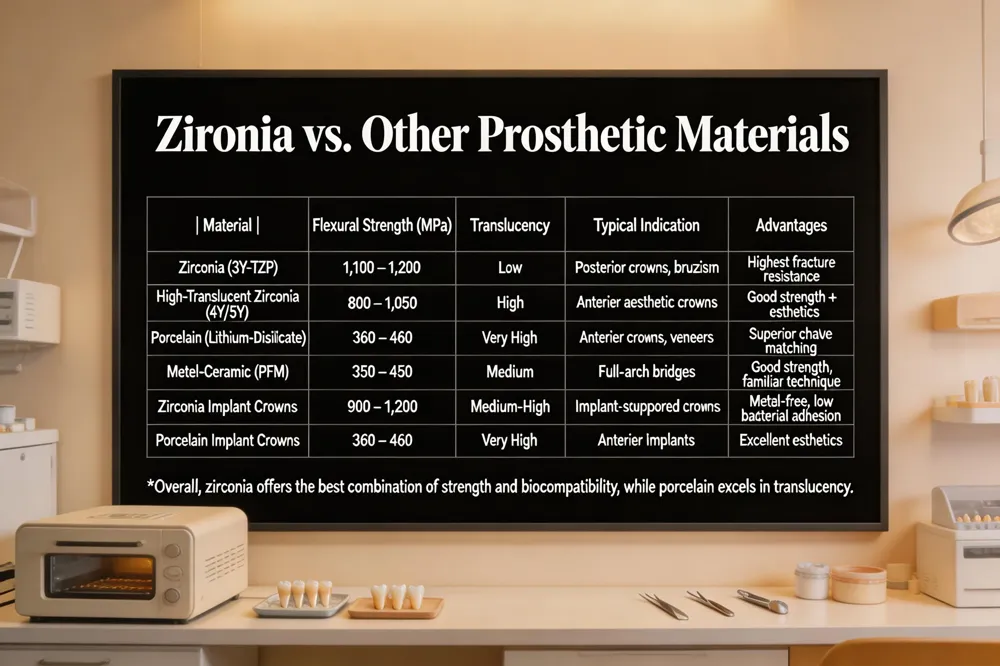
Ceramic vs porcelain vs zirconia crown
All‑ceramic (porcelain) crowns give the highest translucency for front‑tooth aesthetics but are brittle; lithium‑disilicate ceramics add strength while keeping good shade matching. Zirconia crowns provide the greatest fracture resistance (flexural strength 900‑1,200 MPa) and wear resistance, making them ideal for posterior teeth or bruxism patients. Modern high‑translucent zirconia narrows the aesthetic gap, offering a natural look with superior durability.
Zirconia vs porcelain All‑on‑4
Zirconia frameworks deliver superior fracture resistance and long‑term stability for full‑arch prostheses, while porcelain frameworks prioritize translucency. Clinicians often combine a zirconia core with a thin porcelain veneer to balance strength and aesthetics. Zirconia is more costly and harder to repair, but it resists chipping and staining better than porcelain.
Zirconia vs porcelain crown for front teeth
Porcelain crowns remain the first choice for maximum translucency and seamless shade blending. High‑translucent zirconia, especially when layered with porcelain, can be used when additional strength is required, though it remains slightly more opaque.
Zirconia vs porcelain bridge
Zirconia bridges excel in strength and fracture resistance for posterior spans; porcelain bridges provide superior aesthetics for visible zones. A zirconia core with a porcelain veneer often offers the best compromise.
Evaluation of zirconia and metal‑ceramic crowns
Zirconia crowns achieve 93‑96 % 5‑year survival, slightly higher than metal‑ceramic crowns (≈90 %). High‑translucent zirconia eliminates gray‑line margins, improving aesthetics while maintaining metal‑free biocompatibility.
Porcelain vs zirconia implants
Porcelain implant crowns give excellent translucency for anterior restorations; zirconia implant crowns provide metal‑free strength, lower bacterial adhesion, and >15 year longevity, making them preferable for posterior or high‑load cases.
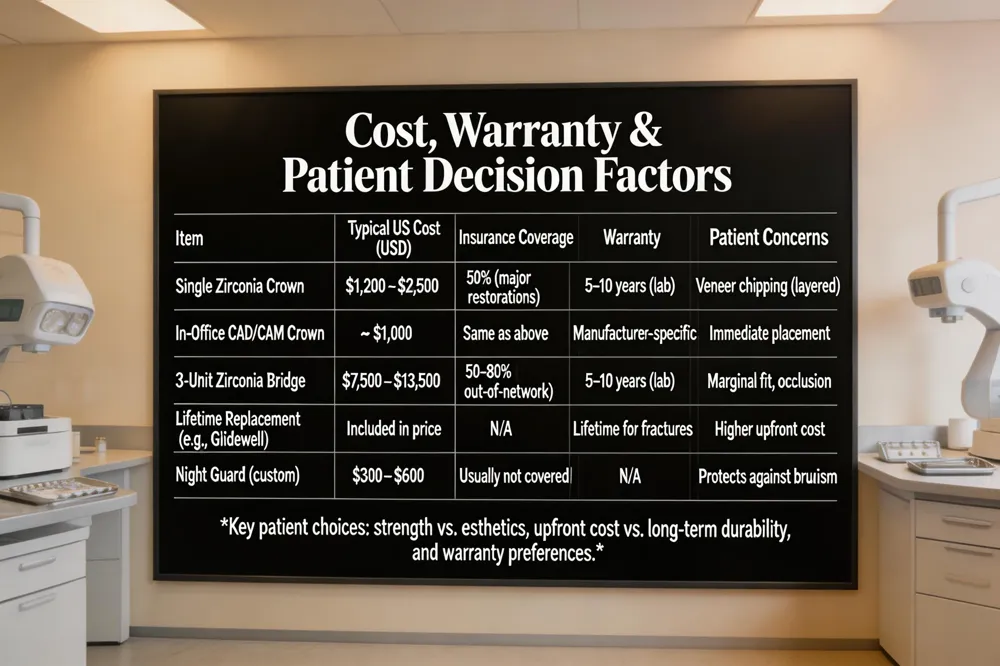 Zirconia crowns in the U.S. typically cost $1,200 – $2,500 per unit; in‑office CAD/CAM can be near $1,000. Bridges run $2,500 – $4,500 per unit, so a three‑unit bridge often totals $7,500 – $13,500. Dental insurance usually covers about 50 % of major restorative work, and many plans reimburse 50‑80 % for out‑of‑network restorations. Most labs offer limited warranties (5–10 years) on structural integrity, while some manufacturers—Glidewell, Illusion Zirconia Life—provide lifetime replacement policies for fractures. Clinicians prefer zirconia because its flexural strength (900‑1,200 MPa) and fracture toughness surpass porcelain and metal‑ceramic alternatives, it is biocompatible, low‑corrosive, and can be milled to precise margins with CAD/CAM. Patients often worry about veneer chipping, composite bonding durability, or celebrity trends; layered zirconia can chip when the porcelain exceeds 1.5 mm, but monolithic zirconia eliminates that risk. Common complications—poor marginal fit, cement failure, or excessive wear on opposing teeth—are mitigated by air‑abrasion, proper resin‑cement cement, and meticulous polishing. After 10 years, composite bonds soften and stain, while 20‑year‑old veneers may chip or debond, prompting replacement with more durable zirconia restorations.
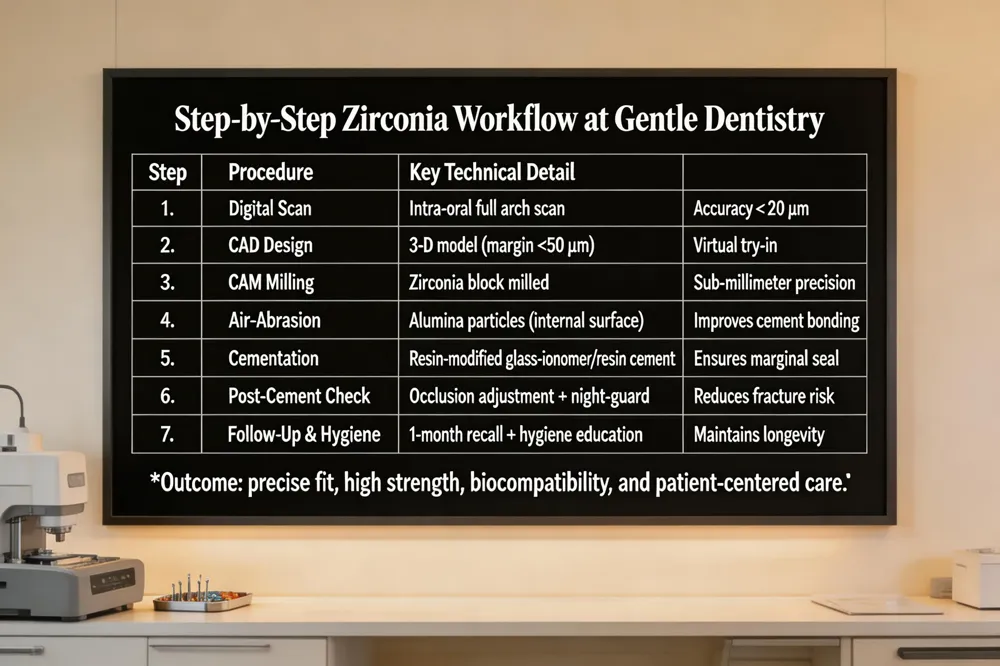 Gentle Dentistry begins every zirconia crown case with a digital intra‑oral scan that captures the exact anatomy of the tooth and surrounding dentition. The data are sent to a CAD/CAM system where a precise 3‑D model is milled from a high‑strength zirconium‑dioxide block ensuring marginal gaps often under 50 µm and preserving more natural tooth structure. Before cementation, the internal surface of the crown is lightly air‑abraded with alumina particles; this micro‑roughening creates a reliable bonding substrate for resin‑modified glass‑ionomer or resin cement, while maintaining the material’s excellent biocompatibility and low bacterial adhesion. For patients with bruxism, the clinician recommends a custom‑fabricated night guard to protect the restoration from excessive occlusal forces, a precaution supported by studies showing zirconia’s superior fracture resistance even under heavy loads. Transparent pricing is presented up front, with financing options that spread the cost of the crown and any ancillary services. Finally, Gentle Dentistry schedules a follow‑up visit and provides oral‑hygiene education—em
izing gentle brushing, flossing, and regular professional cleanings to sustain the crown’s durability and the patient’s long‑term oral health.
Zirconia crowns offer lasting strength, natural aesthetics, and biocompatibility; Gentle Dentistry tailors each restoration to your needs, inviting you to schedule a personalized consultation today for optimal results.