Even more knowledge


A dental abscess is a localized collection of pus caused by a bacterial infection that usually originates in the dental pulp after a cavity, cracked tooth, or prior dental work allows bacteria to infiltrate the tooth. The most common form is a periapical abscess that forms at the tip of a tooth root, though gum (periodontal) and gingival types also occur. Typical signs include severe, throbbing tooth pain that may radiate to the jaw, ear, or neck; swelling of the gums, face, or neck; fever; and a foul taste or odor in the mouth. Detecting these symptoms early is critical because untreated abscesses can spread to the jawbone, sinuses, bloodstream, and even cause life‑threatening sepsis. Prompt dental evaluation and treatment—draining the pus, eliminating the infection, and restoring the tooth—significantly reduce the risk of complications and improve outcomes.
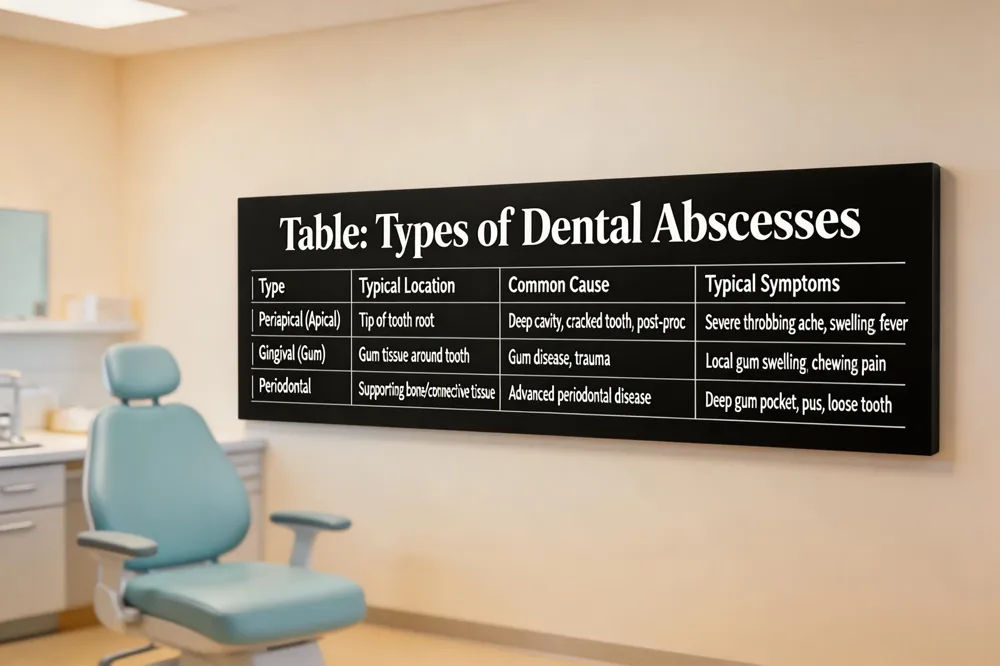 A dental abscess is a localized pocket of pus caused by a bacterial infection that has entered the tooth or its supporting structures. The most common form, a periapical (or apical) abscess, develops at the tip of a tooth’s root when bacteria travel down the pulp chamber. Other types include gingival (gum) abscesses, which form in the soft tissue around the tooth, and periodontal abscesses, which arise within the supporting bone and connective tissue of the periodontium. The infection typically gains entry to the pulp through a deep cavity, a cracked or chipped tooth, or after dental work that leaves a pathway for oral bacteria. Once inside the pulp, the bacteria multiply, causing inflammation, tissue death, and pus formation that can lead to severe pain and, if untreated, become an emergency.
 A tooth abscess often begins with a severe, constant throbbing toothache that may radiate to the ear, jaw or neck. Swelling of the jaw, cheek, or neck accompanies the pain, and patients may notice fever, malaise, and tender swollen lymph nodes. In some cases the infection is present without pain; even a painless abscess can spread to facial tissues and must be examined by a dentist promptly. Early‑stage cheek involvement is usually treated with antibiotics and, when needed, a small incision to drain pus and prevent further spread. Untreated infections can advance rapidly—within 24‑48 hours the bacteria may travel to the jawbone, neck, or bloodstream, creating life‑threatening sepsis; immediate care is essential. Urgent‑care centers can give pain relief and antibiotics, but definitive treatment—drainage, root‑canal therapy, or extraction—requires a dental professional. For more details, search “early signs of dental abscess and emergency symptoms.”
 When a tooth abscess is diagnosed, prompt action is essential to stop the spread of infection and preserve oral health. Our office provides a full range of treatments:
• Incision and drainage procedures – The fastest way to relieve pressure and eliminate pus is a quick incision and drainage, often performed in the same visit, followed by a prescribed antibiotic regimen to control bacterial growth.
• Antibiotic therapy – Systemic antibiotics are given when the infection has spread beyond the tooth or in immunocompromised patients, complementing mechanical drainage.
• Root canal therapy – If the tooth is restorable, we clean the infected pulp, seal the canals, and place a crown, effectively saving the tooth.
• Tooth extraction – For non‑restorable teeth, same‑day emergency extraction removes the infection source and prevents complications.
• Management of gum (periodontal) abscesses – We perform thorough periodontal cleaning, prescribe antibiotics, and, when needed, surgically drain the abscess to protect supporting tissues.
Patients experiencing severe pain, swelling, or fever can count on our same‑day emergency appointments to address these issues swiftly.
 When a tooth abscess strikes, timely treatment can prevent the infection from spreading to the jaw, neck, or airway. Walk‑in urgent‑care appointments are accepted at our clinic, allowing patients to be seen promptly without a prior appointment. We also offer same‑day scheduling for abscess emergencies, ensuring that severe throbbing pain, swelling, or fever is addressed immediately, as recommended by the Mayo Clinic and Cleveland Clinic. For uninsured adults, we provide transparent, flat‑rate pricing and flexible payment plans so cost does not delay care. If swelling threatens breathing or swallowing, we refer patients to the nearest emergency department for airway management, following guidelines from the NCBI and NHS.
Can I go to a walk‑in for a tooth abscess?
Yes—our urgent‑care schedule accepts walk‑ins for abscesses, allowing you to receive immediate assessment and treatment.
Urgent care for tooth abscess near me
Gentle Dentistry of Staten Island provides urgent care services for tooth abscesses, with same‑day appointments to address pain and infection.
Emergency dental care for adults without insurance
We offer transparent, flat‑rate pricing and flexible payment plans for emergency dental treatment, ensuring no‑one has to wait for care.
 Maintaining good oral hygiene is the cornerstone of abscess prevention. Brush twice daily with fluoride toothpaste, replace the toothbrush every 3‑4 months, and floss or use interdental cleaners each day to remove plaque that fuels decay and gum disease. Limit foods and drinks high in added sugars, as sugar feeds oral bacteria that create cavities—the most common pathway for bacterial entry into the pulp. Manage dry mouth (xerostomia) by staying hydrated, chewing sugar‑free gum to stimulate saliva, and discussing saliva‑substitutes or medication adjustments with a healthcare provider, because adequate saliva helps neutralize acids and clear food debris. Finally, schedule regular dental check‑ups and professional cleanings at least twice a year; early detection of cavities, cracks, or periodontal issues allows prompt treatment before an infection can develop into a painful, pus‑filled abscess.
 Gentle Dentistry of Staten Island puts a patient‑centered, gentle approach at the forefront of every visit. From the moment you walk in, the team explains each step, uses soft‑touch techniques, and offers a calm environment to reduce anxiety. State‑of‑the‑art diagnostic imaging—including digital X‑rays and CBCT scans—quickly pinpoint the source of a tooth abscess, allowing the dentist to plan precise incision‑and‑drainage, root‑canal therapy, or extraction. Transparent pricing is provided up front, with clear itemized estimates and flexible financing options such as interest‑free plans and insurance coordination, so you know exactly what to expect financially. After the emergency procedure, the practice schedules comprehensive follow‑up care: post‑treatment X‑rays, wound checks, prescribed antibiotics if needed, and guidance on oral‑hygiene practices to prevent recurrence. This seamless blend of compassion, advanced technology, honest costs, and diligent after‑care ensures a swift, comfortable recovery and preserves your oral health.
A dental abscess usually presents as a severe, constant throbbing toothache that may radiate to the jaw, ear, or neck, coupled with heightened sensitivity to hot or cold, pain when chewing, facial or cheek swelling, tender lymph nodes, foul‑taste or bad breath, and occasionally fever. Sudden release of foul‑smelling fluid indicates a ruptured abscess. Immediate professional care is essential if any of these signs appear, especially when swelling interferes with breathing or swallowing, a high fever (>100.4 °F/38 °C) develops, or the pain does not improve with over‑the‑counter analgesics. Prompt dental evaluation, drainage, and definitive treatment (root canal or extraction) prevent the infection from spreading to the jawbone, sinuses, or bloodstream, which can become life‑threatening.