Even more knowledge

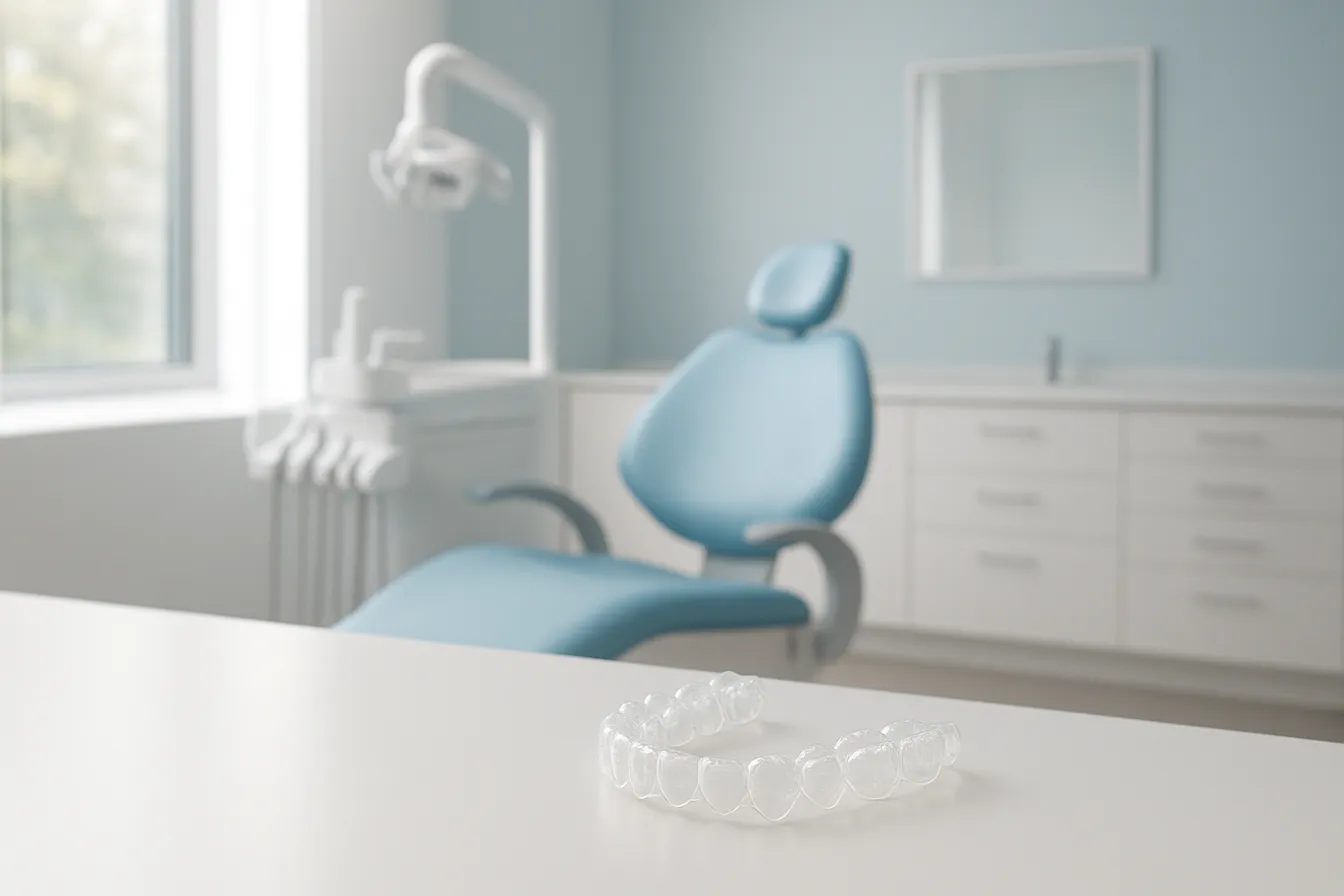
Clear orthodontic treatments primarily include clear aligners and ceramic braces, designed to straighten teeth discreetly. Clear aligners, such as Invisalign and its alternatives, use custom-made, transparent plastic trays that gradually shift teeth. They are nearly invisible, removable, and convenient for maintaining oral hygiene and eating habits. Ceramic braces feature tooth-colored brackets and wires, blending with natural teeth for a less noticeable appearance while still providing effective correction.
Effective orthodontic treatment, especially with clear aligners, requires professional supervision by trained orthodontists. These specialists undergo extensive training and possess the expertise to diagnose complex orthodontic issues and tailor treatment plans. Clear aligners are tools, not standalone treatments, and their success depends on the skill of orthodontists who monitor progress and adjust plans to ensure optimal results.
There is an increasing preference among patients for discreet teeth straightening solutions that fit active lifestyles and aesthetic desires. Clear aligners and ceramic braces address these needs effectively by offering less conspicuous alternatives to traditional metal braces. Their ability to be removed or blend naturally, combined with shorter treatment times in many cases, makes them popular choices for all ages, including adults seeking subtle orthodontic care.

Clear braces offer several options that vary in appearance, comfort, and suitability depending on patient needs.
Ceramic braces overview function similarly to traditional metal braces but use tooth-colored or clear ceramic brackets and frosted wires. This makes them much less noticeable than metal braces, appealing to adult patients concerned with aesthetics. They effectively treat various orthodontic issues, yet they may require longer treatment times and diligent oral hygiene to avoid staining. Ceramic braces are more fragile and generally cost more than metal alternatives.
Invisalign clear aligners are transparent, custom-made plastic trays that fit snugly over teeth. They are removable, which allows patients to eat and maintain oral hygiene without restrictions. Invisalign aligners are designed for comfort, fit closely along the gum line, and are suitable for mild to moderate alignment issues. Treatment duration can range from several months to over a year, depending on complexity. Alternatives such as ClearCorrect aligners and SmileDirectClub aligners also offer similar clear aligner treatments with professional oversight.
Lingual braces attach to the inside surfaces of teeth, rendering them invisible from the outside. They are effective for a wide range of orthodontic concerns but can be more expensive and may cause temporary speech difficulties or discomfort. Their hidden placement caters especially to patients seeking total discretion.
Traditional metal braces use stainless steel brackets and wires, providing robust and versatile treatment options for complex cases. However, their conspicuous appearance and dietary restrictions drive many patients to consider clear options. While Ceramic braces offer a cosmetic upgrade with similar functionality, clear aligners provide flexibility and discretion but depend heavily on patient compliance.
Ultimately, the choice among these types of clear braces depends on individual dental conditions, lifestyle preferences, treatment goals, and budget, best determined through consultation with an Orthodontist specialized training and residency.

Several clear aligner brands have emerged as viable alternatives to Invisalign clear aligners, each with unique features and pricing structures. ClearCorrect aligners is a popular choice offering customizable treatment plans and often a lower cost than Invisalign. Candid aligners stand out for their remote monitoring and at-home impression kits, blending convenience with professional oversight.
Byte focuses on fast treatment times, aided by their patented HyperByte technology, typically completing treatment in as little as 3 to 4 months. Spark Aligners provide competitive pricing and various treatment options suited for different severity levels. ALIGNERCO offers the most budget-friendly plans, starting around $945 for mild cases, making orthodontic care more accessible.
SureSmile, another key player, uses advanced digital planning to ensure precise tooth movements comparable to Invisalign. Most of these brands require professional evaluation and ongoing supervision by licensed orthodontists or dentists, emphasizing the importance of expert guidance to ensure safe and effective treatment.
| Brand | Estimated Cost (USD) | Average Treatment Duration | Notable Feature |
|---|---|---|---|
| Invisalign | $3,000 - $7,000 | 6 - 18 months | Extensive customization and comfort |
| ClearCorrect | $3,000 - $5,500 | 12 - 24 months | Dentist-supervised with attachments |
| Candid | ~$2,400 | 4 - 6 months | Remote monitoring with in-office visit |
| Byte | ~$1,999 | 3 - 4 months | HyperByte technology accelerates treatment |
| Spark | Varies | 6 - 18 months | Competitive pricing and flexible options |
| ALIGNERCO | ~$945 | 4 - 6 months | Budget-friendly with online support |
| SureSmile | $3,000 - $6,000 | Varies | Advanced digital treatment planning |
Treatment times depend on case complexity and patient compliance, with most brands targeting mild to moderate orthodontic issues. Professional dental supervision ensures that the aligner use is appropriate for specific cases and that complex tooth movements are addressed properly.
Clear aligners function as tools within a comprehensive Orthodontic aligners overview that requires careful diagnosis, precision planning, and continual monitoring. Licensed orthodontists bring specialized training that includes understanding facial growth, soft tissue effects, and the biomechanics of tooth movement.
Many aligner companies provide software for treatment customization; however, only experienced professionals can assess facial structure, predict outcomes, and decide on the best treatment sequencing. Orthodontic oversight significantly increases the likelihood of successful, stable, and aesthetically pleasing results compared to unsupervised treatment.
The broad availability of professional clear aligner providers ensures that patients in the United States can access Personalized orthodontic consultations tailored to their unique dental requirements, regardless of the brand chosen.
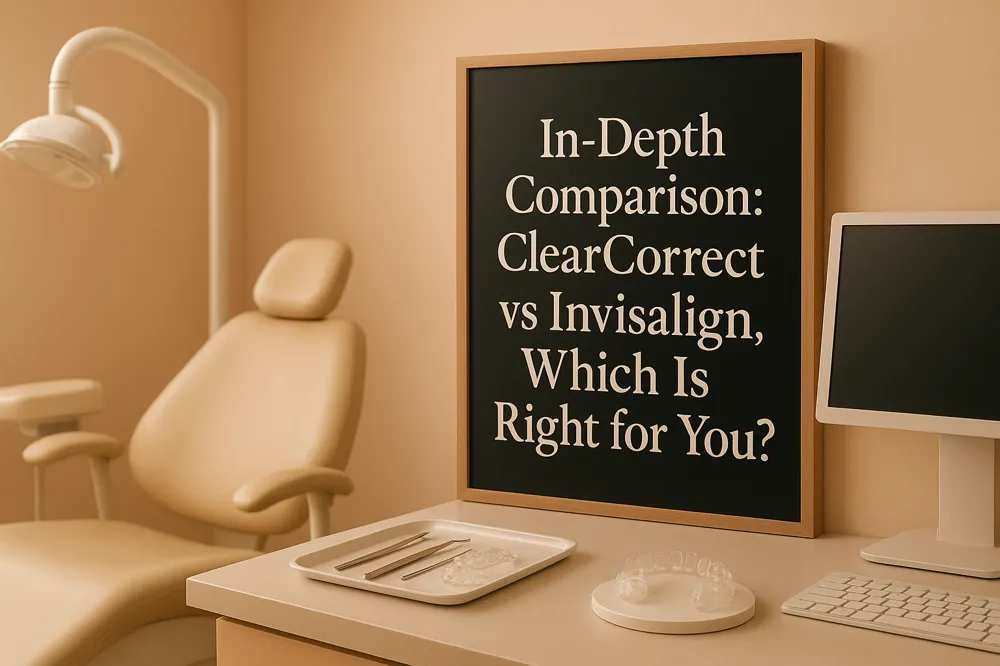
ClearCorrect aligners and Invisalign clear plastic orthodontic aligners both use custom-made clear plastic aligners designed from digital scans to progressively straighten teeth. Invisalign clear aligners are made from proprietary SmartTrack material, offering a snug, flexible fit that many find easier to put on and take off. ClearCorrect aligners are generally thinner and may feel more comfortable and discreet but might occasionally cause minor edge irritation.
Invisalign’s SmartTrack material is engineered for predictable tooth movement and comfort, fitting closely along the gum line. ClearCorrect aligners, while slightly thinner, provide a less bulky feel, which some patients prefer for comfort and aesthetics, though they may be a bit more fragile.
ClearCorrect is typically more affordable, making it a popular choice for mild to moderate orthodontic issues. Invisalign clear aligners usually comes at a higher price point but offers advanced treatment capabilities, which can justify the expense for more complex cases.
Invisalign clear aligners is often favored for complicated tooth movements due to its advanced software, attachments, and elastics options. ClearCorrect aligners can effectively treat many alignment concerns but may be better suited to less complex cases.
Both treatments require regular office visits approximately every 6 to 8 weeks for progress checks. Invisalign clear aligners also offers remote monitoring options, giving patients additional convenience.
Choosing between ClearCorrect aligners and Invisalign clear aligners depends on treatment complexity, cost, and personal comfort preferences. Consulting an experienced orthodontist ensures a tailored treatment plan for optimal results.
Clear braces overview, including ceramic braces and clear aligners like Invisalign clear aligners, generally cost more than traditional metal braces. While metal braces typically range from $3,000 to $7,000, clear aligners often cost between $4,000 and $8,000 depending on the treatment plan and provider.
The increased price reflects the specialized materials offering greater aesthetics, such as the nearly invisible ceramic brackets in clear braces or transparent aligners. Additionally, clear aligners provide convenience through removability, allowing patients to eat without restrictions and maintain easier oral hygiene.
Insurance may cover part of either treatment, and many practices offer flexible financing plans. Your choice depends on orthodontic complexity, personal preferences, and financial budget.
Clear braces overview do have limitations despite their appeal. Ceramic brackets tend to be larger, which can complicate oral hygiene, increasing risks of plaque accumulation and gum irritation if cleaning is insufficient.
The elastic ties often used with clear braces stain easily from foods and drinks, affecting their discreet appearance. Moreover, ceramic components are more fragile and prone to breaking compared to metal, potentially extending treatment duration due to repairs.
Clear braces for teens and adults also tend to suit mild to moderate orthodontic issues better, as they apply less force than metal braces and may not be ideal for complex tooth movements or severe malocclusions.
Patients with clear braces must commit to rigorous oral hygiene, including frequent brushing and flossing, to avoid staining and maintain gum health. They should avoid hard, sticky, or staining foods and drinks like coffee, tea, and red wine, which particularly affect ceramic brackets and elastic ties.
Regular dental check-ups and professional cleanings are crucial during treatment to prevent discoloration and damage.
While clear braces and aligners provide aesthetic benefits, they do not match the strength and versatility of traditional metal braces in handling complex orthodontic problems such as severe crowding, bite issues, or tooth rotation.
Orthodontists often recommend traditional braces for complicated cases due to their ability to apply stronger, continuous pressure and the possibility of using additional appliances.
Choosing the right option requires personalized consultation with an orthodontic specialist to balance goals, complexity, and treatment feasibility such as those offered by Fair Lakes Family and Cosmetic Dentistry.
Yes, Clear braces overview are highly suitable for adults seeking effective and discreet orthodontic treatment. Invisalign clear aligners offer nearly invisible, removable trays that provide comfort and convenience, allowing adults to maintain their lifestyle without the restrictions of traditional braces. Ceramic braces advantages are another option, featuring tooth-colored brackets and wires that blend with natural teeth, helping to minimize visibility during treatment.
Invisalign clear aligners are favored for their subtle appearance and removability, letting patients eat freely and maintain excellent oral hygiene. These aligners apply gentle pressure without metal components, reducing discomfort. Clear braces overview, while less visible, still require careful maintenance due to potential staining but provide a discreet alternative to metal braces.
Treatment duration varies based on case complexity but typically ranges from 6 months to 18 months for adults using Clear braces overview. Some Invisalign treatment process can achieve results in as little as 6 months, especially for mild to moderate alignment issues.
Newer materials like Invisalign's SmartTrack™ material improve comfort and predictability. Technological advances allow for customized treatment plans with 3D scan for aligners and software-guided tooth movement. Additionally, Flexible financing plans have made clear orthodontic choices more accessible to adults.
| Option | Visibility | Comfort | Treatment Time | Maintenance |
|---|---|---|---|---|
| Invisalign clear aligners | Nearly invisible | High, removable | 6–18 months | Remove daily, clean aligners |
| Clear braces overview | Low visibility | Moderate | 12–36 months | Careful brushing, avoid staining |
| Traditional metal braces | Most visible | Can cause discomfort | 12–36 months | Frequent adjustments |
Teeth can sometimes be straightened without traditional braces or Invisalign clear aligners through cosmetic dentistry options like veneers, crowns, or tooth reshaping. These methods enhance the visual appearance by covering or smoothing over minor misalignments, offering a quick aesthetic improvement.
Cosmetic treatments such as porcelain veneers and crowns mainly address how teeth look rather than their position or the function of your bite. They do not move the teeth but mask problems like gaps or unevenness. This means they cannot correct underlying issues such as severe crowding, bite problems (overbite, underbite), or tooth rotation.
Orthodontic treatments remain necessary when there are functional concerns to fix. Options like Invisalign, traditional braces, or other clear aligner systems provide realignment and bite correction. These approaches involve carefully planned gradual tooth movement under the supervision of dental professionals to create lasting and healthy outcomes.
Dental professionals recommend a thorough consultation to identify the best treatment method for each individual. They assess the severity and type of misalignment, bite function, and patient preferences. This ensures the choice—whether cosmetic enhancement or orthodontic realignment—matches the patient’s needs effectively and safely.
In summary, while cosmetic dentistry can improve smile aesthetics quickly in mild cases, braces or clear aligners like Invisalign are often needed for comprehensive tooth straightening and bite correction. A professional evaluation is the first step to determining which path is right for your smile.
Patients deciding between Invisalign clear aligners and other Invisalign alternatives should weigh several important factors. Cost is a major consideration; Invisalign typically ranges from $3,000 to $5,000, while some alternatives like SmileDirectClub affordability or AlignerCo pricing offer lower-price options starting below $2,000. Comfort and convenience also play roles—clear aligners benefits are removable and nearly invisible, allowing easier eating and oral hygiene, which many patients find appealing.
Treatment complexity must be assessed carefully. Traditional braces advantages generally provide stronger, more comprehensive force and can address complex tooth movements and bite corrections better than aligners. Clear aligners excel at segmental tooth movements, may shorten treatment durations, and improve aesthetics but have limitations with certain complex adjustments.
Both Clear aligners options and braces achieve effective orthodontic results overall. Studies show comparable scores in occlusal improvement metrics, such as the Objective Grading System (OGS), but some movements, like transverse dento-alveolar width increases or torque control, favor Clear braces overview due to their fixed mechanical forces.
Aligners require patient compliance for best results, as they are removable, whereas braces are fixed and do not rely on patient discipline. Complex cases often require braces or combined treatments for predictable outcomes.
Orthodontic treatment success heavily depends on expert planning and monitoring by a skilled orthodontist. Aligners, including Invisalign clear plastic orthodontic aligners and its Invisalign alternatives, operate as tools within a professional’s treatment plan rather than standalone solutions. Orthodontists’ extensive training equips them to interpret facial structures, bone movements, and soft tissue dynamics essential for customized treatment.
Each patient’s dental and facial anatomy differs, necessitating personalized treatment approaches. Orthodontists use advanced diagnostics and software to craft tailored plans considering bite complexity, aesthetic goals, and long-term retention. Professional supervision also manages treatment refinements and addresses issues promptly for optimal results.
Ultimately, a consultation with a licensed orthodontist ensures patients select the treatment aligning best with their needs, budgets, and lifestyle preferences, maximizing both effectiveness and satisfaction. For those seeking Personalized orthodontic consultations, professional guidance is key to selecting the ideal option.
Each patient's smile and orthodontic needs are unique. Effective clear aligner or braces treatment depends on a tailored plan created by a skilled orthodontist who considers dental and facial structures.
Choosing between clear aligners, ceramic braces, or other options involves balancing aesthetic preferences with the complexity of your orthodontic case. While clear aligners offer discretion and convenience, some biting and alignment issues may require traditional braces or specialized alternatives.
Clear aligners are tools rather than complete treatments; only experienced orthodontists can safely design and monitor treatment for predictable and stable results. Professionals provide personalized consultations and ongoing care, maximizing success.
If you desire a straight, healthy smile, consult a qualified orthodontist. They will evaluate your condition and guide you toward a discreet, comfortable solution that fits your lifestyle and treatment goals.
Investing in expert-led, customized care ensures you receive the best possible outcome while enjoying the confidence of a subtle, natural smile transformation.