Even more knowledge

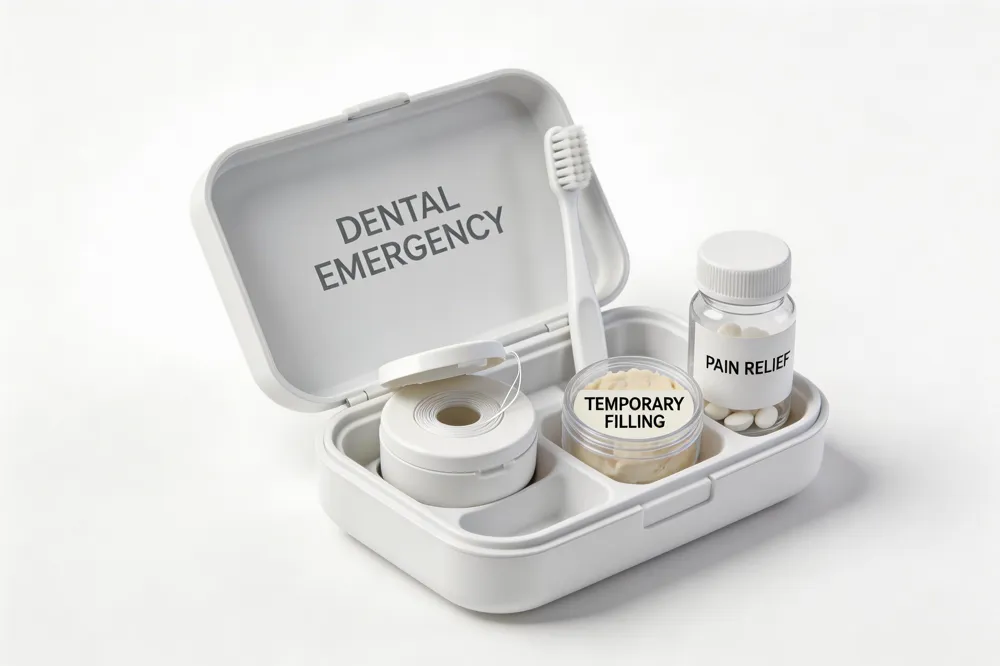
Dental emergencies affect roughly one in six Americans each year, with about 2 million visits to emergency departments annually. Having a ready‑to‑use kit means you can control bleeding, reduce swelling, and manage pain with ibuprofen, a cold compress, and oral numbing gel before a dentist arrives. Temporary filling material or dental wax can seal a lost filling or cover sharp brackets, while a tooth‑preservation container (or milk) keeps an avulsed tooth viable for re‑implantation. This preparedness not only eases immediate discomfort but also improves the chances of saving the tooth and preventing infection, ultimately reducing emergency‑room visits and treatment costs significantly.

A well‑stocked kit begins with temporary filling material (zinc‑oxide‑eugenol cement or quick‑set bonding compound) to seal a lost filling or hold a cracked fragment in place. Include gauze, cotton balls, and sterile wipes for bleeding control and gentle cleaning, plus a small bottle of saline or clean water for rinses. Pain‑relief medication (ibuprofen or acetaminophen) and an oral numbing gel (benzocaine) manage discomfort, while a cold compress reduces swelling. For avulsed teeth, a tooth‑preservation solution—milk, saline, or a “Save‑a‑Tooth” kit—keeps the crown viable for re‑implantation.
Emergency Dental Kit for a Broken Tooth: Use saline rinse, gauze, dental floss, temporary cement, orthodontic wax for sharp edges, and a tooth‑saving container; add ibuprofen and a cold pack, then call Gentle Dentistry of Staten Island within an hour.
What is a dental emergency? Any oral condition demanding immediate professional attention to stop bleeding, relieve severe pain, or prevent permanent damage—knocked‑out tooth, cracked tooth, abscess, or lost restoration.
Best dental emergency kit: Combine the above supplies with a flashlight, printed emergency‑dentist contacts (Gentle Dentistry of Staten Island), and, if desired, ADA‑recommended meds (epinephrine auto‑injector, diphenhydramine, albuterol, glucose, nitroglycerin, aspirin). Store in a labeled, waterproof container and check expirations regularly.

Dental emergency kit subscription Gentle Dentistry of Staten Island ships a fully stocked emergency kit every six months, including temporary filling material, gauze, pain‑relief meds, and a clear guide for knocked‑out teeth, broken crowns, and severe bleeding. Automatic restocking keeps supplies within shelf‑life.
OSHA dental emergency kit requirements OSHA 29 CFR 1910.151 mandates a readily accessible first‑aid kit meeting ANSI Z308.1‑2021 Class B standards, with gauze, bandages, gloves, tweezers, and a resuscitation mask. Dental offices must add patient‑care drugs (epinephrine auto‑injectors, oxygen, ADA meds‑approved meds) and inspect the kit monthly.
ADA dental emergency kit guidelines The ADA calls for sterile saline, gauze, antiseptic wipes, disposable gloves, a CPR barrier mask, and emergency medications: epinephrine (1:1000), aspirin, nitroglycerin, diphenhydramine, albuterol, and glucose tablets. An AED is required where deep sedation is used; staff must be BLS/ACLS trained and the kit inspected quarterly.
HealthFirst dental emergency kit HealthFirst’s pouch meets ADA/JADA standards, containing epinephrine auto‑injectors, naloxone spray, analgesic tablets, sterile gauze, a tooth‑saving zip‑lock bag, antiseptic mouthwash, syringes, needles, and CPR shield. Supplies are tracked and auto‑replenished to stay current.
Patterson dental emergency kit Patterson’s rugged case includes sterile gauze, floss picks, an LED flashlight, mix‑to‑use temporary filling material, and a tooth‑saving container. An illustrated guide walks staff through managing broken crowns, avulsed teeth, and severe bleeding, ensuring rapid, organized response.
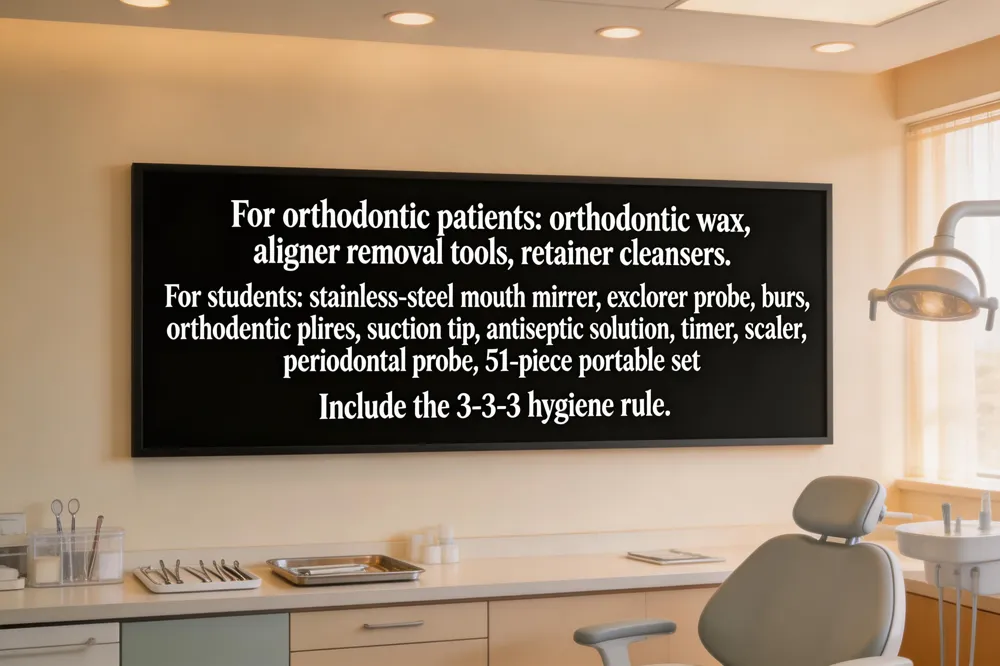
Orthodontic wax and aligner tools are essential for patients with braces or clear aligners. A tube of orthodontic wax covers sharp brackets or wires, while an aligner removal tool and retainer cleanser keep appliances clean. Dental students need an examination kit that mirrors clinic set: stainless‑steel mouth mirror, explorer probe, high‑speed handpiece burs, orthodontic pliers, suction tip, gauze, antiseptic solution, timer and optional scaler and periodontal probe. Kits such as Surgical Mart’s 51‑piece set fit in a carry‑case and stay organized. Brand‑specific kits like Dentech dental first‑aid kit provide items for emergencies: eugenol‑based anesthetic, Temparin Max temporary filling, a “tooth saver” container for milk or saliva storage, sterile cotton swabs, gloves, thermometer and pain‑relief tablets, plus guide. The 3‑3‑3 rule reminds patients to brush for three minutes, floss for three minutes (or three times daily), and avoid food or drink for three hours before bedtime, supporting oral hygiene for braces wearers.

Weekend dental crises occur when offices are closed. Rinse mouth with warm water, apply pressure with gauze or a tea‑bag to stop bleeding, and place a cold compress on the cheek for 10‑15 minutes to reduce swelling. Take an OTC pain reliever such as ibuprofen, avoid chewing on the affected side, and call Gentle Dentistry’s after‑hours line. If you cannot be seen that night, go to emergency dental clinic on Staten Island, e.g., Staten Island University Hospital Dental Emergency.
For those without insurance or limited income, act quickly to avoid a toothache becoming costly. Community‑health clinics, dental‑school urgent‑care programs, and charities often offer services. Gentle Dentistry of Staten Island can give a cost estimate and payment plans, including CareCredit or Sunbit.
If you have no money, dial 211 or contact department to locate dental care. Preserve tooth or denture fragment in milk or saliva and ask clinic about charitable funds or payment options.

Staten Island University Hospital (SIUH) and North Shore University Hospital operate 24‑hour emergency departments that can address urgent dental problems such as knocked‑out teeth, severe infections, facial cellulitis, and uncontrolled pain. They provide initial treatment—antibiotics, pain control, temporary splints, or simple extractions—and arrange follow‑up with a dental specialist. Comprehensive restorative work is referred to a dentist.
Call Gentle Dentistry at (718) 555‑1234 for after‑hours same‑day appointments. The office at 123 Main Street, Staten Island, NY 10301 offers first‑aid guidance over the phone and can treat severe pain, knocked‑out teeth, broken braces, or infections. If hospital care is needed, SIUH’s dental emergency department (4750 Victory Blvd) accepts walk‑ins 24/7.
Cigna dental plans include immediate emergency coverage with no waiting period for extractions, severe pain, or trauma care. Call the 24‑hour dental hotline to confirm benefits and obtain any pre‑authorization. Use in‑network providers to avoid out‑of‑pocket costs.
Plans such as Delta Dental PPO, Cigna Dental Direct, Aflac network dental, and Humana Complete Dental provide emergency coverage that kicks in right away, often covering 100 % of the in‑network fee. Review the “emergency clause” in the summary of benefits or contact the insurer to verify immediate coverage.
Keeping a dental emergency kit up to date is a. Every three months, open the container, verify that pain relievers, numbing gel, temporary filling material and any medications have not passed their expiration dates, and replace any used or outdated items. The kit is not a substitute for a dentist; it merely stabilizes bleeding, eases pain, and protects a knocked‑out tooth until you can reach care, ideally within the hour. Gentle Dentistry of Staten Island offers a subscription service that ships supplies and provides a 24‑hour after‑hours line, so you have up‑to‑date tools and expert guidance when an emergency occurs.