Even more knowledge

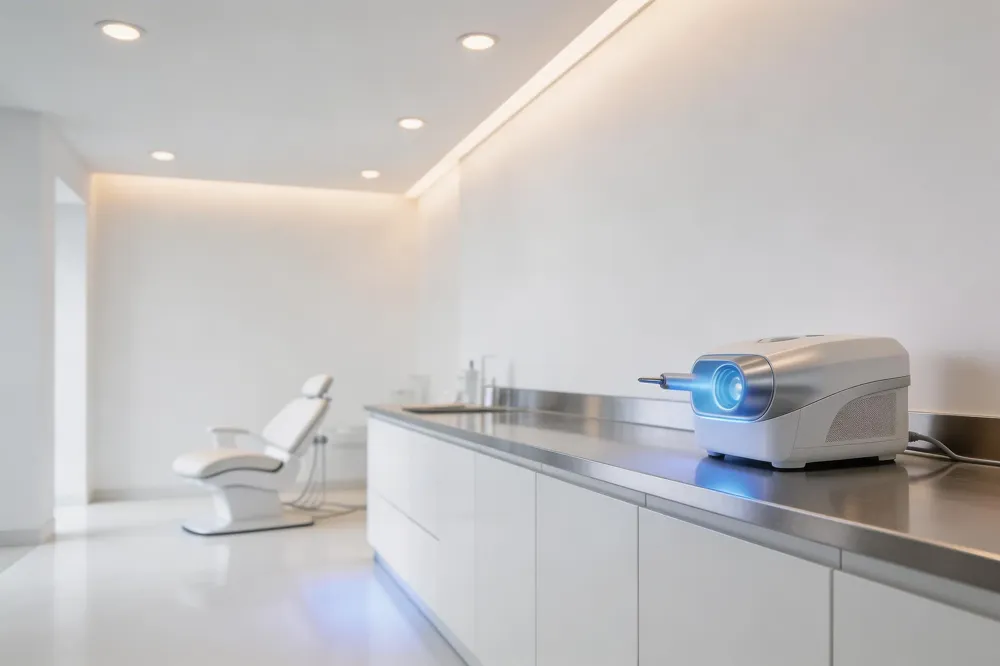
Laser periodontal surgery is reshaping gum care. Because the laser can cut and coagulate tissue without incisions, procedures are painless and often require topical anesthesia, delivering a comfort level that traditional flap surgery cannot match. The minimally invasive nature preserves gum and bone, reduces bleeding, and shortens recovery to 24–48 hours, allowing patients to return to work immediately. Advances such as diode, Nd:YAG and Er:YAG lasers, plus the LANAP protocol, provide tissue interaction that removes bacteria while sparing structures. By lowering inflammation and bacterial load, laser therapy not only improves oral health but also significantly reduces overall systemic risks linked to chronic periodontitis, such as heart disease and diabetes.
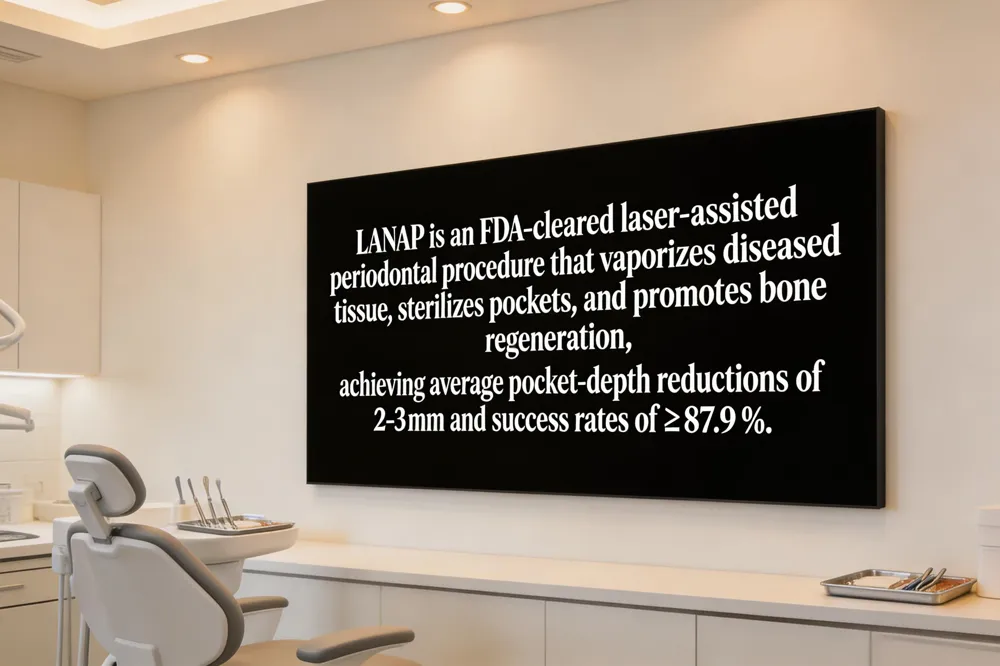
LANAP (Laser‑Assisted New Attachment Procedure) is a minimally invasive, FDA‑cleared periodontal therapy that uses the PerioLase MVP‑7 diode laser (810‑980 nm) to selectively vaporize diseased gum tissue, sterilize pockets, and seal them with a blood clot. The laser’s precise wavelength preserves healthy connective tissue while stimulating bone and connective‑tissue regeneration. Clinical studies report average pocket‑depth reductions of 2‑3 mm and clinical‑attachment gains comparable to flap surgery, with success rates of 87.9 % or higher. Compared with traditional scalpel surgery, LANAP causes far less postoperative pain, swelling, bleeding, and gum recession, allowing patients to resume normal activities within 24 hours. The procedure is effective for moderate‑to‑severe periodontitis (pockets ≤ 6 mm) and can be performed without stopping anticoagulants. Laser gum treatment achieves up to a 99.9 % bacterial kill rate, leading to rapid healing and lower recurrence risk. Even in advanced disease, laser therapy remains a viable option, though very deep pockets may still require conventional surgical adjuncts.
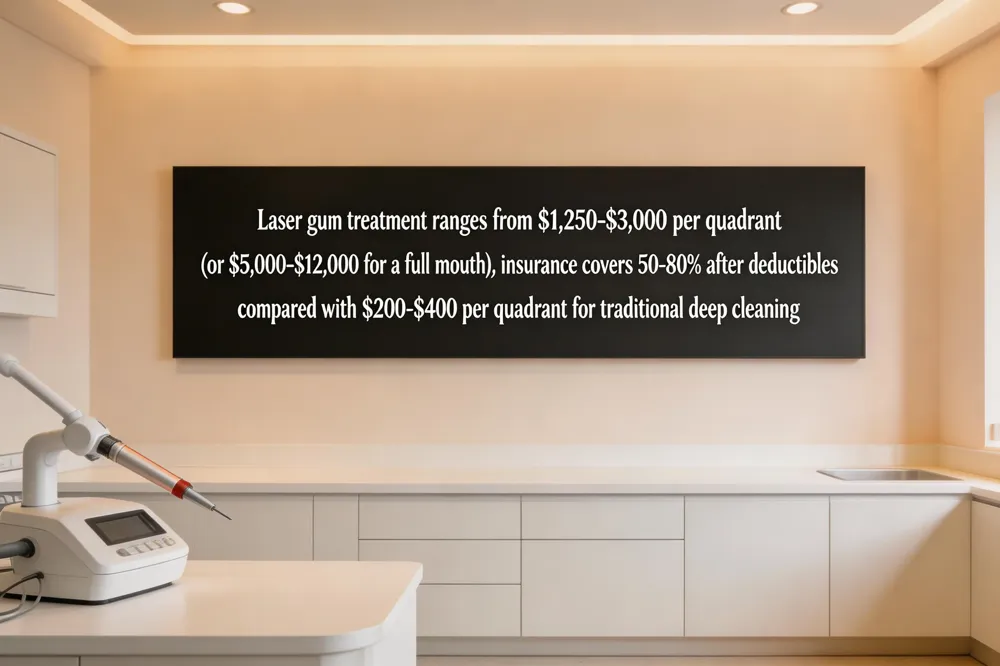
Laser gum therapy costs depend on the technology, disease severity, and insurance coverage. How much does LANAP cost without insurance? A LANAP procedure typically runs $1,250‑$3,000 per quadrant; full‑mouth treatment can reach $5,000‑$12,000. Prices reflect the specialized laser equipment and expertise required. Laser gum treatment vs deep cleaning cost. Traditional deep cleaning (scaling and root planing) averages $200‑$400 per quadrant and is usually covered by insurance. Laser therapy is $1,000‑$4,000 per quadrant, offering precise tissue preservation and faster healing, but is often only partially covered. Laser gum treatment cost. Overall, laser gum treatment ranges $1,250‑$3,000 per quadrant, or $5,000‑$12,000 for the entire mouth, with out‑of‑pocket expenses reduced after insurance benefits. Laser gum surgery cost with insurance. Most plans treat laser surgery as medically necessary and cover 50‑80 % after deductibles, leaving patients to pay roughly $1,000‑$5,000 depending on the extent of care. Laser periodontal therapy cost. The price per quadrant is $1,000‑$4,000; a full‑mouth case may exceed $12,000. Coverage varies, so verify with your insurer and request a personalized estimate from your periodontist.

Laser treatment for gum disease pros and cons Laser gum therapy is minimally invasive, using focused light to eliminate diseased tissue without incisions. This cuts bleeding, pain, swelling and speeds healing, often allowing normal activities within a day. Costs are higher ($2‑8k) and insurers may not fully cover; severe cases may still need conventional surgery.
What are the disadvantages of laser dentistry? Laser dentistry can cause thermal injury if settings are improper and requires strict eye protection. Complex procedures like large restorations or full‑mouth extractions are better done with traditional tools. Specialized equipment and training increase fees, and some clinicians lack experience.
Gum laser treatment side effects Typical side effects are mild: temporary burning or tingling during treatment, slight bleeding, mild swelling, and short‑term tooth sensitivity resolving in 24‑48 hours. Rarely, minor gum discoloration or minimal recession may occur.
What are the disadvantages of laser gum surgery? Drawbacks of laser gum surgery include higher cost and variable insurance coverage, limited availability of trained providers, and limited penetration depth for deep pockets or severe bone loss, making it less suitable for advanced periodontitis. Certain systemic conditions are contraindicated.

Procedural differences: Deep cleaning (scaling and root planing) mechanically scrapes plaque, tartar, and infected tissue from tooth surfaces and roots below the gum line. Laser gum treatment uses a focused light beam to vaporize diseased tissue and kill bacteria while coagulating blood vessels, often requiring only topical anesthesia and no incisions.
Efficacy and pocket reduction: Clinical studies show laser‑assisted protocols such as LANAP can reduce pocket depths by an average of 2–3 mm and improve clinical attachment levels, comparable to or slightly better than conventional scaling alone. Laser’s ability to sterilize deep pockets may lower reinfection risk.
When to choose laser or scaling: For mild‑to‑moderate periodontitis, many clinicians combine both—using a scaler for thorough calculus removal and a laser for targeted disinfection. Severe bone loss or extremely deep pockets may still need traditional flap surgery.
Is laser therapy worth it? The minimally invasive nature reduces bleeding, pain, and recovery time, making it a valuable adjunct for suitable patients, though higher cost and limited availability mean it isn’t necessary for all cases.

Laser gum treatment can halt the progression of recession by precisely removing diseased tissue, killing bacteria, and reducing inflammation. Advanced protocols such as LANAP stimulate the body’s natural healing response, often achieving new attachment of gum tissue and modest regrowth of bone and connective tissue. However, the laser alone rarely fully regenerates lost gum in deep cases; clinicians typically combine laser therapy with connective‑tissue grafts, bone grafts, or membrane procedures to obtain optimal coverage. For patients seeking non‑surgical regrowth, meticulous oral‑hygiene, regular professional cleanings, and a balanced diet support the healing environment but cannot magically regrow tissue without surgical assistance. Laser therapy is not mandatory for every gum‑health issue, but it becomes advantageous when conventional scaling and root planing fail to control bleeding, deep pockets, or bone loss, or when patients desire a minimally invasive cosmetic solution such as correcting a gummy smile. A periodontist will evaluate disease severity, medical history, and imaging to determine whether laser treatment, grafting, or a combination best meets the individual’s needs.

Laser gum treatment typically yields noticeable comfort reduction within the first 1–2 weeks; patients are advised to follow a soft diet for 10–14 days and avoid brushing or flossing the treated sites for about 10 days to protect the clot. Full tissue regeneration generally occurs over 4–6 weeks, while deeper remodeling of gum and bone may continue for several months up to a year. Side‑effects such as mild swelling, temporary discoloration, or minor bleeding are managed with warm salt‑water rinses, over‑the‑counter pain relievers, and avoidance of smoking and alcohol. Post‑operative instructions emphasize gentle oral hygiene, a soft‑food diet, and a follow‑up visit 7–10 days after the procedure to assess healing. Laser therapy is reserved for cases where conventional scaling and root planing fail—persistent bleeding, deep pockets, bone loss, or cosmetic concerns like a gummy smile—making its precision and faster recovery advantageous. Cost‑ per‑ quadrant ranges from $1,000‑$4,000, compared with $200‑$400 for a traditional deep cleaning, and insurance often covers the latter more fully.

When selecting a periodontist on Staten Island, look for a practice that blends a patient‑centered philosophy with rigorous credentials. Gentle Dentistry emphasizes comfort, using a calming environment and minimal‑anesthesia protocols so patients can talk and eat immediately after treatment. The providers—Dr. Bryan D. Pieroni, D.D.S., and Dr. Joshua H. Kanner, D.D.S.—are licensed in New York State, hold board‑certified periodontics training, and regularly attend advanced laser workshops to stay current with FDA‑cleared devices such as the PerioLase MVP‑7 and WaterLase MD. These lasers operate at wavelengths (e.g., diode lasers (810‑980 nm), Nd:YAG lasers (1064 nm), and Er:YAG lasers (2940 nm) that precisely vaporize diseased tissue while coagulating blood vessels, reducing bleeding, swelling, and postoperative discomfort.
Is laser dentistry better than regular dentistry? Laser dentistry offers greater precision, less pain, and built‑in sterilization, but traditional tools remain essential for many procedures; the best practices combine both.
Is laser gum treatment effective? Yes—clinical studies show LANAP can achieve a 99.9 % bacterial kill rate, reduce pocket depths by 2‑3 mm, and promote faster tissue regeneration, making it a safe, minimally invasive option when paired with diligent oral hygiene.
Laser gum surgery offers a minimally invasive solution that removes diseased tissue with focused light, dramatically reducing bleeding, swelling, and postoperative pain. Advanced wavelengths such as diode, Nd:YAG, and Er:YAG precisely target bacterial biofilm while preserving healthy gum, and protocols like LANAP have demonstrated 2‑3 mm pocket‑depth reduction and bone regeneration. Because each patient’s periodontal condition, medical history, and oral‑hygiene habits differ, a personalized treatment plan—crafted by a board‑certified periodontist with laser training—is essential for optimal results. If you are ready to experience faster healing, less discomfort, and lasting gum health, schedule a consultation today and let our expert team design the right laser‑based therapy for you and confidence.