Even more knowledge

Dental myths are widespread, often leading to misunderstandings that can harm oral health. Many people believe brushing harder cleans better or that sugar alone causes cavities, when in fact gentle brushing and bacteria's acid production are the real issues.
Accurate information is crucial because oral health directly affects overall well-being. Gum disease bacteria can enter the bloodstream, increasing risks for heart disease, dementia, and pregnancy complications. Misconceptions delay proper care and worsen health outcomes.
Regular visits to dental professionals play a key role in dispelling myths. Dentists provide early detection of problems like cavities and gum disease that often go unnoticed, educate on effective hygiene techniques, and offer safe treatments such as professional teeth whitening and X-rays with minimal radiation.
Understanding and correcting these common myths enables better oral hygiene habits, promotes healthier smiles, and supports overall health.
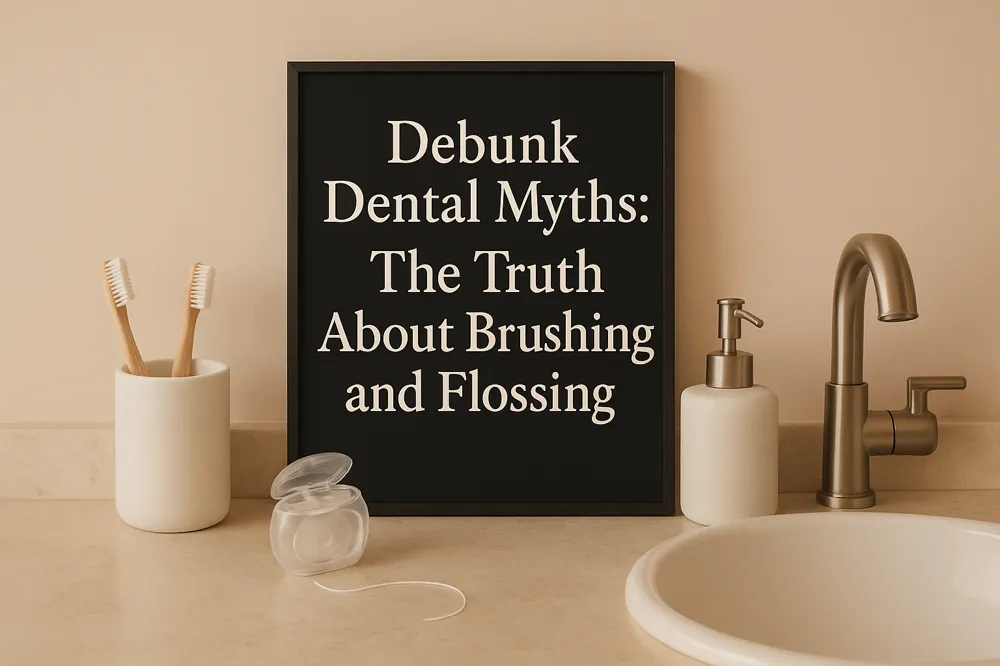
Contrary to popular belief, brushing too hard and gum damage does not clean them better. Instead, applying excessive force can damage the enamel and irritate the gums, leading to enamel erosion and gum recession. These conditions make teeth sensitive and increase the risk of cavities and gum disease.
Using a soft-bristled toothbrush along with gentle circular motions is the safest and most effective way to keep your teeth clean. This proper brushing technique protects your enamel and gums from damage, helping maintain oral health while effectively removing plaque.
Dental experts recommend benefits of brushing twice daily for at least two minutes each time—once in the morning and once before bed. Nighttime brushing is especially important as saliva production decreases during sleep, increasing vulnerability to cavities.
Importance of flossing is essential for removing plaque and food debris from between the teeth—areas that toothbrushes cannot reach. Regular flossing can remove up to 80% of plaque, reducing the risk of cavities and gum inflammation. Despite its importance, many people neglect daily flossing, which undermines oral hygiene.
While benefits of chewing sugar-free gum can stimulate saliva flow and temporarily displace some bacteria, it does not remove plaque or clean the teeth effectively. Therefore, gum chewing should never be considered a substitute for proper brushing and flossing.
| Practice | Reality | Clinical Advice |
|---|---|---|
| Brushing Hard | Damages gums and enamel, causing sensitivity | Use gentle circular motions |
| Brushing Frequency | Twice daily, at least 2 minutes each time | Morning and before bedtime brushing |
| Flossing | Removes plaque inaccessible to brushing | Floss daily for best oral health |
| Chewing Sugar-free Gum | Helps saliva but doesn’t replace brushing | Use as adjunct, not substitute |
Bacteria from gum disease and overall health can enter the bloodstream and contribute to serious systemic health conditions. These include cardiovascular disease, where the bacteria may influence inflammation in blood vessels; dementia, potentially through inflammatory pathways; respiratory infections by inhaled bacteria; and complications during pregnancy such as preterm birth or low birth weight. For more details, see gum disease and overall health.
Pregnancy causes hormonal changes that increase the risk of gum disease, often called pregnancy gingivitis. Managing gum health during this time is critical as untreated gum disease can negatively impact both maternal and fetal health. Pregnant women are advised to maintain dental care during pregnancy and oral hygiene for pregnant women to address these risks effectively.
Routine dental visits every six months play a crucial role in early detection and prevention of dental problems like cavities and gum disease. Early intervention helps avoid progression to more severe conditions that can influence overall health. Dentists can detect signs invisible to the patient, ensuring timely care and management, which is especially important for importance of regular dental visits and regular dental checkups importance.
Maintaining gum health is not just about keeping a beautiful smile; it is a vital component of overall wellbeing, highlighting the importance of importance of routine dental checkups and informed oral hygiene practices.
Gentle Dentistry of Staten Island provides a wide range of orthodontic treatments designed to meet diverse patient needs. Their offerings include traditional metal and ceramic braces, as well as discreet options like clear braces, lingual braces, and Invisalign vs Smile Direct Club. These treatments address common dental concerns such as crooked teeth, overbites, underbites, spacing issues, and jaw misalignments. Treatment plans are tailored to children, teens, and adults, ensuring care that fits each individual's stage of development and oral health needs.
Invisalign vs Smile Direct Club is designed to handle complex orthodontic cases involving significant tooth movements and jaw alignment issues. It involves comprehensive professional oversight with regular in-office visits, enabling orthodontists to customize and closely monitor treatment.
In contrast, Smile Direct Club caters mainly to minor dental corrections, providing a more DIY approach with less frequent dental supervision. While it offers convenience and cost-effectiveness, it is not suitable for complex cases requiring detailed orthodontic intervention.
Orthodontic treatments need to be personalized to address the specific dental conditions and developmental stages of each patient. Gentle Dentistry of Staten Island emphasizes customized care plans that consider patient age and complexity of the orthodontic issue, ensuring the most effective, safe, and comfortable treatment outcomes.
This approach helps prevent common complications and supports long-term oral health, benefiting patients well beyond their orthodontic treatment period.
Dental X-rays are considered safe as they involve very low levels of radiation comparable to a short airplane flight. Modern digital X-ray technology further reduces exposure. These X-rays play a crucial role in detecting dental issues early, such as hidden cavities, gum disease progression, and tumors that are not visible during a routine exam. For more information, see Safety and importance of dental X-rays.
X-rays provide valuable insights beyond what can be seen with the naked eye. They help dentists identify decay between teeth, monitor bone health around the teeth, and spot abnormalities early, enabling timely treatment and prevention of complex issues. Learn more about the Importance of regular dental checkups.
Professional teeth whitening performed under dental supervision is safe and effective. Dentists use specially formulated non-acidic products combined with precise application techniques that minimize enamel damage and sensitivity risks. See details on Professional teeth whitening safety.
Over-the-counter whitening products, if misused, can cause tooth sensitivity, gum irritation, and even enamel damage. Their uncontrolled use and strong bleaching agents may risk long-term tooth health. Read more about Dangers of OTC whitening products.
Natural remedies such as lemon, strawberry juice, or activated charcoal are not safe whitening options. Their high acidity or abrasive nature can erode enamel or cause microscopic damage, potentially increasing staining and sensitivity over time. Dental professionals advise against these methods in favor of safe, evidence-based treatments. Further information can be found in Risks of Using Activated Charcoal for Teeth.
Baby teeth play crucial roles beyond just being placeholders for permanent teeth. They assist children in chewing food properly, aid in speech development, and maintain space for adult teeth to grow in alignment. Early loss or decay of primary teeth can lead to misalignment and crowding issues later on.
Pediatric dental visits should start as soon as the first tooth appears, usually between 6 to 12 months of age. Early dental checkups help prevent early childhood caries and establish healthy habits, ensuring children are comfortable with dental care. See more about "Early Dental Visits for Kids".
Young children often lack the fine motor skills to brush effectively, so parental supervision during brushing and flossing is essential up to age 6-8. Using a soft-bristled toothbrush and gentle circular motions for two minutes twice daily, along with daily flossing once multiple teeth are present, is recommended. Learn about Supervising Children's Brushing Till Age 6-8 and Proper flossing techniques.
Some believe baby teeth do not require care since they will be replaced. This is false; neglect can cause cavities and affect permanent teeth. Also, the idea that children can brush unsupervised early on is incorrect due to the need for thorough cleaning. For detailed insights, see "Importance of Baby Teeth for Kids" and Children's oral hygiene.
Sugar fuels bacteria that produce acids harming enamel, and frequent consumption of sugary snacks or acidic fruit juices can increase decay risk. Limiting sugary and acidic drinks like fruit juices and replacing them with water promotes healthier teeth. Read more on Sugar and tooth decay link and "Fruit Juice vs Water for Children's Teeth".
By ensuring early dental visits, proper hygiene, and sensible diets, children’s primary teeth can be protected, supporting healthy oral development throughout life.

Dr. Sterling and Dr. Skurnick prioritize understanding each patient's unique dental history, preferences, and concerns. They create customized treatment plans tailored to individual needs, ensuring effective and comfortable care. Open communication and transparency are central to their approach, helping patients feel informed and confident. Their gentle techniques combined with advanced technology foster a sense of respect and comfort, aiming to build long-term, trusting relationships focused on oral health and overall health.
The practice uses digital radiographs to reduce radiation exposure by about 80%, making diagnostics safer. Intraoral cameras and high-powered microscopes offer detailed visuals to enhance diagnosis and precision in restorative work. 3D digital scanners like iTero enable quick, radiation-free dental impressions and accurate planning for treatments such as implants and differences between Invisalign and Smile Direct Club. Laser dentistry provides minimally invasive procedures that reduce pain and healing time, enhancing patient comfort. Continuous staff training ensures efficient use of these cutting-edge tools.
Patients receive comprehensive and tailored dental care focused on comfort and safety. Modern technologies support minimally invasive treatments like laser fillings and digital imaging, which reduce trauma and discomfort. Emphasis on preventing tooth loss with proper oral hygiene helps catch issues early, avoiding more complex procedures. The relaxed, welcoming environment and available sedation options help ease dental anxiety, suitable for patients of all ages. The practice’s commitment to personalized, ongoing care supports the maintenance of routine six-month dental checkups.