Even more knowledge

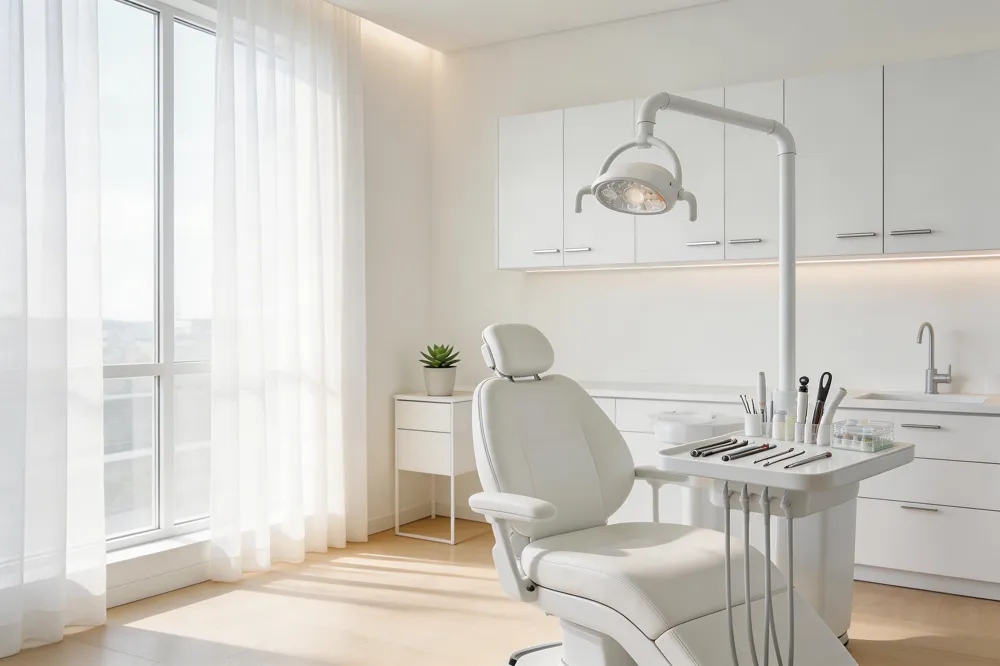
Gentle Dentistry’s patient‑centered philosophy puts comfort, transparency and personalized care at the forefront of every orthodontic journey. The practice blends gentle, low‑friction brackets and clear‑aligner options with cutting‑edge tools such as AI‑driven treatment planning, intra‑oral 3D scanners, in‑house 3D printing of custom appliances, and remote‑monitoring platforms that cut office visits by up to 40%. In 2026, the AAO’s Ortho Innovator Awards highlight AI‑optimized force application, robotic wire‑bending and accelerated orthodontic devices, while manufacturers roll out biodegradable, plant‑based aligner materials. Together, these advances make 2026 a turning point for faster, more predictable, and aesthetically discreet smile transformations.
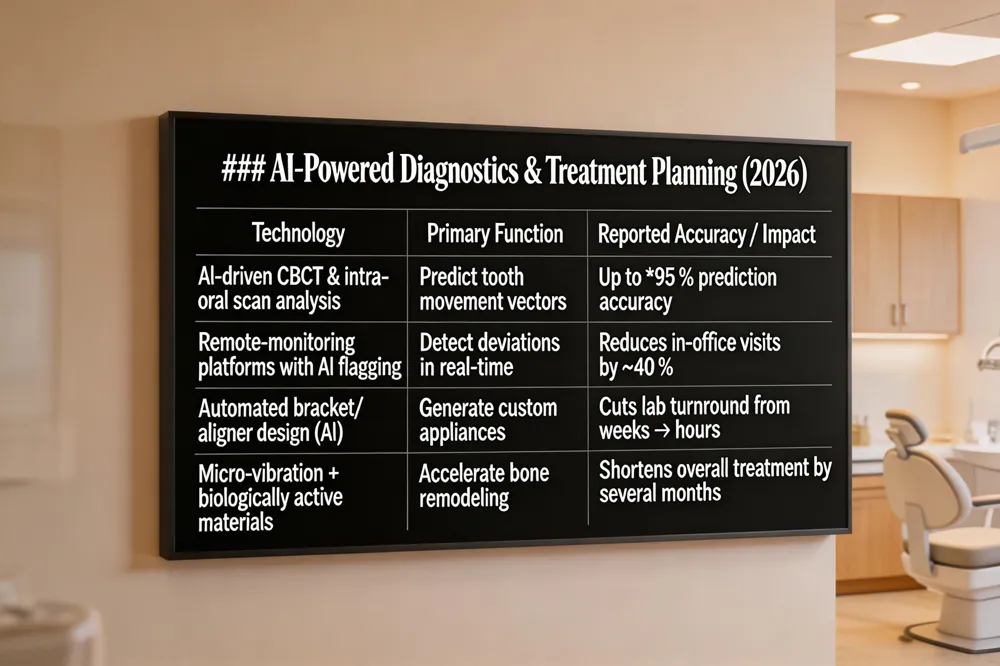 Artificial intelligence reshapes orthodontics through 3‑D imaging and treatment simulation. AI analyzes CBCT and intra‑oral scans to predict tooth movement with up to 95% accuracy, enabling plans that shorten time. Remote‑monitoring platforms let patients upload scans; AI flags deviations, cutting office visits by ~40% while ensuring safety.
Workflow lowers costs and waste. Automated design of brackets, aligners and retainers with in‑house 3‑D printers reduces lab turnaround from weeks to hours. Accelerated protocols that combine micro‑vibration and biologically active materials can cut treatment by several months.
Is there a future in orthodontics? Yes—AI planning ensures a future for patients of all ages. Will AI replace orthodontists? No. AI augments diagnosis and monitoring, but tactile expertise, aesthetic judgment and communication remain essential. What are the new advancements? simulations, 3‑D printed appliances, remote monitoring and accelerated protocols define 2026 orthodontic care. What are the advancements in dentistry in 2026? AI diagnostics, scanning, chair‑side 3‑D printing, implant surgery and teledentistry expand precision and access. What are the 3 M’s? Muscles, Malformation and Malocclusion guide diagnosis and treatment planning.
 The “three M’s” in orthodontics stand for Muscles, Malformation, and Malocclusion. Muscles refer to the functional activity of the masticatory and perioral muscles that influence tooth position and jaw dynamics. Malformation describes the skeletal and dental structural abnormalities, such as a jaw size discrepancy or tooth anomalies, that create the underlying framework for a malocclusion. Malocclusion is the resultant misalignment of the teeth and jaws that the orthodontist seeks to correct. Together, these three factors guide diagnosis and treatment planning to achieve a balanced, functional, and aesthetically pleasing result.
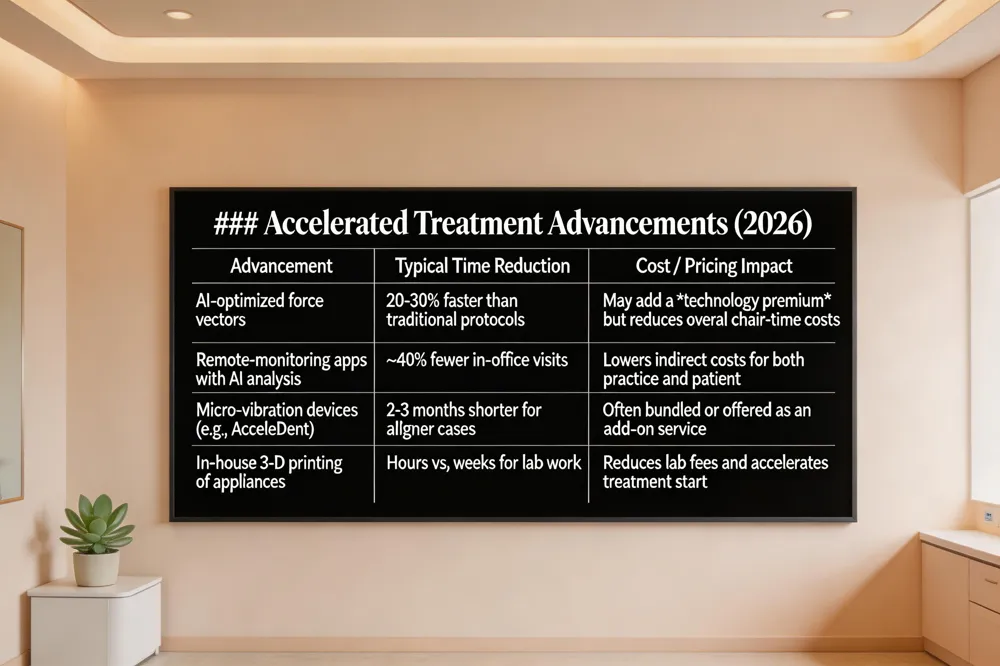 AI‑optimized force application, now common in leading practices such as SMILE‑FX, predicts precise tooth‑movement vectors and can cut treatment duration by 20‑30 % compared with traditional protocols. Remote‑monitoring platforms integrated with AI‑driven image analysis lower the number of in‑office visits by roughly 40 %, allowing patients to send high‑resolution scans from home and receive timely adjustments without frequent appointments.
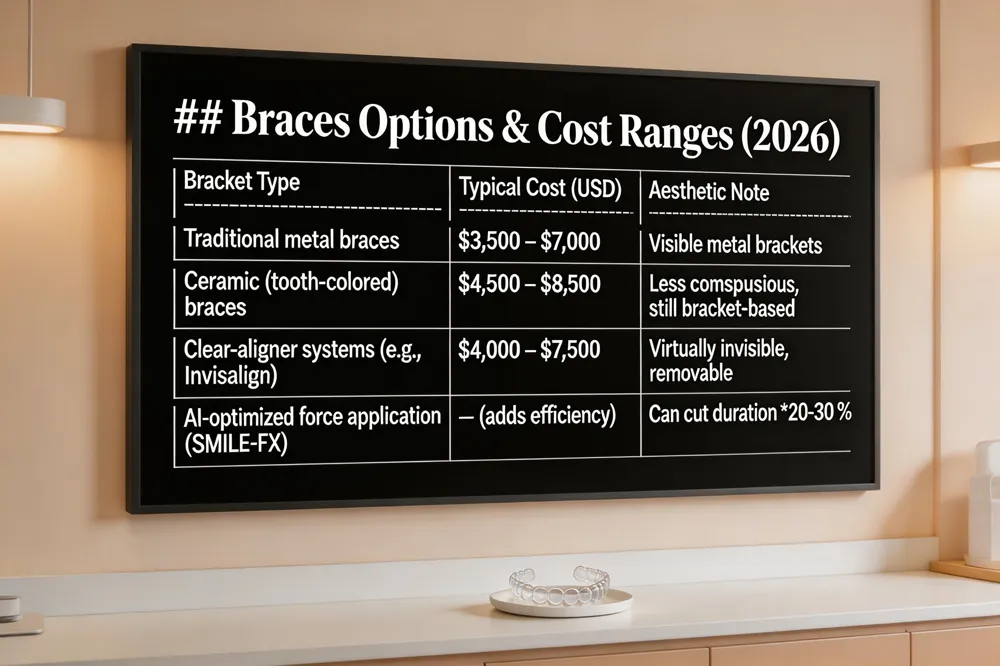
How much do braces cost in 2026? In 2026 the typical cost for a full course of orthodontic treatment in the United States falls within the following ranges: traditional metal braces $3,500‑$7,000, ceramic (tooth‑colored) braces $4,500‑$8,500, and clear‑aligner systems such as Invisalign $4,000‑$7,500. Prices vary by case complexity, treatment length, and digital‑technology premium.
How much does Invisalign cost in 2026? The national average cost for Invisalign ranges from about $3,000 to $8,000 or more, depending on case complexity. Mild cosmetic adjustments $1,200‑$4,500, moderate alignment $3,000‑$6,500, and complex cases $6,600‑$10,000+. Insurance coverage and financing options are widely available.
What are the new advancements in orthodontics? Recent breakthroughs include AI‑driven treatment simulations, in‑house 3‑D printing of custom brackets and aligners, remote‑monitoring apps that reduce office visits, and accelerated tooth‑movement protocols such as micro‑vibration devices. These technologies together deliver faster, more accurate, and patient‑friendly care.
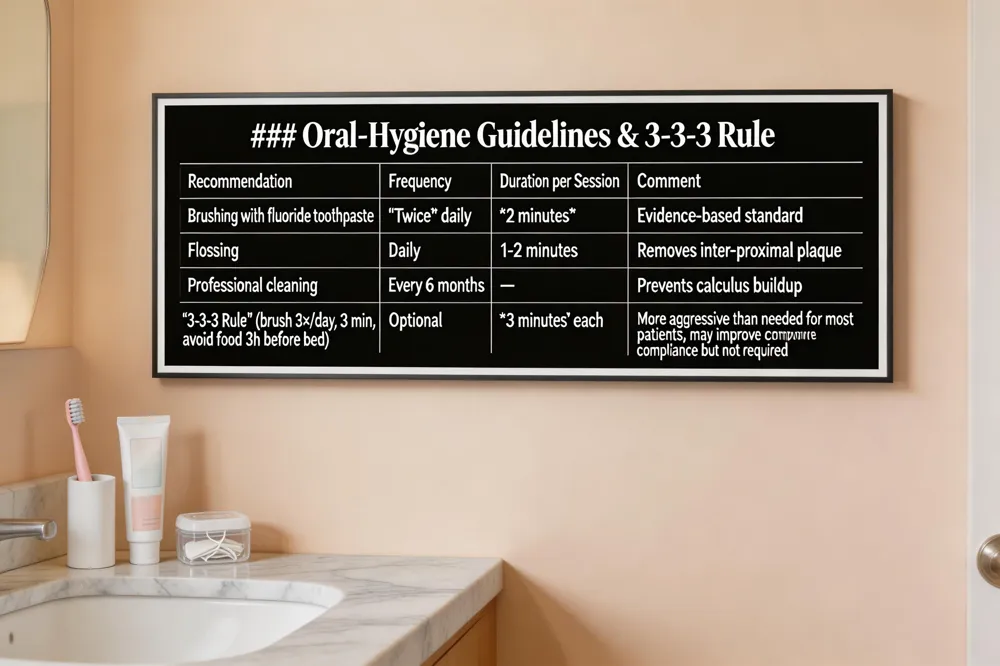 Maintaining optimal oral hygiene is essential for successful orthodontic treatment. Current evidence‑based guidelines recommend brushing twice a day for two minutes with fluoride toothpaste, complemented by daily flossing and regular professional cleanings. While the popular “3‑3‑3 rule”—brush three times a day, for three minutes each session, and avoid food for three hours before bed—can encourage better habits, it exceeds the standard recommendation and may be unnecessary for most patients. Consistent hygiene reduces plaque, prevents decalcification around brackets or aligners, and supports faster, more predictable tooth movement.
Celebrity Invisalign stories illustrate the appeal of clear aligners. Billie Eilish wore Invisalign for roughly 18 months, using small tooth‑colored attachments to achieve a subtle smile transformation. Kate Middleton reportedly used Invisalign for about six months before her 2011 wedding, helping her attain a polished look for the ceremony. These high‑profile examples underscore how compliance with oral‑care protocols and modern, discreet orthodontic options can deliver both health and aesthetic benefits.
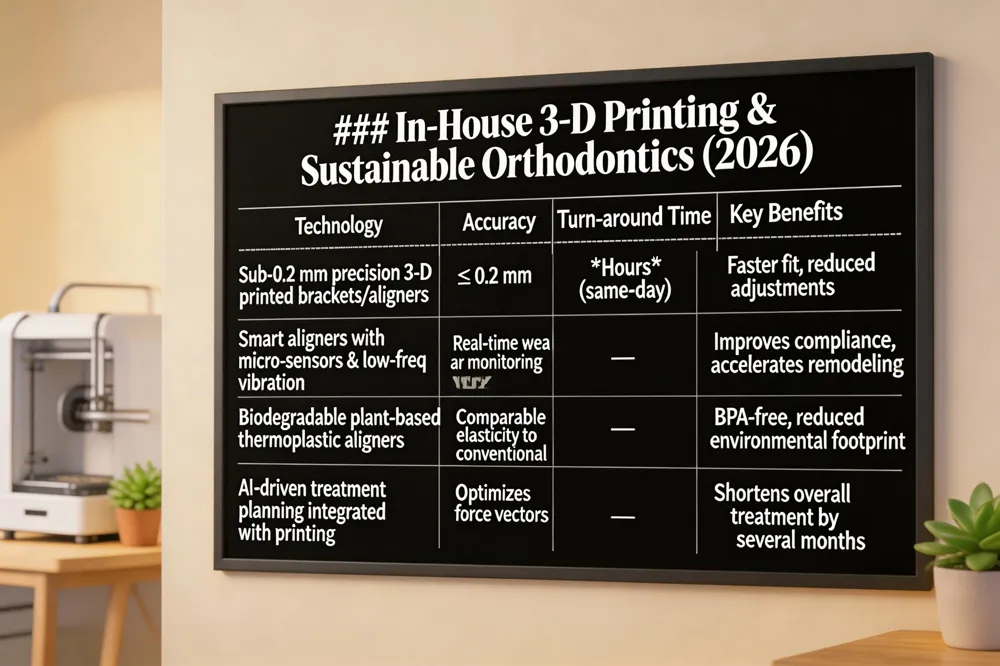 Modern orthodontics in 2026 is defined by three converging advances. First, on‑site 3‑D printing now creates custom brackets, expanders, and clear‑aligner trays that fit each arch with sub‑0.2 mm accuracy, cutting lab turnaround from weeks to hours and reducing chair‑time adjustments. Second, smart aligners equipped with micro‑sensors and low‑frequency vibration modules (e.g., AcceleDent‑compatible technology) monitor wear time, deliver programmable forces, and accelerate bone remodeling, shortening typical Invisalign courses by two‑to‑three months. Third, biodegradable, plant‑based thermoplastic aligner materials—free of BPA and phthalates—provide a sustainable alternative while maintaining the elasticity needed for precise tooth movement. These innovations are supported by AI‑driven treatment‑planning platforms that predict optimal force vectors, remote‑monitoring apps that reduce in‑office visits by roughly 40 %, and clinical data showing AI‑optimized force application can cut overall treatment duration of several months. Together, they deliver faster, more accurate, and environmentally responsible orthodontic care.
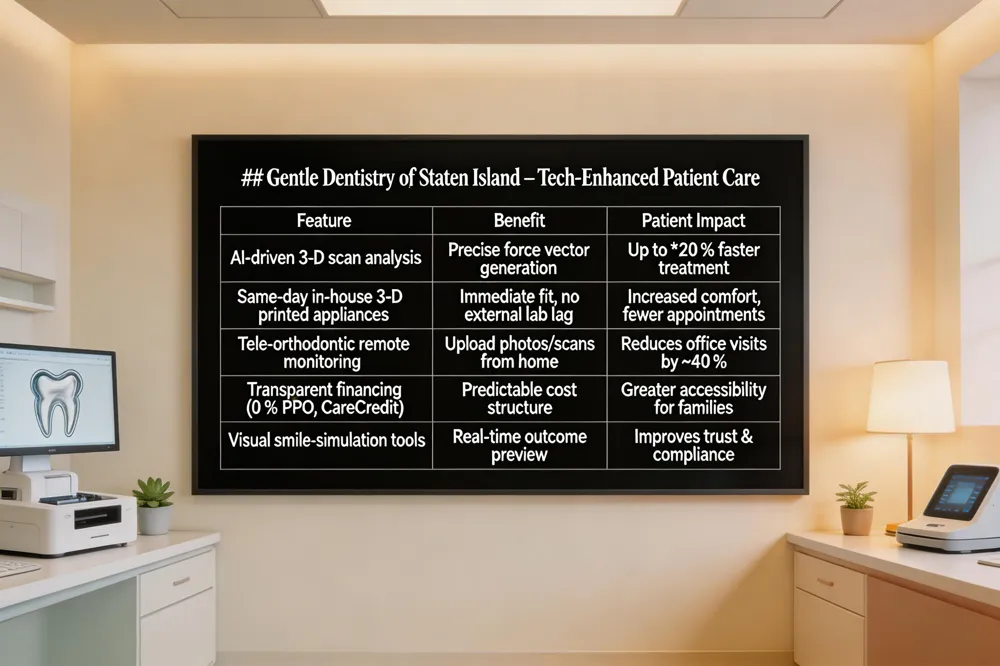 Gentle Dentistry of Staten Island puts patients at the center of every visit, using clear, jargon‑free explanations and visual smile‑simulation tools that let patients see expected outcomes before any appliance is placed. This transparent communication builds trust and encourages active participation in treatment.
The practice leverages AI‑driven treatment planning that analyzes 3‑D intra‑oral scans, CBCT images and historical case data to generate precise force vectors, shortening treatment time by up to 20 %. In‑house 3‑D printing produces custom brackets, aligners and retainers on the same day, improving fit and comfort while reducing lab turnaround. Tele‑orthodontic platforms let patients upload high‑resolution photos or scans from home, cutting in‑office visits by roughly 40 % and keeping clinicians informed in real time.
Financing is streamlined through coordination with major PPO plans, Medicaid and CareCredit, offering 0 % interest monthly payment plans and transparent cost estimates up front. This blend of patient‑centered philosophy, cutting‑edge technology and accessible financing makes comprehensive orthodontic care achievable for families across Staten Island.
What are the 3 M's in orthodontics? The “three M’s” stand for Muscles, Malformation, and Malocclusion. Muscles refer to functional activity of the masticatory and perioral muscles that influence tooth position and jaw dynamics. Malformation describes skeletal and dental structural abnormalities that create the framework for a malocclusion. Malocclusion is the resultant misalignment that the orthodontist corrects. Together they guide diagnosis and treatment planning for a balanced, functional, and aesthetic result.
Technology and compassion now move orthodontics hand‑in‑hand, delivering faster, more comfortable results. AI‑driven treatment planning, 3‑D intra‑oral scanning, and in‑house 3‑D printing let clinicians visualize every tooth movement before a single wire is placed, while remote‑monitoring apps cut office visits by up to 40 %. Patients enjoy shorter timelines—often 4–6 months for simple cases—fewer painful adjustments, and clear‑aligner options that keep oral hygiene simple. Gentle Dentistry of Staten Island blends these advances with a patient‑first philosophy: compassionate communication, flexible scheduling, and customized appliances that fit each smile’s unique anatomy. Discover a personalized, tech‑enabled journey toward a healthier, more confident you today again.