Even more knowledge

Same‑day (immediate‑load) dental implants place a titanium or zirconia post and a provisional crown in a single visit, eliminating the months‑long healing phase of traditional protocols. This is possible thanks to 3‑D cone‑beam CT imaging, intra‑oral scanning, computer‑guided surgical guides, and CAD/CAM‑fabricated temporary prosthetics that ensure precise implant positioning and primary stability. Patients benefit from an immediate functional and aesthetic restoration, fewer appointments, reduced overall treatment time, preservation of bone and gum tissue, and lower psychological stress. When case selection and surgical technique are proper, success rates of 95‑98% match those of delayed‑loading implants.
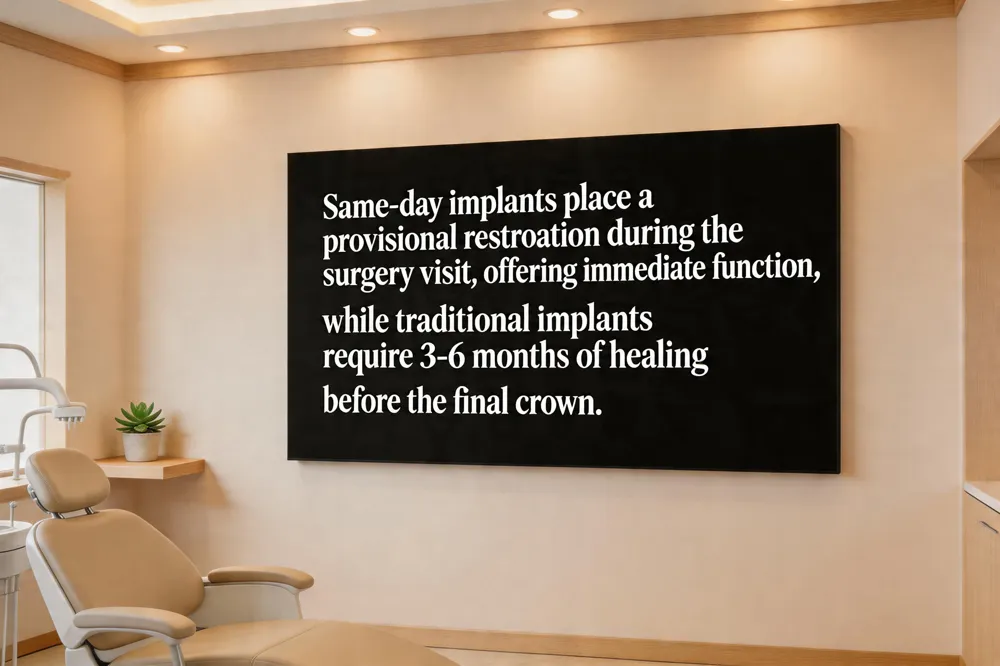
One‑day (immediate‑loading) dental implants and traditional implants differ mainly in the treatment timeline. In a same‑day protocol the implant is placed, and a temporary provisional crown or bridge is attached during the same clinical visit, allowing the patient to leave with a functional tooth that day. Traditional implants involve a multi‑stage approach: after extraction the implant is placed and then left to heal for 3–6 months before a final prosthesis is fitted. This extended healing period reduces the number of appointments but prolongs the overall treatment time.
Clinical requirements for immediate loading are strict. Successful same‑day implants need sufficient bone density and volume to achieve primary stability—typically an insertion torque of 35 N·cm or higher—verified by CBCT imaging, intra‑oral scanning, and computer‑guided surgical guides. The implant surface (nanostructured titanium or zirconia) and design also contribute to early osseointegration. Patients must have good oral health, no active infection, and be non‑smokers; a soft‑diet for 6–8 weeks is essential to protect the implant during the healing phase.
Risk considerations include a slightly higher chance of early implant failure if primary stability is not achieved, increased risk of postoperative infection, and the need for strict patient compliance. While success rates for immediate‑load implants (94‑98%) are comparable to traditional protocols when case selection is rigorous, patients with low bone quality, uncontrolled systemic disease, or heavy bruxism are better suited to the conventional staged approach.
One day dental implants vs traditional implants One‑day implants provide immediate function and aesthetics by placing a temporary restoration on the day of surgery, whereas traditional implants require a months‑long healing period before the final crown. Immediate loading cuts treatment time and visits but demands adequate bone quality and carries a modestly higher failure risk if stability is insufficient; traditional implants offer a cautious healing window, beneficial for patients with lower bone density or additional risk factors.

The price of a same‑day (immediate‑load) implant varies by case complexity, geographic market and the materials used. In the United States during 2025‑2026 a single‑tooth immediate‑load implant typically runs between $3,000 and $8,000. Higher costs arise when bone grafting, premium implant brands, or extensive surgical planning are required. For full‑arch restorations, such as an All‑On‑Four or Teeth‑in‑a‑Day solution, the total expense for one arch generally falls in the $15,000‑$24,000 range, reflecting the cost of multiple implants, computer‑guided surgical guides, and provisional prosthetics fabricated on‑site. Many practices, including Gentle Dentistry of Staten Island, offset the upfront outlay with financing programs like CareCredit, Sunbit, or in‑house payment plans, and they often assist patients in navigating insurance benefits—though most dental insurance plans cover only a portion of the prosthetic work, if any. It is advisable to schedule a comprehensive consultation to obtain a personalized treatment plan and a precise cost estimate based on your bone density, oral health, and aesthetic goals.
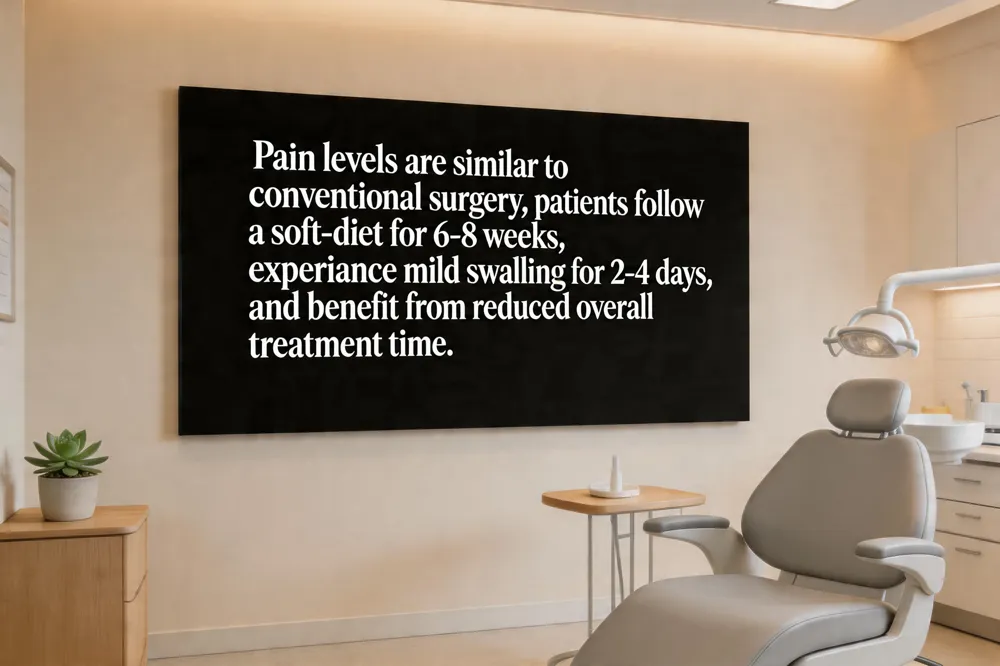
Same‑day dental implants are not inherently more painful than traditional staged procedures. Most patients report a level of discomfort comparable to—or even less than—conventional surgery because the entire treatment is completed in a single visit, reducing overall tissue trauma. Local anesthesia and minimally invasive techniques (flapless extraction, guided surgery) keep intra‑operative pain minimal, and dentists tailor postoperative analgesics to each individual. After surgery patients are advised to follow a soft‑diet regimen—preferably pureed or mashed foods—for the first 6–8 weeks, avoiding hard, crunchy, or sticky items that could stress the implant site. The typical recovery timeline includes mild swelling and soreness for 2‑4 days, followed by a gradual return to normal chewing as osseointegration progresses over 3‑6 months. Regular follow‑up checks, gentle oral hygiene, and adherence to dietary guidelines promote uneventful healing and long‑term implant success.

Same‑day (immediate‑load) dental implants are reserved for patients who meet strict clinical criteria. Bone density and volume requirements are the cornerstone of candidacy. Cone‑beam CT (CBCT) or 3‑D imaging must show at least 1 mm of healthy bone surrounding the planned site and sufficient overall volume to achieve primary stability—typically an insertion torque of 30‑35 N·cm or higher. When bone is deficient, grafts or sinus lifts are required, and the case reverts to a staged protocol.
Systemic health and lifestyle factors also play a decisive role. Ideal candidates are in good overall health, free of uncontrolled diabetes, recent radiation therapy, or active periodontal disease. Non‑smokers are strongly preferred because smoking compromises osseointegration; patients who quit before surgery have markedly better outcomes. Controlled bruxism can be managed with a night‑guard, but severe parafunction may preclude immediate loading.
Single‑tooth same‑day possibilities are common when the extracted tooth’s socket provides adequate bone. A temporary crown is fabricated ahead of time and attached during the same visit, allowing the patient to leave with a functional tooth while the implant integrates over 3‑6 months. If the site lacks sufficient bone or the patient has contraindications, a traditional multi‑stage approach is recommended.
Who is eligible for same‑day dental implants? Patients with adequate jawbone volume and density, healthy gums, no active infection, good systemic health, and a non‑smoking status meet the eligibility threshold. Can you get a single tooth implant in one day? Yes—provided the bone quality permits primary stability and the patient fulfills the health criteria, a single‑tooth implant with a temporary crown can be placed and restored in a single appointment.
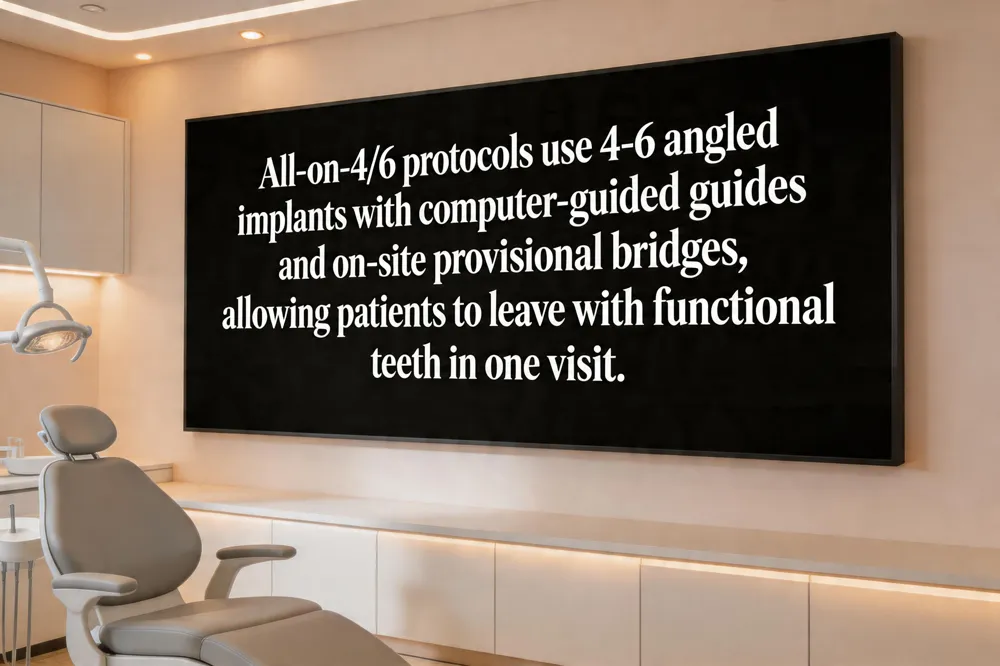
Full‑mouth dental implants in one day rely on immediate‑loading protocols such as All‑on‑4 and All‑on‑6. In these techniques four to six titanium implants are placed at strategic angles to engage dense bone, often avoiding the need for grafts. A computer‑guided surgical guide, built from a CBCT‑derived 3‑D plan, ensures precise positioning, while a provisional bridge is fabricated on‑site and screwed in at the same appointment. The patient walks out with functional, aesthetic teeth, and the implants fuse over the next 3‑6 months before the final prosthesis is delivered.
What I wish I knew before dental implants? I wish I’d known the surgery is virtually painless under local anesthesia, but mild swelling and discomfort for a few days are normal and manageable with OTC pain relievers. Implants are not “maintenance‑free”; they require diligent brushing, flossing, and regular check‑ups to prevent peri‑implantitis. Healing can take months, especially if bone grafting is needed, and factors like smoking, uncontrolled diabetes, or poor bone density can jeopardize success. While the upfront cost is higher than removable dentures, the long‑term durability (often 15‑25 years) makes implants a cost‑effective, permanent solution.
Patient‑focused advice & common pitfalls: Ensure adequate bone volume and density, quit smoking, and disclose all medical conditions. Follow the soft‑diet protocol for 6‑8 weeks, keep oral hygiene strict, and attend all follow‑up visits. Pitfalls include selecting unsuitable candidates, insufficient primary stability, and non‑compliance with post‑operative instructions, which can lead to early implant failure.
Same‑day implants give you a functional, aesthetic tooth or bridge in a single visit, cutting treatment time, eliminating removable dentures during healing, and preserving bone and gum structure. Clinical studies show success rates of 95‑98% when case selection, primary stability, and digital planning are optimal, and patients report immediate confidence boosts. Risks include a slightly higher chance of early failure, infection, or marginal bone loss if primary stability is inadequate, and the provisional restoration may be less durable and aesthetic than the final prosthesis. Because outcomes hinge on bone density, oral health, and lifestyle factors, a personalized evaluation is essential—CBCT imaging, intra‑oral scanning, and a thorough medical review determine candidacy and guide the treatment plan. Interested patients should schedule a comprehensive consultation, discuss imaging and financing options, and receive a clear step‑by‑step roadmap before committing to same‑day implant therapy.