Even more knowledge

Orthodontic care focuses on enhancing the function and appearance of teeth and jaws. By gradually applying gentle pressure, orthodontic treatments correct misaligned bites and spacing issues, promoting long-term oral health. A well-aligned smile facilitates easier cleaning, reduces the risk of dental problems, and improves overall oral function.
Orthodontic treatment is no longer exclusive to teenagers; about one in three orthodontic patients today are adults. Many adults seek treatment not only for aesthetic improvements but also to address issues like overcrowding, gum disease, or jaw pain. Modern options like clear aligners and ceramic braces offer discreet solutions that fit adult lifestyles.
Orthodontists utilize advanced digital imaging, 3D scans, and computer simulations to tailor treatment plans for each patient, regardless of age. This technology ensures precise adjustments and helps patients understand their expected outcomes. Personalized care alongside innovative appliances, including Invisalign and custom brackets, enhances comfort and effectiveness throughout the treatment journey.
Teen and adult orthodontic treatments differ significantly due to biological and lifestyle factors. Teens benefit from active jaw growth and more malleable bones, which allow for easier tooth movement. This makes treatment generally more efficient, with an average duration of 18 to 24 months. Adults, on the other hand, have fully developed jaws, which slows down tooth movement and can make treatment more complex. Existing dental conditions such as gum disease or missing teeth in adults necessitate careful planning, leading to treatment durations that may range from 12 to 36 months depending on complexity. For more details, see teen orthodontic treatment benefits, adult discreet orthodontic options, jaw and teeth development in teens, clear aligners for adults, ceramic braces for adults, differences in orthodontic treatment time, orthodontic treatment challenges in adults, early orthodontic intervention advantages, alignment correction in adolescents, orthodontic treatment outcomes for teens and adults.
One of the main distinctions is that teenagers' jaws and teeth are still developing, allowing orthodontists to guide tooth alignment more effectively during growth. Adults lack this growth advantage, so their teeth and jawbones are more resistant to movement. Additionally, adults often face challenges such as gum disease or bone loss, which can complicate treatment and sometimes require preparatory dental care before orthodontic appliances are applied. Learn more about orthodontics treatments overview, types of orthodontic appliances, common orthodontic treatments, function and appearance improvement, malocclusions and orthodontics, orthodontic treatment process, initial consultation for orthodontics, dental imaging in orthodontics, customized orthodontic appliances, orthodontic treatment goals, surgical orthodontic options, monitoring and adjustments in treatment.
| Age Group | Typical Treatment Duration | Complexity Factors |
|---|---|---|
| Teens | 18 to 24 months | Growth phase aiding alignment, fewer dental issues |
| Adults | 12 to 36 months | Fully formed jaws, potential gum disease, missing teeth |
For more on orthodontic treatment for teens, effective ages 11 to 15, permanent teeth eruption, jaw growth during teens, common orthodontic issues in teens, crowding and spacing correction, overbites and underbites treatment, traditional metal braces, clear ceramic braces, Invisalign Teen clear aligners, orthodontic treatment duration, treatment duration 18 to 24 months, regular orthodontic checkups, checkups every 6 to 10 weeks, post-treatment retainers, maintaining teeth alignment, long-term orthodontic success and orthodontic treatments for adults, metal braces for adults, clear braces benefits and drawbacks, Invisalign for mild to moderate issues, post-treatment retainers, retainers to maintain teeth position, treatment duration for adults, importance of oral health before orthodontics.
Teens commonly struggle with malocclusions such as overbite, underbite, crowding, gaps, and jaw alignment issues. Early treatment can prevent further complications and improve oral health long-term. Adults encounter similar issues but may also deal with problems stemming from previous dental work, wear, or gum disease, adding layers of complexity. More information can be found under orthodontic evaluation at age seven, orthodontic treatment for all ages, adult orthodontic patients statistics, traditional braces options, clear aligners benefits, lingual braces solutions, holistic dental health approach and adult orthodontics statistics, importance of adult orthodontic treatment, dental issues from misaligned teeth in adults, orthodontic treatment for adults, common adult orthodontic problems, adult orthodontic treatment options, challenges of adult orthodontics, braces and aligners for adults, orthodontic insurance coverage for adults, American Association of Orthodontists (AAO).
Teens have a wide range of treatment options including traditional metal braces, ceramic braces, and Invisalign® Teen. These options address both functional and aesthetic needs during formative years. Adults often prefer discreet options like clear aligners (e.g., Invisalign) and ceramic braces to accommodate professional and social environments. Metal braces remain effective but are less popular among adults due to visibility concerns. For detailed options, see teen orthodontic treatment in Baton Rouge, orthodontic treatment during ages 11 to 15, guiding teeth and jaw development in teens, common orthodontic issues in teenagers, duration of braces for teens, wearing braces safely during sports, adjusting to braces while playing instruments, parental support for orthodontic treatment, timing benefits of teenage orthodontics, long-term dental health improvements, personalized orthodontic options for teens, traditional braces and modern alternatives and adult orthodontic treatment, orthodontics for adults in the US, reasons for adult orthodontic treatment, aesthetic orthodontic improvements, correction of relapse in orthodontics, orthodontic preparation for implants and crowns, addressing missing teeth with orthodontics, improving oral hygiene through orthodontics, creating a better bite in adults, closing gaps with orthodontic treatment, reducing tooth wear by orthodontics, correcting jaw discrepancies, Invisalign for adults, clear removable aligners, 3D imaging in orthodontics, LightForce 3D printed brackets, custom orthodontic brackets, predictable and faster treatment, orthodontic discomfort in adults, modern orthodontic appliances, comfort in adult orthodontics, use of titanium in braces, cost of adult orthodontic treatment, orthodontic treatment cost factors, no age limit for orthodontics, orthodontics for seniors, Dr. Daniela Toro orthodontic treatments.
Both demographics achieve excellent outcomes when treatment is personalized and monitored closely, with modern orthodontic technology enabling tailored approaches for individual needs and lifestyles. Visit Orthodontist Staten Island NY, Orthodontist Metuchen NJ, Invisalign clear aligners, Clarity Advanced ceramic braces, American Association of Orthodontists recommendations, First orthodontic check-up by age 7, Orthodontic treatments for children, Orthodontic treatments for adults, Early orthodontic evaluation, Personalized orthodontic care, Patient-centered orthodontic treatment, Flexible orthodontic financing, Benefits of orthodontic treatment, Orthodontic treatment testimonials for more information.
Orthodontic treatment process starts with an initial consultation where the orthodontist reviews your medical and dental history. This visit typically lasts 30 to 60 minutes and includes a thorough visual examination of your teeth and jaws.
During the consultation, advanced imaging techniques are used to create a precise treatment plan. These technologies include digital imaging in orthodontics, which emit significantly less radiation than traditional films, and 3D scans like cone beam computed tomography (CBCT) or digital intraoral scanners. This allows the orthodontist to evaluate bone structure, tooth position, and jaw alignment in detail.
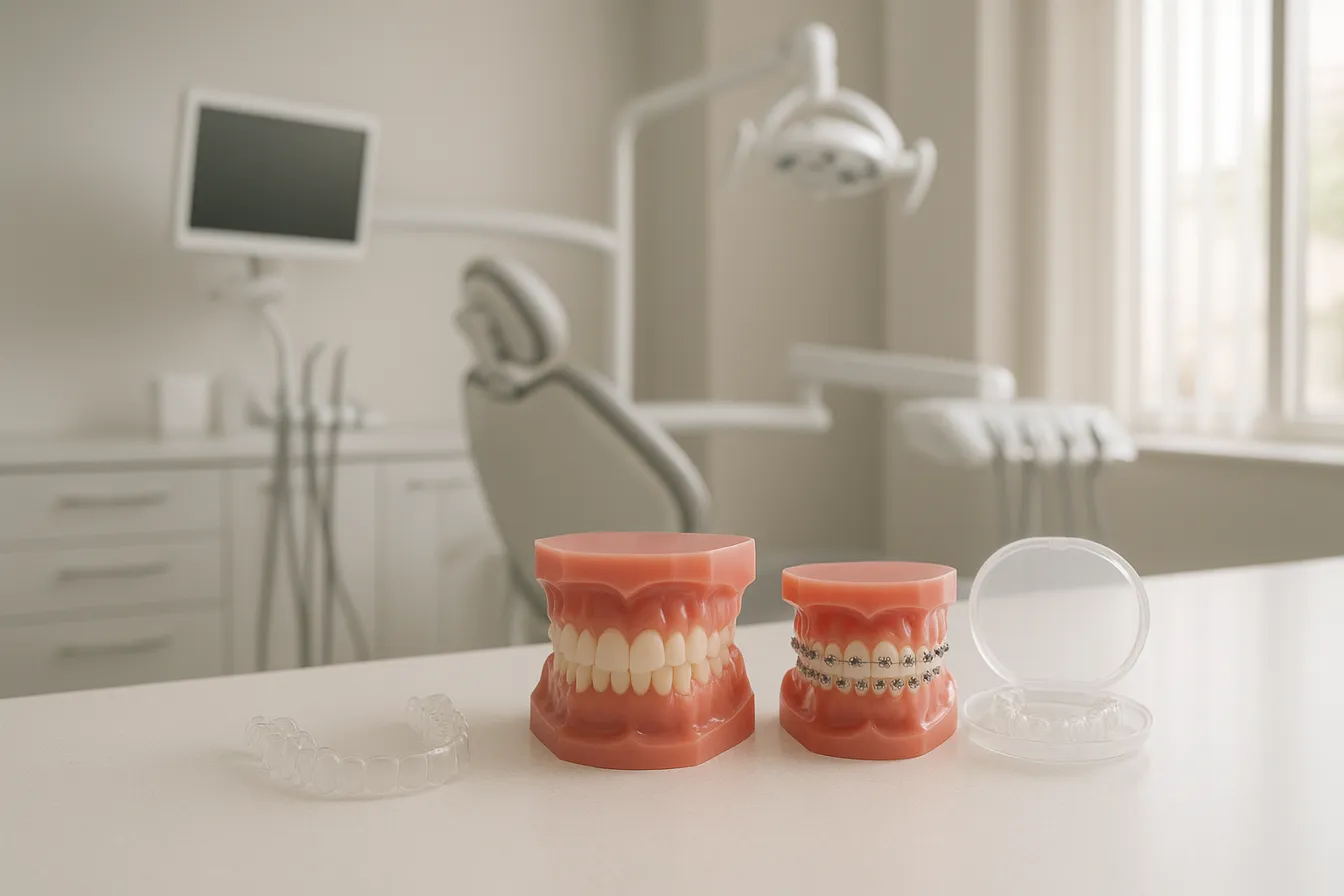
Following the evaluation, customized orthodontic appliances are selected and fitted. Options include traditional metal braces with brackets and wires, ceramic braces for adults that blend with teeth, or clear aligners such as Invisalign treatment, which use a series of removable plastic trays to gradually shift teeth. The fitting process usually involves bonding brackets to teeth or providing a tailored set of aligners.
Treatment progress is carefully monitored through regular orthodontic adjustments, typically scheduled every 4 to 10 weeks depending on the case. Adjustments may include tightening or changing wires on braces, replacing elastics, or switching to the next set of aligners. These visits are essential to ensure teeth are moving as planned and to address any concerns.
Once treatment goals are achieved, braces or aligners are removed. Patients are then fitted with retainers—either fixed or removable—to help maintain their new smile by preventing teeth from shifting back. Continuous monitoring and good oral hygiene remain vital to sustaining results and promoting overall dental health.
This structured process, supported by modern technology and personalized care, applies to both teens and adults, offering successful outcomes for improving dental function and aesthetics.
Orthodontic treatment options vary for teens and adults but include similar appliances tailored to each group's needs. For teens, common choices are:
For adults, discretion often becomes a priority. Thus, clear aligners like Invisalign are highly favored due to their near-invisibility and removability, making them convenient for professional and social settings. However, adults with complex orthodontic problems may require metal or ceramic braces for adults to achieve optimal results.
Metal Braces:
Ceramic Braces:
Clear Aligners (Invisalign):
Modern orthodontics benefits significantly from advanced technologies. Innovations include:
These advances make appliances more comfortable and efficient for both teens and adults.
| Appliance Type | Visibility | Suitability | Comfort & Maintenance |
|---|---|---|---|
| Traditional Metal | High | Complex cases | Durable, less aesthetic, requires cleaning |
| Ceramic | Medium (tooth-colored) | Moderate cases | More fragile, potential staining |
| Invisalign Aligners | Low (nearly invisible) | Mild to moderate cases | Removable, easy hygiene, requires wear time |
Choosing the right orthodontic option depends on age, treatment complexity, lifestyle preferences, and health considerations. With modern technology, both teens and adults can achieve effective and comfortable orthodontic care tailored to their unique needs.

Orthodontic treatment offers valuable health and functional benefits across all ages. For both teens and adults, it improves bite alignment, oral function, and the appearance of teeth. This leads to easier cleaning, reduced risk of tooth decay, gum disease, jaw pain, and uneven tooth wear.
Early evaluation (around age 7) is recommended by the American Association of Orthodontists. Treating during teenage years prevents complex problems later in life, such as severe malocclusions and jaw disparities, reducing the need for surgery or lengthy treatment. Learn more about the Importance of early orthodontic evaluation and Orthodontic evaluation by age 7.
Orthodontic treatment at any age often dramatically boosts self-esteem and confidence. Teens gain social benefits from improved smiles during formative years, while adults appreciate discreet options like Invisalign or ceramic braces that fit their professional and social lifestyles.
Understanding these age-specific teen orthodontic treatment benefits, adult discreet orthodontic options helps patients and providers choose suitable treatments that ensure healthy, beautiful smiles lifelong.
Maintaining excellent oral hygiene is crucial throughout Orthodontics treatments overview to avoid complications such as gum inflammation, tooth decay, and enamel demineralization, especially around braces and other appliances. Patients must brush and floss regularly, carefully cleaning around brackets and wires to prevent plaque buildup.
For those engaged in sports, orthodontic mouthguards offer essential protection for both the teeth and orthodontic appliances. Mouthguards help prevent injuries and protect brackets and wires from damage during physical activity, allowing patients to stay active safely while undergoing treatment. This is also highlighted under Mouthguards for sports.
Routine orthodontic appointments, typically every 4 to 8 weeks, allow the orthodontist to adjust appliances by tightening wires or replacing elastics, ensuring teeth move as planned. Additionally, these visits include oral health evaluations to monitor gum health and detect early signs of decay or irritation. Adjustments and monitoring are vital for steady progress and to avoid treatment delays. More information can be found at Orthodontic checkup importance.
Once active treatment is complete, the use of retainers—either fixed or removable—is essential to keep teeth in their new positions. Lifelong care involves wearing retainers as prescribed and maintaining good oral hygiene to prevent relapse. Continuing regular dental checkups supports long-term stability and oral health after braces or aligner therapy. Details about post-treatment care are explained in Post-treatment retainers and Post-treatment orthodontic care.
Orthodontic care now includes an array of options such as traditional metal braces, ceramic braces, and clear aligners like Invisalign. These treatments are customized to meet individual needs, including age, lifestyle, and specific alignment concerns. Advanced technologies, including 3D imaging and digital scans, enhance precision planning and improve results.
The American Association of Orthodontists recommends an initial evaluation by age 7 to detect early issues. For teens, treatment is most effective between ages 11 to 15 due to active bone growth and development, allowing smoother tooth movement and jaw alignment. Timely intervention prevents more complex problems later, supporting better oral health and confidence.
Adult orthodontic treatment is increasingly common, with about 20-30% of patients being adults. Options like clear aligners, ceramic braces, and lingual braces provide discreet, comfortable solutions suited for professional and social settings. Although adult treatments may take longer due to matured bones and existing dental conditions, excellent results are achievable.
Regular orthodontic checkups every 4 to 8 weeks ensure proper progress through adjustments and monitoring of oral health. Maintaining good oral hygiene, wearing retainers post-treatment, and protecting teeth during activities are vital for long-lasting results. Patient engagement and routine care contribute significantly to achieving and maintaining a healthy, beautiful smile.